Democrats press Blanche over whether Jan 6 rioters could access DOJ ‘anti-weaponization’ fund
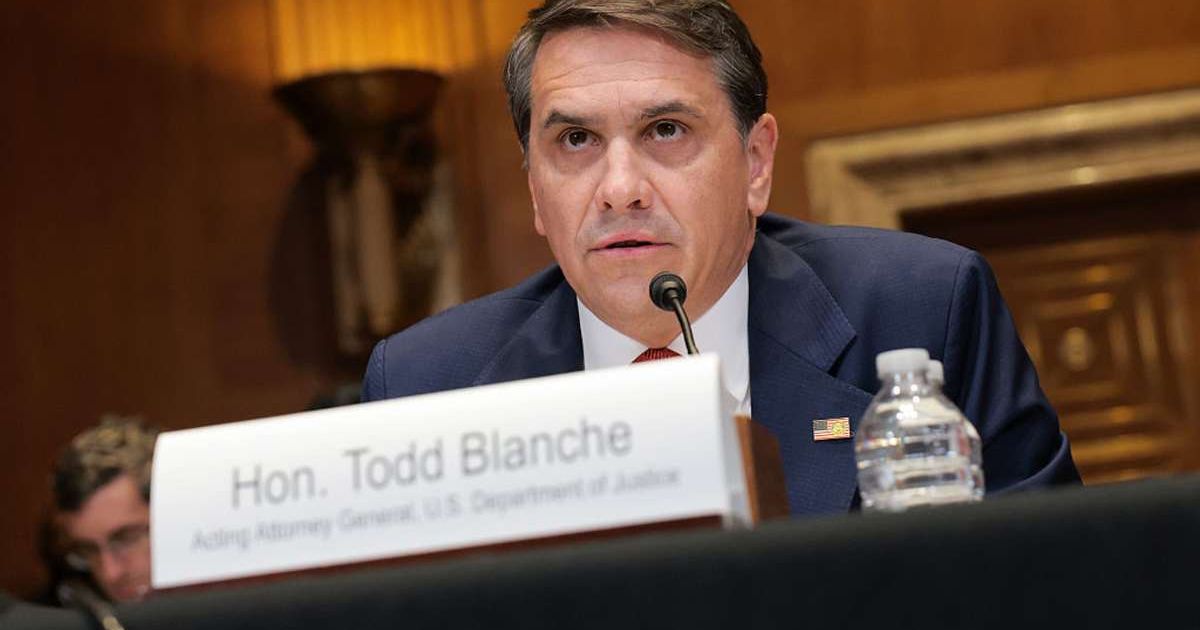
WASHINGTON, DC: A heated Senate hearing over the Justice Department’s newly announced $1.8 billion “anti-weaponization” compensation fund intensified on Tuesday as Democratic lawmakers pressed Deputy Attorney General nominee Todd Blanche on whether Trump campaign donors and Jan 6 rioters convicted of assaulting police officers could receive federal payouts.
Blanche repeatedly declined to rule out such possibilities, saying eligibility decisions would ultimately be determined by commissioners overseeing the fund rather than by him personally.
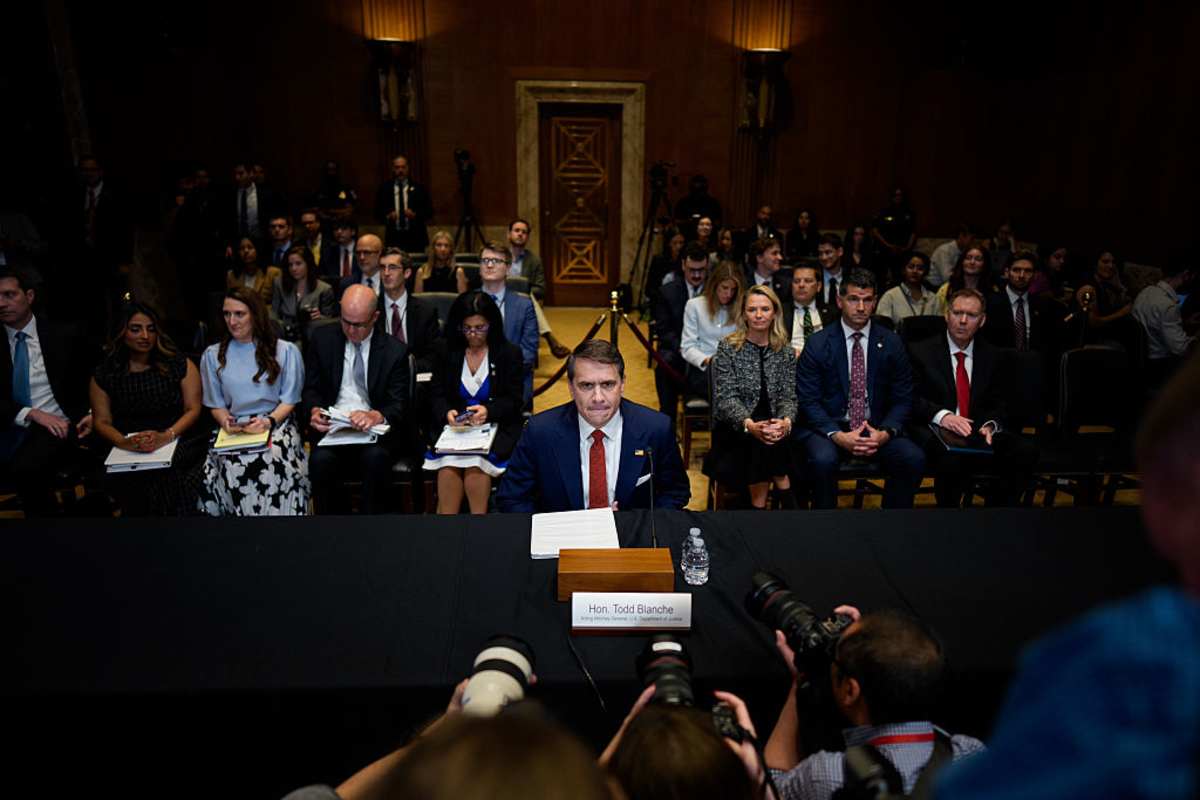
Democrats question Trump allies, Jan 6 eligibility
Sen Chris Coons, D-Del, challenged Blanche over whether he would commit to preventing Trump campaign donors from benefiting from the fund, which was created to compensate individuals who claim the federal government unfairly targeted them.
“I am not committing to anything beyond the settlement agreement itself,” Blanche responded, adding that campaign donors were not automatically excluded from seeking compensation.
Coons then raised concerns conveyed by law enforcement officials regarding the possibility that members of far-right groups such as the Oath Keepers and Proud Boys, including individuals convicted of assaulting Capitol police officers during the Jan 6 attack, could potentially qualify for payments.
“Will you commit that no one who has been convicted of assaulting a police officer will receive a payout from this fund?” Coons asked.
Blanche did not directly answer the question. Instead, he noted that he shared concerns expressed by law enforcement personnel while also questioning how details of the arrangement had circulated before its formal announcement.
“I share the concerns that apparently members of law enforcement gave to you last week, although none of this was announced last week, so that’s surprising,” Blanche said, prompting Coons to respond that officials had heard rumors of a settlement.
Blanche reiterated that “anybody can apply” for compensation under the program and said the final rules governing eligibility would be established later.
“The commissioners will set rules, I’m sure,” he said. “That’s not for me to set.”

Van Hollen calls fund an ‘outrageous’ slush fund
Sen Chris Van Hollen, D-Md, escalated criticism of the program, describing the nearly $1.8 billion fund as an “outrageous, unprecedented slush fund.”
Van Hollen directly questioned Blanche about whether individuals convicted of violent crimes during the Jan 6 Capitol riot could potentially access compensation through the program.
Blanche again maintained that eligibility would be open to anyone who believed they had been victims of political or legal “weaponization.”
“I would hope you would make a rule that anyone convicted of assaulting a police officer of violent crime is simply not eligible,” Van Hollen told him.
The exchange underscored growing Democratic concerns that the compensation program could become politically explosive if it is perceived as benefiting Trump allies or individuals connected to the Capitol attack.

Blanche cites Obama-era settlement as precedent
During the hearing, Blanche defended the arrangement's legality by citing an Obama-era Department of Agriculture settlement involving Native American farmers, which he said established precedent for such compensation mechanisms.
Responding to an earlier question from Sen Susan Collins, R-Maine, Blanche acknowledged that the DOJ fund was “unusual” but argued it was not without precedent. “It is true that this is unusual, that is true, but it is not unprecedented,” Blanche said. “It was done to address something that had never happened again either.”
Van Hollen, however, countered that the Obama-era settlement had received approval from a federal judge, while the newly announced DOJ fund had not undergone similar judicial review.
The dispute signals that the “anti-weaponization” fund is likely to become a major flashpoint in ongoing political battles over Jan 6 prosecutions, federal law enforcement and claims of political targeting under previous administrations.