Elon Musk's $1M payments to voters may have breached election law, Wisconsin board finds
WASHINGTON, DC: Elon Musk's multimillion-dollar push to reshape Wisconsin's Supreme Court may now have landed him in legal jeopardy.
The Wisconsin Elections Commission found that the billionaire Tesla boss may have violated the state's election bribery law by offering $1 million checks to voters during a Wisconsin Supreme Court election.
The commission has since referred two complaints to the Brown County District Attorney's Office, which will decide whether to pursue criminal charges.
Elon Musk’s efforts to flip Wisconsin elections
The legal complaint revolves around Musk’s effort to flip majority control of the highest court in battleground Wisconsin.
The tech titan and groups he supported spent at least $20 million on the candidate backed by Republicans, Brad Schimel, who later lost by 10 percentage points to the Democratic-backed candidate Susan Crawford.
The efforts included offering cash giveaways to certain voters who signed his political group's petitions, a practice that started when Musk backed President Trump's 2024 campaign.
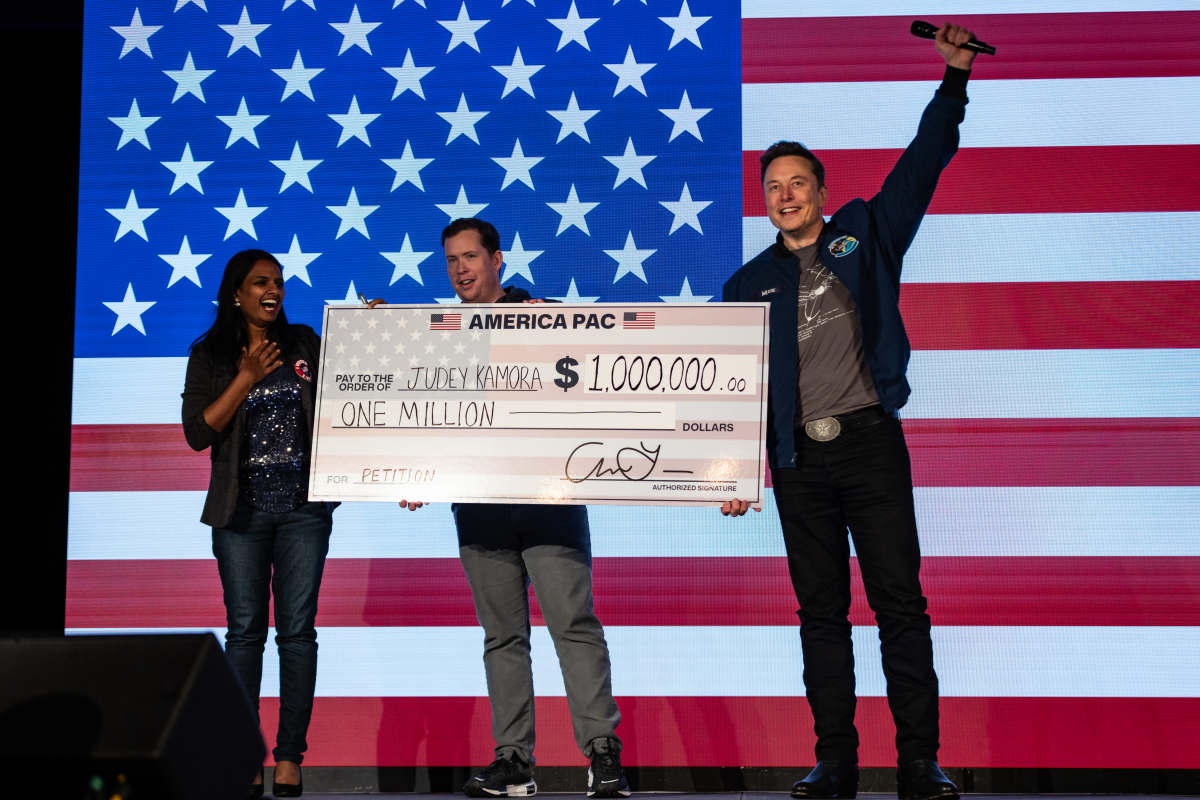
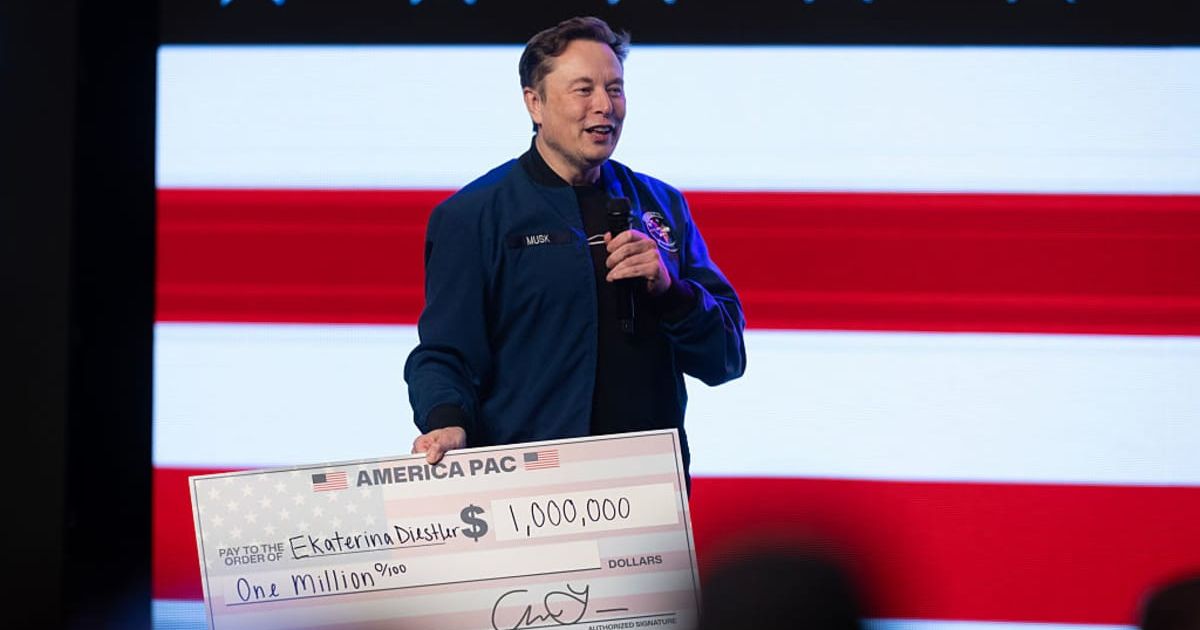
During the race, Musk's America PAC handed out $1 million checks to three voters who signed a petition opposing what it called "activist judges."
At the time, Wisconsin Attorney General Josh Kaul, a Democrat, sued to stop Musk from making the payments, accusing him of violating state law by offering people money to vote.
With his lawyer arguing that the billionaire was exercising his right to free speech, the state's highest court ultimately declined to take up the issue, leading Musk to hand out giant novelty checks to a pair of voters at a rally several days before the election.
Election committee refers complaints to attorney's office
The panel, which consists of three Democrats and three Republicans,
The commission — which is made up of three Republicans and three Democrats — voted 5-1 last Thursday to refer two complaints filed by voters against Musk to the Brown County District Attorney's office.
A motion approved by the committee found "probable cause" that Musk violated a state law that makes it a crime to offer a person "anything of value" to induce them to vote.
Wisconsin law states that anyone who “offers, gives, lends or promises to give or lend, or endeavors to procure, anything of value, or any office or employment or any privilege or immunity to, or for, any elector, or to or for any other person, in order to induce any elector,” is in violation of the law.
Musk's spending in Wisconsin's 2025 Supreme Court race has already sparked legal challenges, including a lawsuit from the Wisconsin Democracy Campaign seeking to permanently bar him from offering cash payments to voters in the state.
That lawsuit is pending in Brown County. It alleges that Musk and two groups he funds violated prohibitions on vote bribery and unauthorized lotteries and that his actions were an unlawful conspiracy and public nuisance.