Hassett eyes historic 6% growth despite Strait of Hormuz turmoil and rising inflation pressures

WASHINGTON, DC: President Trump’s top economic adviser issued a staggering projection on Sunday, May 10, claiming the American economy could be on the verge of an explosive 6% annual growth rate.
White House Economic Council Director Kevin Hassett stated that this year’s GDP could clock in at nearly triple the expectations of most mainstream forecasts.
This bold outlook comes despite the United States not exceeding the 6% annual growth threshold since the mid-1980s.
BARTIROMO: What kind of GDP growth number would you expect this year?
— Aaron Rupar (@atrupar) May 10, 2026
HASSETT: I think we really could be looking at numbers north of 6% because there's so much capital stock growth right now pic.twitter.com/gE0lQ7iq8D
Speaking to Fox News’ “Sunday Morning Futures,” Hassett theorized that a massive capital-spending surge observed in March is set to turbocharge the nation's economic engine.
He pointed specifically to an artificial intelligence-related investment bonanza from major corporations as a primary driver.
“I think we really could be looking at numbers north of 4, north of 5, north of even 6 because there’s so much capital stock growth right now,” Hassett explained when questioned about his expectations for the remainder of 2026.
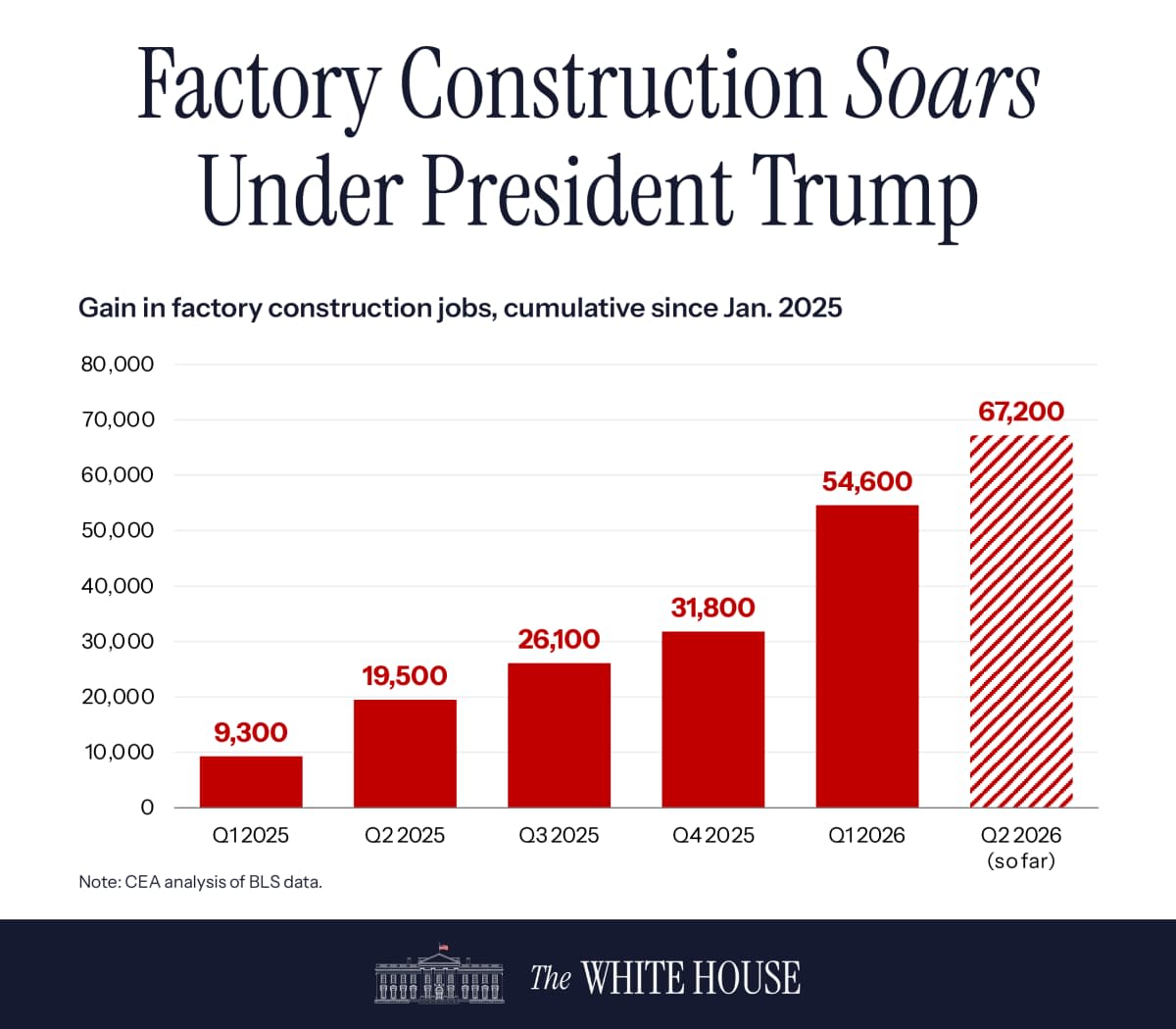
Capital spending fuels massive factory boom
The White House is banking on a shift from construction to production to justify these high-flying numbers.
While first-quarter GDP growth for 2026 was recorded at a modest 2%, Hassett argued that the figure was deceptive.
He explained that the 2% rate was the result of a record number of imported capital goods necessary for building new industrial facilities.
According to Hassett, the true potential of the economy will be unleashed once these facilities are fully operational. “Once we turn those factories on, you’re going to see really growth unlike anything we have seen before,” he claimed.
To reach the 6% annual target, the US economy would mathematically need to perform at a rate of roughly 7.5% or higher during the final three quarters of the year.
Hassett credited the "One Big Beautiful Bill Act" for this domestic investment surge.
The legislation, which renewed many provisions of the 2017 Tax Cuts and Jobs Act, is seen by the administration as the catalyst for the current capital-investment boom that they believe will lead to unprecedented prosperity.
Energy crisis and inflation dampen forecasts
The administration’s optimism stands in stark contrast to global realities and the more conservative estimates from independent analysts.
Most reputable forecasts for 2026 peg US growth between 2.2% and 2.6%, consistent with the performance of the past few years.
Furthermore, the economy is currently grappling with significant headwinds, including surging oil prices.
This energy volatility is a direct result of Iran wreaking havoc on the Strait of Hormuz, a critical maritime passage that once accounted for over a fifth of the world’s seaborne oil flow.

These geopolitical tensions have contributed to persistent inflationary pressure.
The Personal Consumption Expenditures (PCE) price index, which serves as the Federal Reserve’s preferred metric, showed inflation at 3.5% for the year ending in March.
This remains considerably higher than the Fed’s longstanding 2% target.
Critics also argue that business volatility stemming from the administration's tariffs has continued to act as a drag on the broader economy, complicating the path to the explosive growth Hassett predicts.
Job market reaches multi-year peak
Despite the friction caused by international conflict and price hikes, the domestic labor market continues to show surprising resilience.
Government data from March indicates that hiring has surged to its highest levels since 2024. While the US has recently enjoyed faster growth than most of its developed-nation peers in the Group of Seven (G7), reaching the 6% mark remains a historic challenge.

The last time the country neared such a figure was during the 2021 pandemic rebound, which reached 5.7% before being overshadowed by an inflationary hangover.
The White House remains undeterred by these historical comparisons. Hassett’s projection relies on the belief that the current "AI investment bonanza" and the renewal of tax cuts will create a unique economic environment that defies traditional forecasting models.
As the second quarter progresses, all eyes will be on the manufacturing sector to see if the "turning on" of factories can indeed generate the record-breaking momentum promised by the President's top adviser.