Ilhan Omar accuses Trump of demonizing Somali community, warns his rhetoric could spur violence
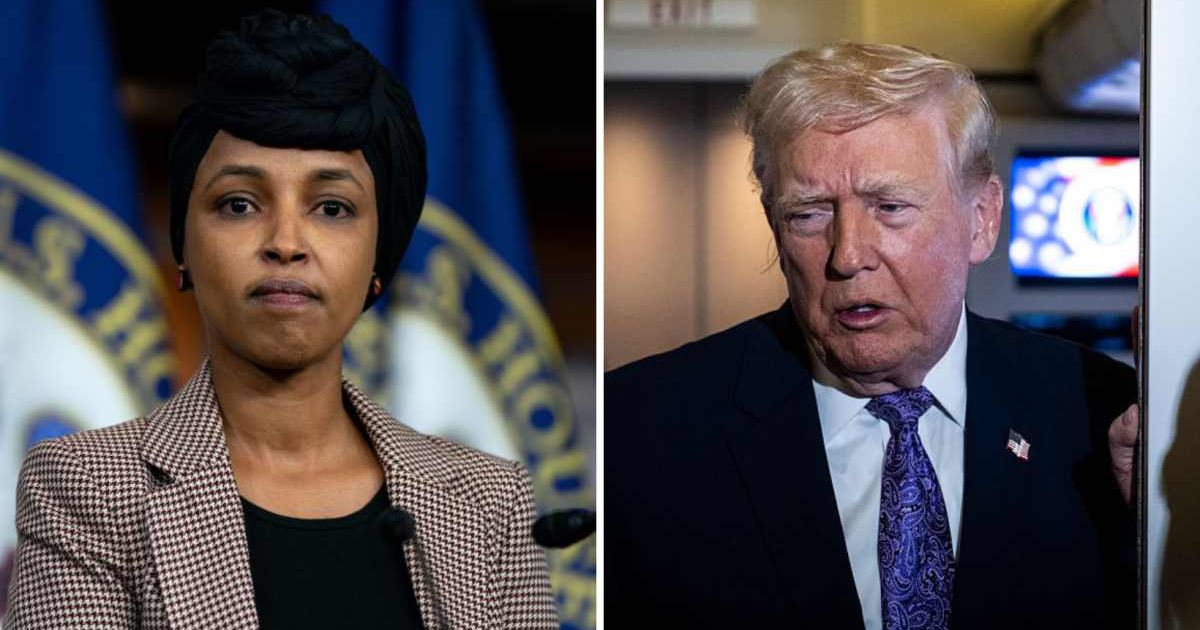
WASHINGTON, DC: Rep Ilhan Omar (D-MN) is condemning President Donald Trump after he delivered a sweeping attack on Somali immigrants during his appearance at the White House on December 4.
Trump claimed, "These Somalians have taken billions of dollars out of our country. They've taken billions of dollars. They have a representative, Ilhan Omar, who they say married her brother. She should be thrown out of our country. And most of those people, they have destroyed Minnesota."
Trump's comments immediately drew a sharp backlash for targeting an entire ethnic community, prompting a broader discussion on the real-world consequences of political rhetoric.
During an interview on CNN's 'The Lead,' host Jake Tapper pressed Omar on the practical impact of a president singling out an entire group of people based on ethnicity.
Ilhan Omar says Trump's rhetoric fuels fear and emboldens extremists
Responding to Tapper, Omar said Trump's rhetoric has already manifested in alarming ways within her own life. "I mean, it creates fear. And there is a possible danger that a lot of the people who follow the president have exhibited violence in many cases, especially in my case, whenever he has said something about me that is derogatory or says I'm a threat to the country, I have gotten death threats," she said.
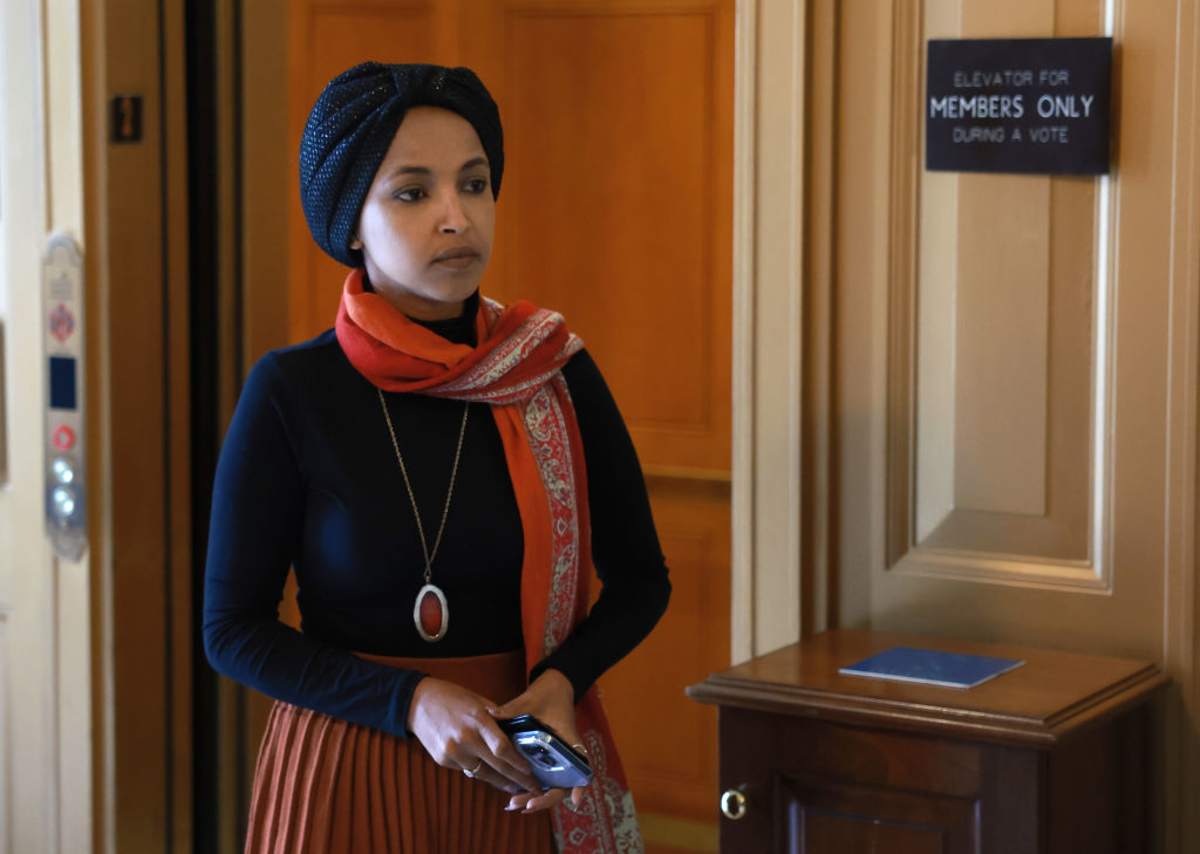
Omar pointed out past incidents where supporters of the President were prosecuted after threatening her, often citing Trump's language as inspiration for these threats. She said that this pattern is not isolated and reflects a broader threat facing Somali communities, not only in Minnesota, home to one of the nation's largest Somali American populations but across the United States.

She said such rhetoric does not remain symbolic; instead, it trickles into daily life, where Somali Americans must navigate the fear of harassment or discrimination.
Ilhan Omar mentions history of targeted rhetoric in US
Omar said that history has repeatedly shown how quickly targeted rhetoric can translate into collective blame, something ethnic groups such as Italian, Japanese and Muslim Americans have experienced at different points in US history.
Tapper echoed this statement, saying that while ethnic stereotyping was once widespread, it is generally rejected today. Yet, he said, Trump's comments risk reopening dangerous doors.
Omar underscored that Somali Americans contribute significantly to Minnesota's culture and economy and that portraying them as harmful is both inaccurate and damaging. Beyond the immediate political debate, she said the focus should be on ensuring communities feel safe and protected.
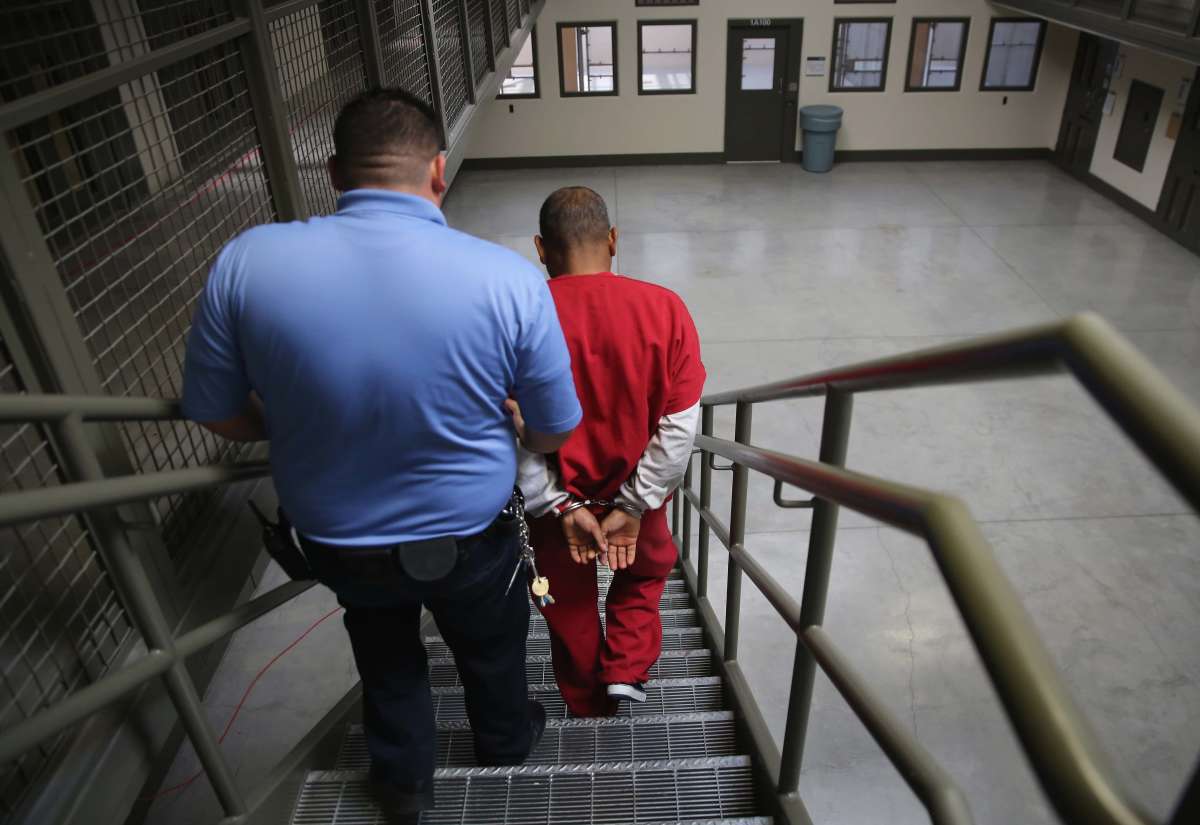
"There are so many people that have been incarcerated over the years that have been encouraged by the President's words," she said. "And so there is fear for Somalis, not just in Minnesota, but across the country, that some of these people might attack and harm them."