Judge blocks death penalty, admits backpack evidence in Luigi Mangione trial
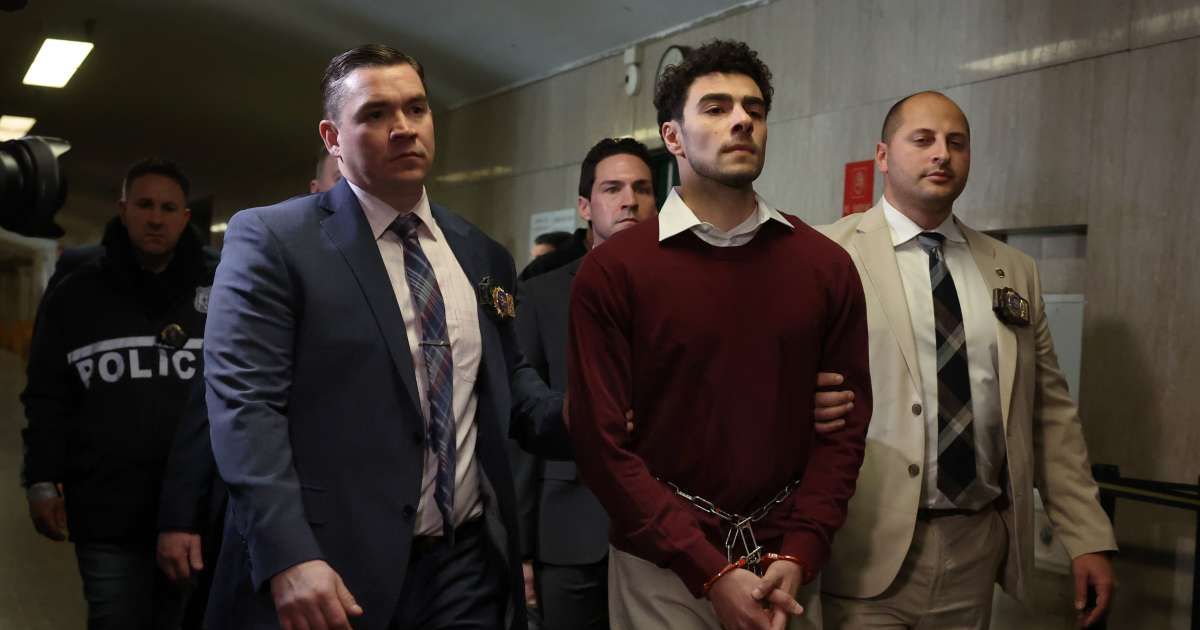
NEW YORK CITY, NEW YORK: A federal judge in New York issued a split ruling on Friday, January 30, removing the possibility of the death penalty from Luigi Mangione's federal case while allowing prosecutors to keep key physical evidence.
US District Judge Margaret Garnett dismissed death-eligible counts tied to the indictment but rejected defense efforts to suppress evidence recovered at the time of Mangione’s arrest.
The decision reshaped the legal landscape ahead of trial for Mangione, who was accused of stalking and killing UnitedHealthcare CEO Brian Thompson in Midtown Manhattan in December 2024.
Mangione pleaded not guilty to both state and federal charges stemming from the fatal shooting.
Judge Garnett’s ruling eliminated capital punishment exposure in the federal case, resolving one of the defense’s central challenges, while preserving core evidence prosecutors say links Mangione directly to the crime.
Court rejects stalking charge as violent crime

The court agreed with the defense that the stalking charge cited by prosecutors did not qualify as a “crime of violence” under federal law. As a result, it cannot serve as the predicate offense required to make Mangione eligible for the death penalty.
Defense attorneys had also argued that the government’s decision to pursue capital punishment was politically driven and sidestepped standard Justice Department review procedures.
While Judge Garnett did not rule on the political claim, her dismissal of the death-eligible counts removed execution from consideration in the federal prosecution.
Federal trial set for October 2026

With the capital issue resolved, Judge Garnett set a clear timeline for the federal proceedings. She ordered Mangione’s federal trial to begin in October, with jury selection scheduled for September 8.
The schedule could conflict with parallel state proceedings. The Manhattan district attorney’s office requested that Mangione’s state trial begin on July 1, preceding the federal case. Coordination between state and federal courts has not yet been finalized.
Judge rejects motion to suppress evidence
 Luigi Mangione's defense argued that police unlawfully searched his backpack (Andrew Leyden/Getty Images)
In a setback for the defense, Judge Garnett denied a motion to suppress evidence seized during Mangione’s arrest in Altoona, Pennsylvania.
The defense argued that police unlawfully searched Mangione’s backpack without a proper warrant.
The court rejected that claim, finding the search consistent with lawful procedures following the arrest. As a result, the prosecution will be allowed to present the seized items at trial.
Backpack search ruled legal and valid

The backpack contained evidence prosecutors describe as central to their case, including the alleged firearm used in the killing, a notebook, and other written materials.
Prosecutors argued that the search complied with Altoona Police Department protocols for handling a suspect taken into custody.
Judge Garnett’s ruling cleared the way for jurors to review the physical evidence if the case proceeded to trial.
Prosecutors contended that the materials, particularly the notebook and writings, would be used to establish intent and connect Mangione to the December 2024 shooting.