Lawmakers sound alarm over 'messy' tariff payback battle post-Supreme Court decision
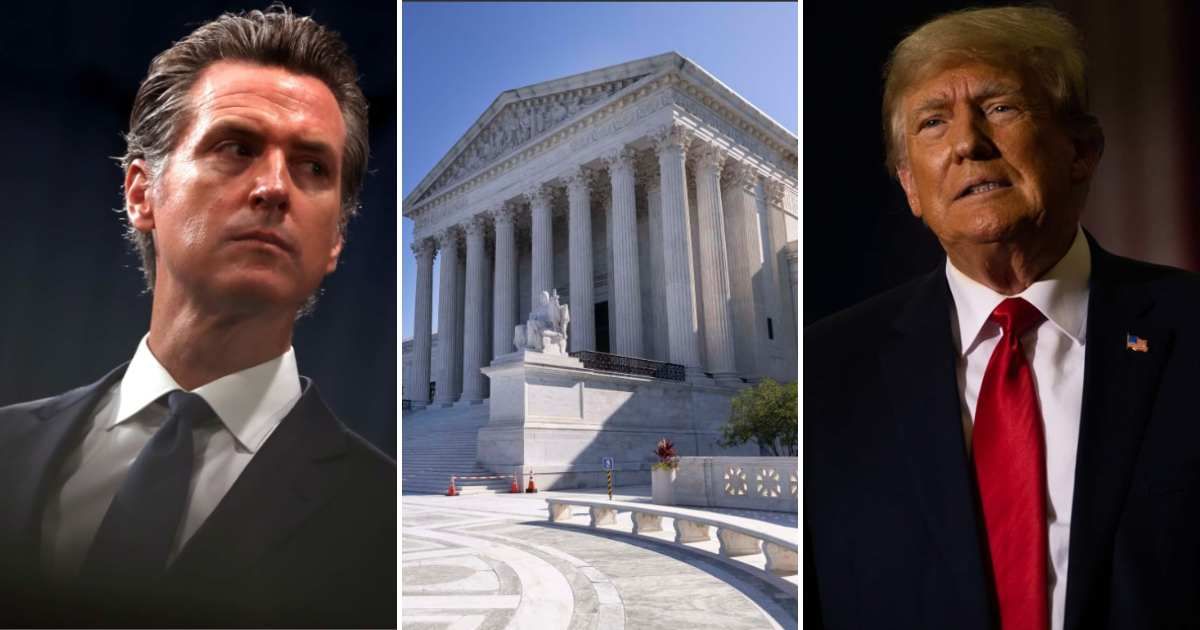
WASHINGTON, DC: The Supreme Court’s 6-3 decision to strike down President Donald Trump's sweeping global tariffs has shifted the national focus toward the billions of dollars already collected by the federal government.
While the ruling invalidated the use of emergency powers for these levies, the majority opinion offered no clarity on the practical process of returning the funds.
Justice Brett Kavanaugh, in his dissent, noted that the court said "nothing today" about how the government should return the money, warning that the ensuing process would likely be a "mess."
California Governor Gavin Newsom was among the first to demand action, calling the tariffs an "illegal tax" on the American people.
Newsom urged the administration to "issue an immediate refund to all Americans," framing the court's decision as a "huge win" for families and small businesses that had suffered under the policy.
However, legal and economic experts suggest that the path to actual reimbursement is far from straightforward.
Issue an immediate refund to all Americans for your illegal tax. Now. https://t.co/v5pUv2u6qN
— Gavin Newsom (@GavinNewsom) February 20, 2026
Barriers prevent consumers from recouping losses
Despite the political calls for immediate refunds, Senator Elizabeth Warren warned that the "game is rigged" against average citizens.
Warren, a ranking member of the Senate Banking Committee, pointed out that there was currently "no legal mechanism" for consumers or many small businesses to recoup the money they had already paid through higher prices.
She expressed concern that giant corporations, supported by "armies of lawyers," would be the only entities able to sue for refunds.
No Supreme Court decision can undo the massive damage that Trump's chaotic tariffs have caused.
— Elizabeth Warren (@SenWarren) February 20, 2026
The American people paid for these tariffs and the American people should get their money back. https://t.co/I78bV2jJUH
Former Deputy Assistant Secretary for Economic Policy Natasha Sarin echoed these concerns, stating that even if the federal government ultimately issued refunds, they would be sent to firms rather than directly to consumers.
"You’re depending on firms ultimately passing those back to the consumer," Sarin explained in a New York Times opinion piece, suggesting that large companies might simply pocket the money for themselves.
This potential outcome has sparked fears that the "massive damage" to American families will go uncompensated.
Economists split on long-term impact of tariff ruling
"The [Supreme] Court says nothing today about whether, and if so how, the Government should go about returning the billions of dollars that it has collected from importers."
— Heather Long (@byHeatherLong) February 20, 2026
Get ready for a really messy tariff refund situation... https://t.co/pegQVwOfrP
Economists are divided on the long-term impact of the ruling.
Heather Long, chief economist at Navy Federal Credit Union, argued that the decision will force a "reset in tariff policy" that could lead to lower rates and a more orderly system, eventually boosting economic growth.
She noted that smaller firms, in particular, would benefit from the relief provided by the ruling. However, others warned that the victory would lead to a significant increase in market volatility.
Olu Sonola, head of US economics at Fitch Ratings, cautioned that the decision would introduce "higher tariff-regime uncertainty."
While the ruling rolls back approximately 60% of the 2025 tariffs - totaling upward of $200 billion - the potential for those same tariffs to reappear in a revised form remains high.
This "messy operational and legal overhang" regarding refunds is expected to amplify economic uncertainty for the foreseeable future.
Traders brace for tariff refund fight
Following the ruling, US stocks saw a positive but relatively muted reaction as markets had already anticipated the legal challenge.
The Dow rose 92 points, while the tech-heavy Nasdaq gained 1.06% during Friday morning trading. Traders are currently weighing the implications of potential refunds on the government’s coffers and the possibility that the Trump administration will use other trade authorities to reimpose similar rates.
The rise in gold prices by 1.3% further signaled lingering caution among investors.
While the SCOTUS decision offered some immediate certainty by striking down the illegal levies, the lack of a clear refund roadmap and the prospect of a "very different path" for future trade enforcement have kept haven assets in demand.
Lower courts are now expected to be the primary battleground for determining how the billions in collected revenue will be redistributed.