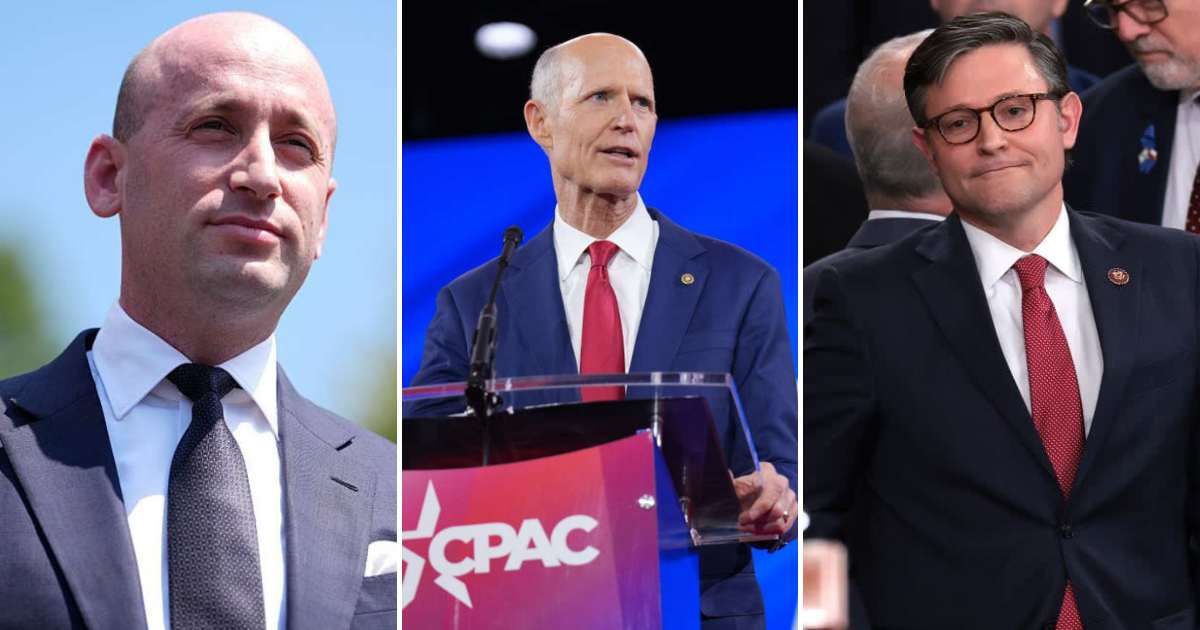
Miller, Scott and Johnson lead GOP outrage over Supreme Court's birthright citizenship ruling
WASHINGTON,DC: A wave of Republican anger swept through conservative circles after the Supreme Court, on Tuesday, June 30, refused to back President Donald Trump's effort to restrict birthright citizenship, with top allies accusing the justices of undermining American sovereignty.
The response quickly shifted beyond criticism of the ruling itself, with several influential conservatives arguing that the Constitution must now be changed to reverse what they called a dangerous precedent.
One of the most destructive and outrageous decisions in the long history of the Supreme Court. American citizenship is not the birthright of the world. It belongs only and solely to Americans. No provision of the Constitution can be read to require our national self-obliteration. https://t.co/qZuwzZq5tr
— Stephen Miller (@StephenM) June 30, 2026
Republicans erupt over SCOTUS ruling
One of the administration's strongest responses came from White House Deputy Chief of Staff Stephen Miller, who blasted the ruling as a historic setback for the country's immigration system.
In a sharply worded statement on X, Miller argued the Court had fundamentally misunderstood the meaning of American citizenship.
"One of the most destructive and outrageous decisions in the long history of the Supreme Court. American citizenship is not the birthright of the world. It belongs only and solely to Americans. No provision of the Constitution can be read to require our national self-obliteration."
House Speaker Mike Johnson (R-LA) is Visibly Distraught After SCOTUS Birthright Citizenship Decision: “Oh dear, what’d they rule?... Well, I need to read the opinion, okay. But obviously you could say that’s a textualist, literalist view. However, I do think that this has been… pic.twitter.com/SuVjrLYFWA
— RedWave Press (@RedWavePress) June 30, 2026
House Speaker Mike Johnson also reacted publicly after learning of the decision, saying he was disappointed by the outcome even as he acknowledged he still needed to study the Court's full opinion.
Johnson argued that the current interpretation of birthright citizenship has been "grossly abused" over the years and suggested the ruling could leave Republicans with only one realistic long-term option.
Johnson specifically pointed to concerns over birth tourism and indicated that if the Supreme Court has settled the constitutional question, Republicans may ultimately have to pursue the difficult process of amending the Constitution.
The Supreme Court’s birthright citizenship decision is wrong, dangerous, and disastrous for American sovereignty and the American people. If we can't fix it with ordinary legislation, then we must do what the Constitution commands in moments of national crisis: We must amend the… pic.twitter.com/8shwWkFGXY
— Senator Eric Schmitt (@SenEricSchmitt) June 30, 2026
Calls for amendment grow among GOP
Missouri Senator Eric Schmitt responded by arguing that the Court's decision leaves Congress with no choice but to pursue constitutional change.
Rather than merely criticizing the ruling, Schmitt announced plans to introduce a constitutional amendment aimed at restoring what he described as the original understanding of American citizenship.
"The Supreme Court's birthright citizenship decision is wrong, dangerous, and disastrous for American sovereignty and the American people."
Schmitt argued that ordinary legislation cannot override a constitutional ruling and insisted that only an amendment can permanently address the issue.
"If we can't fix it with ordinary legislation, then we must do what the Constitution commands in moments of national crisis: We must amend the Constitution and restore American citizenship."
He described citizenship as the foundation of American self-government and warned that allowing automatic citizenship for children born to illegal immigrants or temporary visitors weakens national sovereignty.
The Supreme Court has made its decision, now Congress needs to respond.
— Rick Scott (@SenRickScott) June 30, 2026
We need to make sure illegal aliens don’t come into our country and EXPLOIT our immigration system.
That means closing EVERY. SINGLE. LOOPHOLE.
I have a bill, the SAFE KIDS Act, to combat the… https://t.co/aPxUm1KGUl
Senator Rick Scott also urged lawmakers to respond quickly.
Scott called on Congress to close what he described as loopholes in immigration law while promoting his SAFE KIDS Act, legislation aimed at preventing the exploitation of surrogacy and visa programs for birthright citizenship.
Scott also argued that President Trump's border policies should be permanently written into federal law so they cannot be reversed by future administrations.
🚨 The Supreme Court ruled that the Fourteenth Amendment guarantees birthright citizenship to children born in the United States, including those whose parents are in the country unlawfully or only temporarily, striking down President Trump's executive order. pic.twitter.com/iDns5rmqJF
— SCOTUS Wire (@scotus_wire) June 30, 2026
SCOTUS' birthright citizenship ruling sparks row
The controversy stems from the Supreme Court's decision to reject President Trump's executive order seeking to restrict birthright citizenship.
Trump signed the order on his first day back in office, arguing that children born in the United States to parents who are in the country illegally or only temporarily should not automatically receive US citizenship.
The Supreme Court disagreed, holding that the Fourteenth Amendment continues to protect birthright citizenship under the long-standing constitutional interpretation.
The majority concluded that children born on American soil remain entitled to citizenship in most circumstances, preserving decades of legal precedent.