'NATO calls me Daddy': Trump slams alliance at Davos, demands 'piece of ice'
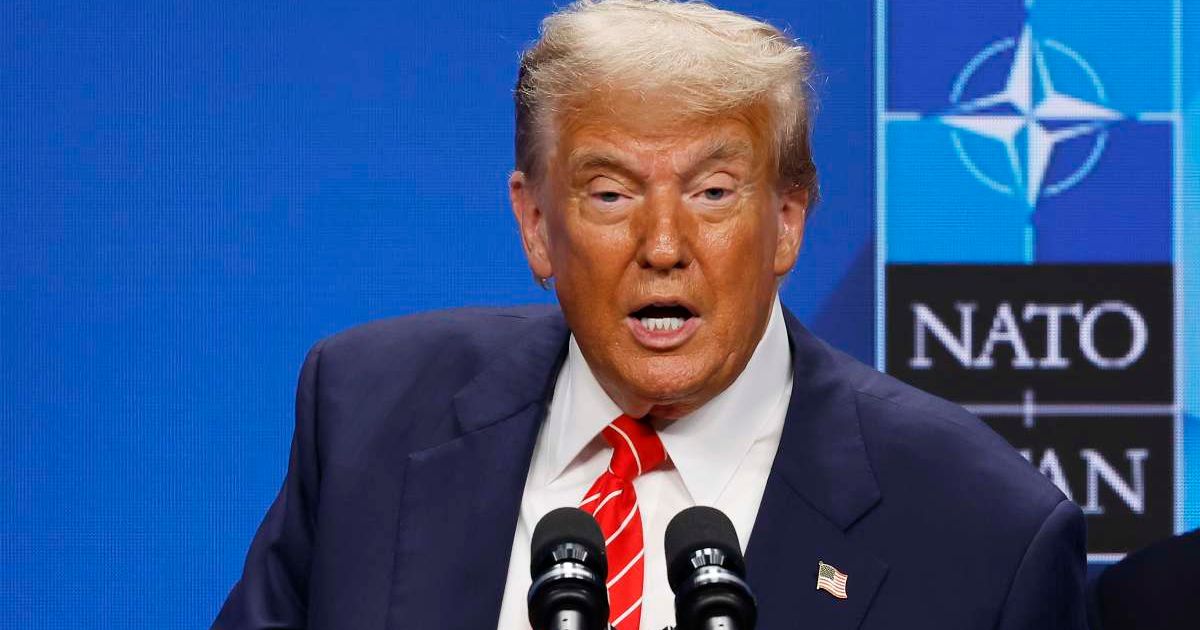
DAVOS, SWITZERLAND: On Wednesday, January 21, Trump used his address at the World Economic Forum to renew his criticism of the North Atlantic Treaty Organization, questioning whether the alliance would stand with the United States in a crisis and warning that America bears an unfair share of the burden.
“The United States is treated very unfairly by NATO,” Trump told the Davos audience. “We give so much, and we get so little in return.” While saying the US would stand by Europe, he cast doubt on whether that support would be reciprocated if America were threatened.
Doubts about alliance support for America
Trump: But the problem with NATO is that we'll be there for them 100%. But I'm not sure that they'll be there for us. They're not there for us on Iceland. That I can tell you. I mean, our stock market took the first dip yesterday because of Iceland pic.twitter.com/BLFCwMtg68
— Acyn (@Acyn) January 21, 2026
Trump directly challenged the alliance’s reliability. “The problem with NATO is that we’ll be there for them, 100%, but I’m not sure they’ll be there for us,” he said.
While discussing his push to acquire Greenland, Trump appeared to conflate the territory with Iceland. “They’re not there for us on Iceland,” he said, adding, “I can tell you, our stock market took the first dip yesterday because of Iceland.”
Framing the issue as one of loyalty, Trump warned allies that their responses would be remembered. “You can say yes and we’ll be very appreciative, or you can say no and we will remember,” Trump said. Linking the matter to security, he added, “A strong and secure America means a strong NATO. National security requires economic security.”
Allies called him 'Daddy' previously
🇺🇸🇬🇱🇮🇸 Speaking at the WEF Davos Summit, Trump continues to confuse Iceland for Greenland:
— Europa.com (@europa) January 21, 2026
“In Europe, I'm helping NATO, and I've, until the last few days when I told them about Iceland, they loved me. They called me daddy, right, the last time. A very smart man said, he's our… pic.twitter.com/uYnIVa6i8j
Trump also revisited remarks from last year, claiming alliance leaders once treated him as a dominant figure. “They called me ‘daddy’ last time,” he said. “A very smart man said he’s our daddy. He’s running it.”
Before contrasting that with more recent criticism of his leadership. “I went from running it to being a terrible human being,” Trump said, referencing remarks by NATO Secretary-General Mark Rutte in June that joked “Daddy has to sometimes use strong language” in defense of Trump’s rhetoric.
Tying the comment to Greenland, Trump said, “Now what I’m asking for is a piece of ice, cold and poorly located, that can play a vital role in world peace and world protection.”
Unfair burden of Ukraine war
Trump on Ukraine:
— The Horizon (@Horizon_Reports) January 21, 2026
We are thousands of miles away, separated by a giant ocean.
It’s a war that should have never started, and it wouldn’t have started if the 2020 U.S. presidential election hadn’t been rigged.
People will soon be prosecuted for what they did.
It’s probably… pic.twitter.com/QoxOTxlJQd
Turning to Ukraine, Trump argued the war underscores the imbalance in NATO commitments. He said the conflict should never have started and questioned what the United States gains from its support, citing financial costs and loss of life. “We are thousands of miles away, separated by a giant ocean. It’s a war that never should have started,” he said.
“What does the United States get out of all this work, all this money, other than death, destruction and massive amounts of cash going to people who don’t appreciate what we do?” Trump asked, clarifying, “I’m talking about NATO and I’m talking about Europe.”
Claiming the US gets nothing back
Trump concluded by asserting that the United States has received “nothing” from the alliance “except to protect Europe from the Soviet Union and now Russia.”
That claim overlooks NATO’s collective defense clause under Article 5, which has been invoked only once in the alliance’s history, after the September 11, 2001, attacks, when NATO members joined the United States in military operations in Afghanistan.