Pete Hegseth asks when Europe will address migrant 'invasion' or if it's already 'too late'

🚨 BREAKING: In a powerful moment on the anniversary of D-Day, SecWar Pete Hegseth GOES HARD against European nations who opened their borders to 3rd world migrants
— Eric Daugherty (@EricLDaugh) June 6, 2026
"Sadly, today, different European beaches are STORMED by different DANGEROUS ideologies. Spain, Italy, Greece,… pic.twitter.com/MXr28otNFn
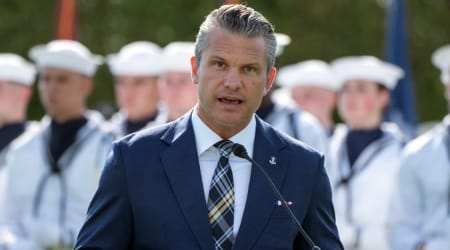
WASHINGTON, DC: Defense Secretary Pete Hegseth used a D-Day anniversary speech in Normandy to warn that Europe faces a new kind of “invasion” from arriving migrants, warning that the freedom won by Allied troops could prove temporary if leaders failed to defend it.
His remarks injected a modern political fight into one of the West’s most symbolic wartime commemorations. They also underscored how Trump administration officials are increasingly tying migration concerns to broader national security messaging.
Pete Hegseth links migration to D-Day legacy
Speaking at the Normandy American Cemetery during ceremonies marking the 82nd anniversary of the June 6, 1944, landings, the defense secretary argued that the freedoms secured by Allied troops must still be defended today.
Hegseth told attendees that “different European beaches are stormed by different dangerous ideologies”.

He then pointed to migration routes across Southern Europe.
“Beaches in Spain and Italy and Greece and Bulgaria. Boats and men arrive,” Hegseth said.
The defense secretary followed with his most provocative line of the speech, asking, “When will European capitals do something about that invasion?”
“Or is it too late?” he continued. “I pray not, and I believe not.”
Hegseth did not explicitly use the word immigration elsewhere in his remarks, but he repeatedly framed the issue as a challenge tied to the future security and identity of European nations.
Trump officials sharpen migration security message
The comments echoed broader themes that have become increasingly prominent within the Trump administration’s approach to Europe.
Administration officials have frequently criticized European governments over migration policies, border security and what they describe as restrictions on nationalist and far-right voices.
Hegseth’s decision to raise those concerns during a D-Day commemoration placed the migration debate inside one of the most historically significant military anniversaries observed by the United States and its allies.
The remarks came as another Trump administration official faced criticism over comments tied to immigration.
JD Vance's immigration comments draw backlash
On Saturday, British Prime Minister Keir Starmer’s office condemned Vice President JD Vance after he blamed immigration for the killing of 18-year-old British student Henry Nowak in Southampton, according to a New York Post report.
Both Nowak and the person convicted of killing him were British, prompting a sharp response from Starmer’s office.
The administration’s concerns about Europe’s future have also appeared in official policy documents. In December, the Trump administration’s national security strategy warned that Europe faced the “prospect of civilizational erasure” and could become “unrecognizable” within 20 years.
Hegseth’s Normandy speech now adds another high-profile example of administration officials folding migration concerns into historical and national security narratives, a message likely to draw continued scrutiny as debates over borders and immigration remain central political flashpoints across Europe and the United States.