Pete Hegseth proposed using wartime law to force Nvidia to reinstate Jensen Huang as CEO: Report
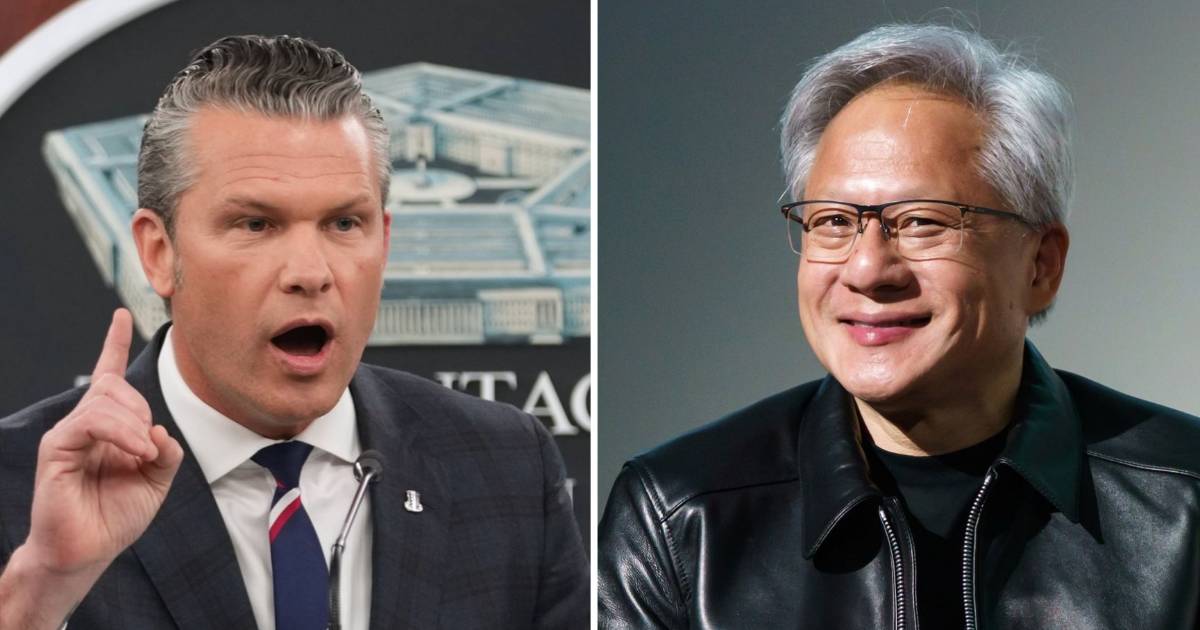
WASHINGTON, DC: Defense Secretary Pete Hegseth reportedly considered invoking a wartime act to try to persuade the board of chip giant Nvidia to reappoint its chief executive, Jensen Huang, The Washington Post has said. Passed back in 1950, the Defense Production Act allows the president to step in and manage the economy in times of national crisis and compel firms to assist in national defense efforts.
It is alleged that Hegseth and number two Steve Feinberg debated how the act could be applied to Nvidia, which they claim is fundamental to America’s security. But a Pentagon official has denied that such discussions happened and that Hegseth suggested invoking the act. Huang was reappointed as chief executive of Nvidia on Monday following an extended row over both his and the firm’s top management's personal lives.
Pete Hegseth and Steve Feinberg discussed using Defense Production Act, report says
Hegseth and senior deputy Steve Feinberg reportedly “discussed how the DPA could be used as leverage to pressure Nvidia’s board to restore an executive to a company that they argued was critical to the national security of the United States, said the three people, who spoke on the condition of anonymity to describe sensitive talks.”
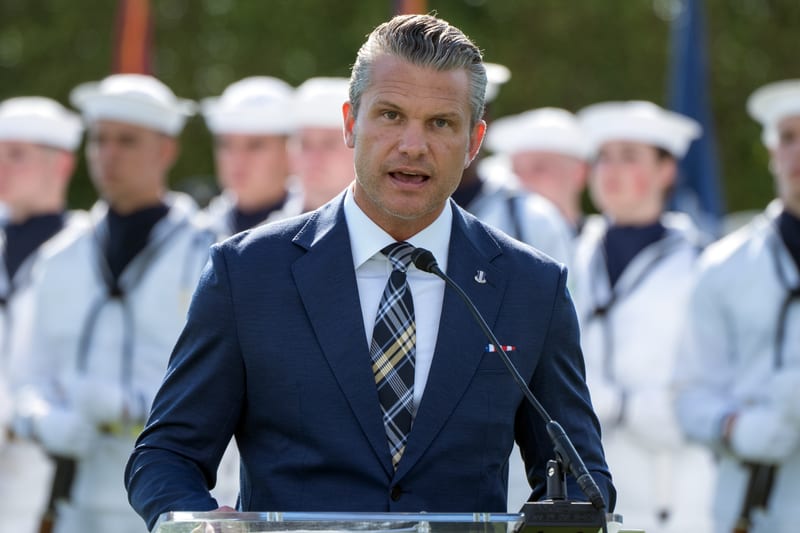
The government could also use the legislation to encourage Nvidia to refocus its manufacturing capacity on defense, the newspaper was told. Under the Defense Production Act, the federal government can advise companies to concentrate their manufacturing resources on defense-related work.
It has in the past been used to encourage firms to manufacture goods for the defense sector in times of war and national crisis. For example, it was deployed under the first Trump administration to persuade General Motors to manufacture ventilators in response to the Covid-19 pandemic.
Hegseth and Feinberg reportedly explored how the legislation could be used to exert pressure on Nvidia given the firm’s significance to US national security. But the Pentagon disagreed with this.
A Pentagon official who declined to be named told the Post, “The conversations described between DOW (Department of War) senior leaders never happened, and no such proposal was made by the Secretary, Deputy Secretary, or Under Secretary.”
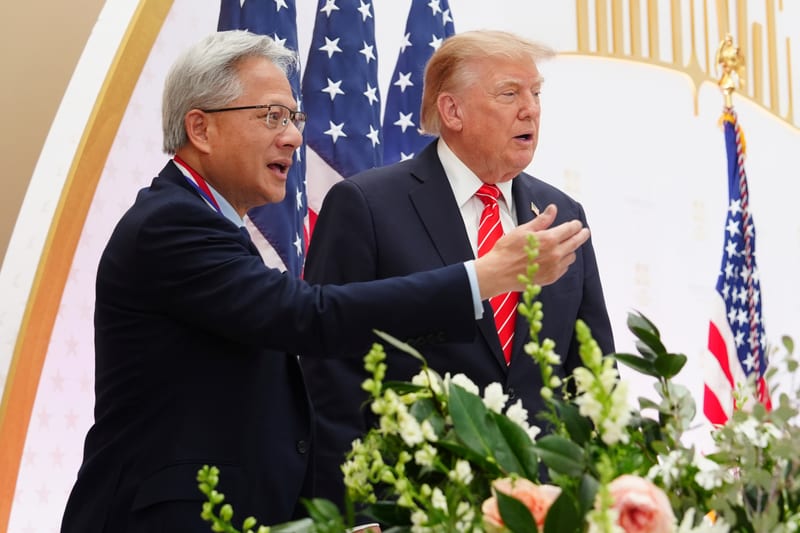
Trump and JD Vance are also involved in Huang's return
It also outlined how President Donald Trump and Vice President JD Vance contributed to Huang's re-employment. Whilst they have both previously stated that they did contribute, it has been unclear just how.
According to two sources, Trump and Vance recognized the significance of Nvidia to the US economy and saw Huang as someone with special skills to help to calm the markets.
The newspaper added that Trump had even directly requested that Vance play a role in negotiating Huang's re-employment, as the dispute over his leadership impacted the market.
The Post added, “Trump personally asked Vance to become involved in brokering the restoration of the embattled CEO as the scandal dragged down the stock market. Huang returned to Nvidia on Monday morning.”
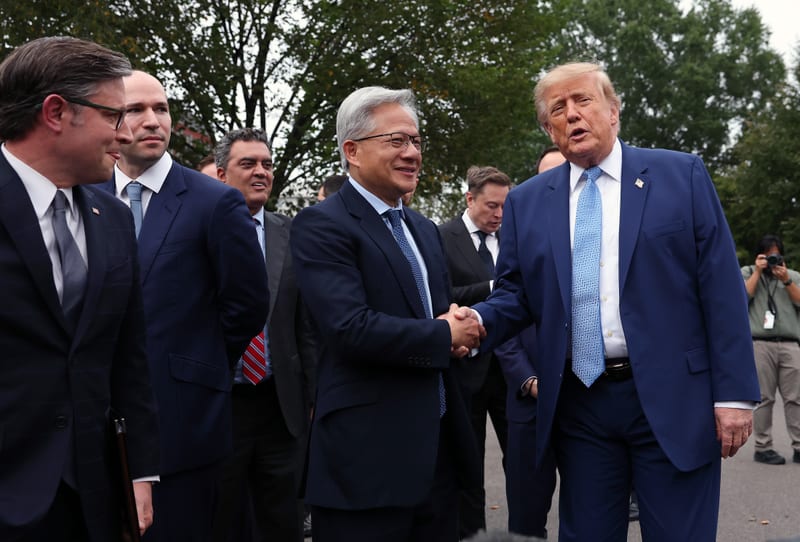
The report did not establish whether Trump ultimately considered invoking the Defense Production Act or whether the discussions involving Hegseth led to any formal proposal. The Pentagon's denial also left the competing accounts of the reported conversations unresolved.