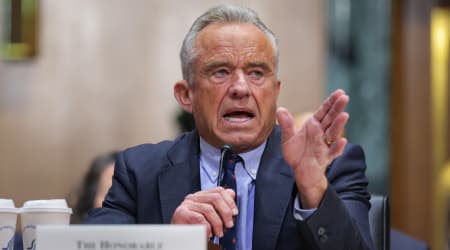
RFK Jr accuses NYT of publishing ‘hit piece’, rejects claims he’s detached from HHS
Sheryl. Your article exemplifies the biased reporting we have come to expect from you and @nytimes. It was unfair, inimical, and inaccurate. All one needs to refute your argument is to glance at my publicly available calendar and to review my unprecedented list of accomplishments… https://t.co/IhD2qDRCo7
— Secretary Kennedy (@SecKennedy) June 10, 2026
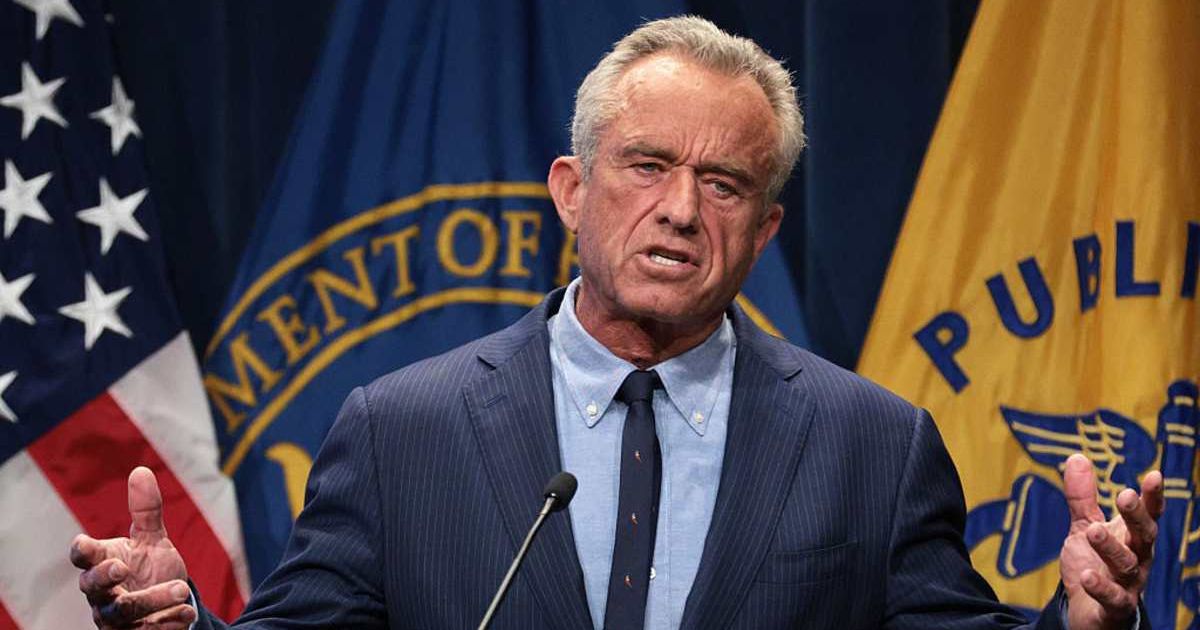
WASHINGTON, DC: Health and Human Services (HHS) Secretary Robert F Kennedy Jr publicly challenged a New York Times report that questioned his engagement as the department’s leader, calling it a politically driven “hit piece.”
His response turned scrutiny over his management into a direct credibility fight with the newspaper. The dispute centers on whether RFK Jr has remained actively involved in leading HHS during major public health challenges.

RFK Jr rejects NYT's claims about his leadership
RFK Jr fired back after the New York Times published an article titled “Kennedy Shows Minimal Engagement With Vast Health Portfolio,” written by correspondent Sheryl Gay Stolberg, which claimed that he had "shown little interest" in managing the department’s day-to-day operations and instead focused on issues such as food recommendations, pesticide exposure, and his long-held concerns about vaccines.
The report focused heavily on the 72-year-old's handling of the Ebola outbreak in Africa, which at least six Americans have been exposed to, and cited multiple colleagues who said he was primarily focused on personal priorities rather than broader departmental management.
The article also described RFK Jr as “deeply mistrustful” of career civil servants and reported that many senior positions remained vacant while veteran scientists and health experts had departed.
It further noted that he had made one known visit to the Centers for Disease Control and Prevention headquarters, a trip that occurred after a gunman opened fire at the facility and killed a police officer.
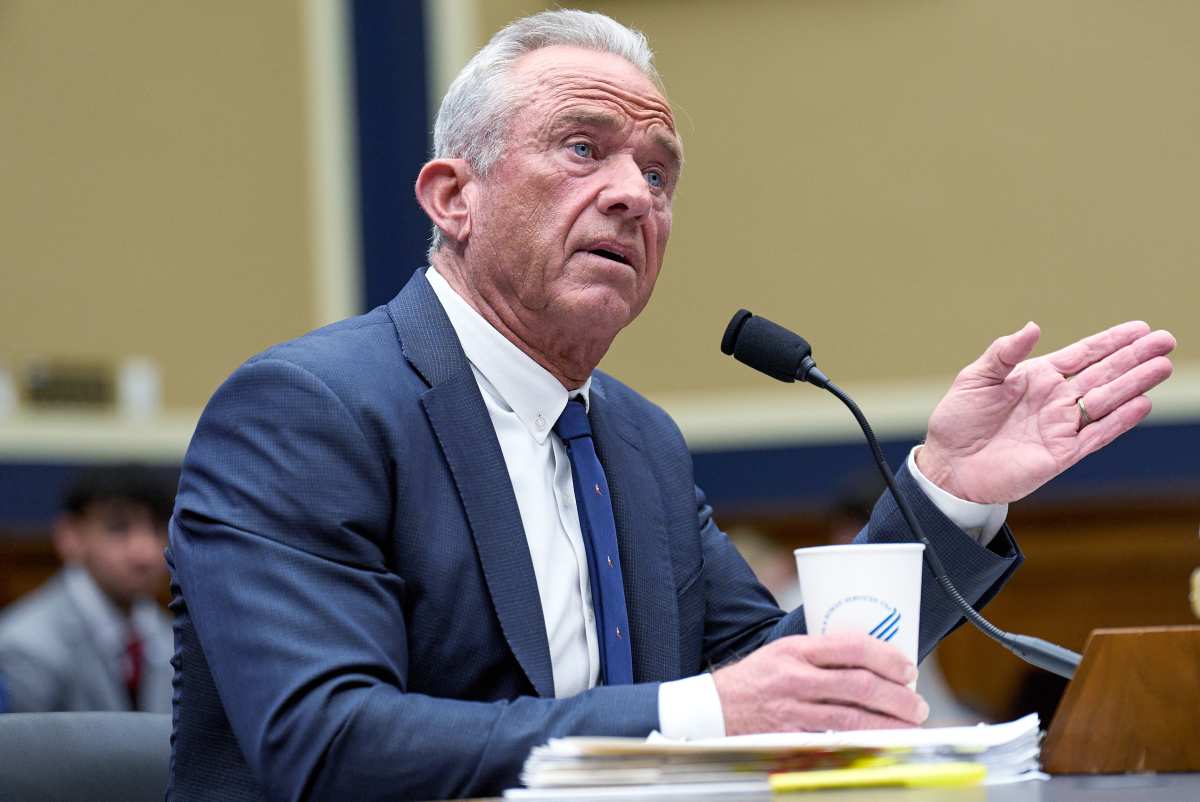
 Robert F Kennedy Jr testifies before the House Energy and Commerce Committee Health Subcommittee in the Rayburn House Office Building on June 24, 2025, in Washington, DC (Kayla Bartkowski/Getty Images)
RFK Jr rejected those claims outright, framing the reporting as "unfair, inimical, and inaccurate," and accusing the journalist of cherry-picking "facts" to "flesh out a preordained hit piece."
He wrote on X (formerly Twitter) that all anyone needs to refute the reporter's argument is to "glance at my publicly available calendar and to review my unprecedented list of accomplishments on a wide range of issues, all of which I drove."
"Had you read my calendar, you would have seen that I have back-to-back meetings all day, every day, with both career and political staff, with my counselors and with outside stakeholders, interspersed with press conferences and other policy announcements," the HHS secretary vouched, before stressing, "I am knowledgeable and active on every issue in every division of my department, and I always make the final decisions."
“In order to prove your preconceived case for my disengagement, you quote anonymous employees, some of whom I fired or who quit to avoid being fired,” RFK Jr fumed.
He also accused the newspaper of building a narrative first and then seeking evidence to support it. “You had a preconceived thesis, and you set out to prove it,” RFK Jr added. “This is a widely accepted technique in journalism today, but I grew up in an era when it would not have been tolerated by the New York Times.”
RFK Jr accuses NYT of employing 'propagandists'
RFK Jr argued that the newspaper ignored reforms he says he implemented after taking office.
“When I took this job, the building was empty. About 90% of the employees were not coming to work. I changed that, but your newspaper never covers my reforms,” he wrote.
He also contrasted his attendance record with that of his predecessor, saying, “Nor did you cover the fact that my predecessor almost never showed up for work here during his four years in office.”
The HHS secretary reserved some of his strongest criticism for the paper’s use of unnamed sources.
“There was a time that journalists were proud to be the fearless and uncompromising champions of truth. Standards have devolved, and journalism is dead. The Times now employs propagandists,” he wrote, adding that the publication’s limited access to decision-makers had left reporters “covering trivia and relying on your own capacity for invention”.
The Times pushed back on his accusations, saying he declined an interview request and did not respond to detailed questions before publication.
A spokesperson said the report was based on conversations with a dozen people who worked directly with Kennedy during his tenure and added, “We are confident in our reporting.”