Trump blasts Chicago bloodshed, asks why Pritzker won't seek his help: 'I could fix it in one month'
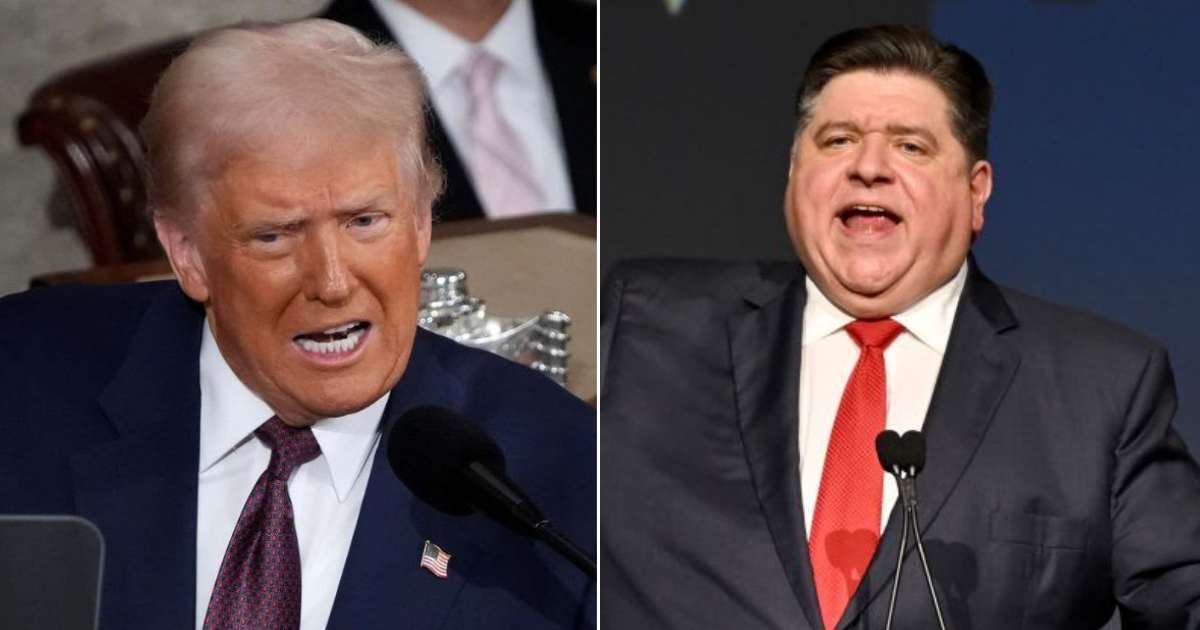
WASHINGTON, DC: President Donald J Trump has launched a fierce law-and-order offensive against Illinois Governor JB Pritzker, seizing on an exceptionally violent summer weekend in Chicago to demand total authority over municipal law enforcement.
Writing on Truth Social on Sunday, June 21, Trump highlighted a sudden spike in gun violence that left at least 22 people shot and four dead, aggressively offering to deploy federal resources to unilaterally stabilize the third-largest city in the United States within a matter of weeks.
The provocative intervention forcefully thrusts the White House back into the center of the metropolitan policing debate, directly challenging the state's Democratic establishment while positioning a highly muscular domestic platform as the only viable solution to regional public safety crises.
The escalation unfolded immediately following an expansive drive-by mass shooting in the South Side neighborhood of Princeton Park, where gunmen in a red SUV opened fire on a crowd gathered for Juneteenth commemorations.
Trump capitalized on the operational shock to argue that state executives are deliberately neglecting critical safety metrics, asserting his executive directives could systematically reverse systemic inner-city crime trends that local authorities have failed to contain for generations.
Executive challenges state leadership over public safety
At least 12 people were shot when an SUV pulled up to a crowd on a Chicago street and two occupants opened fire, according to police. pic.twitter.com/t4mAxRbg5s
— Breaking911 (@Breaking911) June 21, 2026
"Lots of Killing going on in Chicago. 22 people shot, at least 4 Dead," Trump posted, directly targeting Pritzker's administrative refusal to request federal tactical support.
The president expressed open disbelief that local officials are continuing to resist White House help amid persistent municipal bloodletting.
Trump boldly boasted that under his personal management, federal law enforcement could make Chicago a safe city in just one month.
He expanded the projection by declaring that within one year, the historically scrutinized metropolis would be fully transformed into one of the safest municipal environments in the country.
Capital city transformation cited as operational model

To validate his aggressive law-and-order platform, Trump pointed directly to recent shifts in the federal district, claiming that Washington, DC, went from one of the worst cities to one of the safest under his administration's direct policing oversight.
He argued that the rapid reversal proves that traditional, hardline accountability policies work more effectively than the progressive reforms favored by municipal leadership.
The bold intervention has drawn an immediate, furious response from civil rights groups and regional advocates, who accuse the White House of using local civilian tragedies to fuel partisan campaign narratives.
However, as local detectives continue to hunt for the mass shooting suspects with zero arrests made, Trump’s willingness to bypass state authority highlights an intensifying federal push to override local commands ahead of the critical summer cycles.