Trump says he 'may be crying' if Democrats retake power and make Puerto Rico and DC states
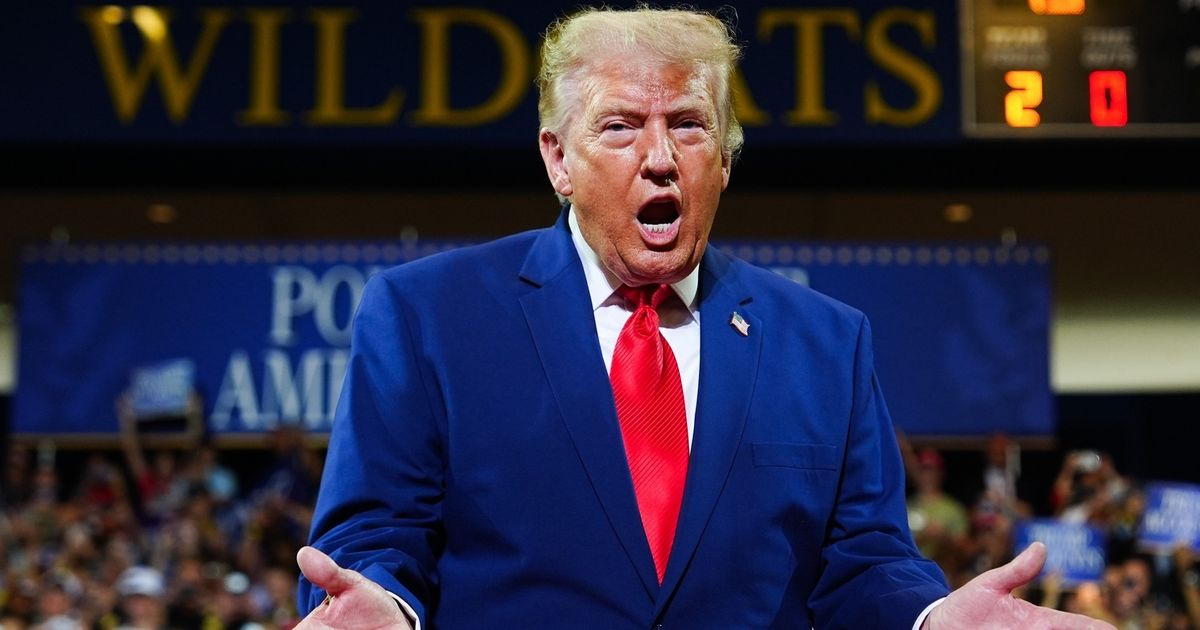
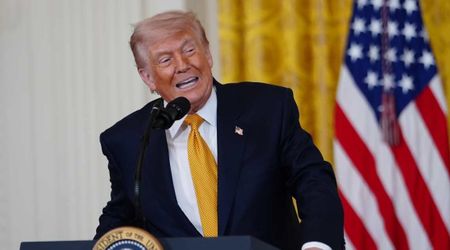
MARIETTA, GEORGIA: President Donald Trump said he "may be crying" if Democrats regain power, eliminate the Senate filibuster and admit Puerto Rico and Washington, DC, as states, arguing the moves would permanently shift the political balance in the United States.
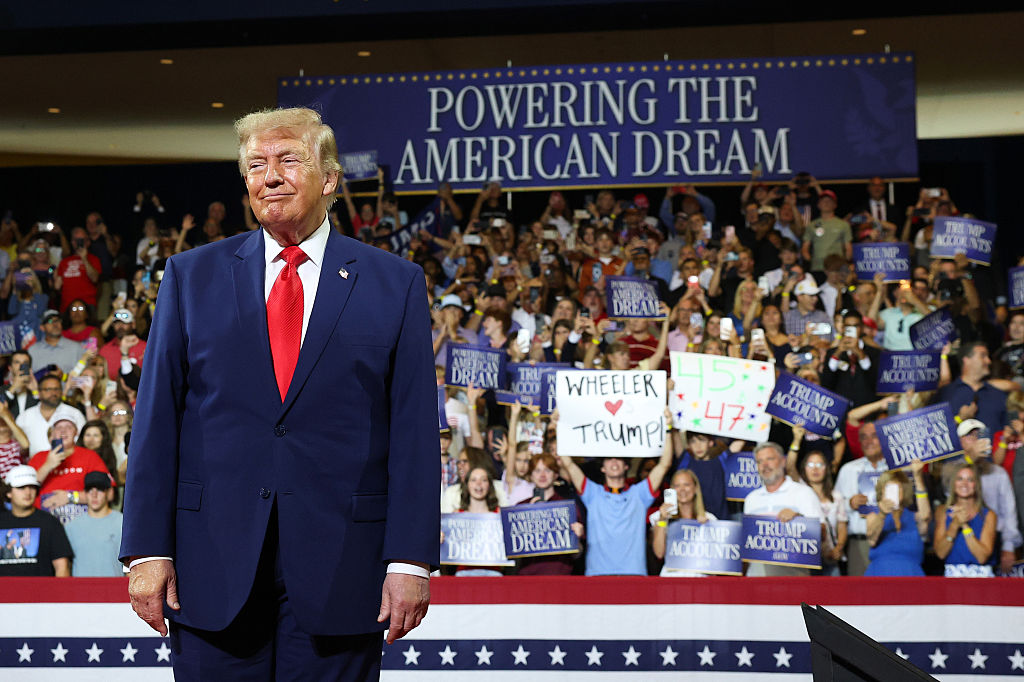
Speaking at a rally in Marietta, Georgia, on Wednesday, July 22, Trump tied the warning to his continued push for the SAVE America Act, which would require proof of citizenship to register to vote and mandate photo identification for voting. The legislation has passed the House but remains stalled in the Senate.
Trump links Puerto Rico and DC statehood to the SAVE America Act
Addressing supporters, Trump argued that failing to enact the SAVE America Act could allow Democrats to regain congressional control and make changes to Senate rules that would ease the passage of future legislation.
"They should terminate the filibuster and approve everything because the Democrats are going to do it! The Democrats are gonna terminate the filibuster as soon as they have a chance. And then they're gonna approve Puerto Rico and DC as a state. They got four more senators. They're gonna end up with 12 more congressmen. They're gonna get, like, 40 electoral votes," Trump said.
Trump says he will cry if Puerto Rico and DC become states: They should terminate the filibuster and approve everything because the Democrats are going to do it as soon as they have a chance, and then they are going to approve Puerto Rico and D.C. as a state. They have got four… pic.twitter.com/xOglMIFMlL
— Acyn (@Acyn) July 22, 2026
He then suggested he would look back on the moment with regret if those events were to occur. "If they are allowed to do that, by that time, I'll be sitting home, and I'm not a big crier. I don't think you want to see me cry, you know? There are some people they do very well when they cry, but you don't want to see me cry. But I may be crying."
Trump also encouraged supporters to contact Senate Majority Leader John Thune. "They should terminate the filibuster," Trump said. "Everybody call John Thune at the Senate. He's the leader of the Republican Party, and tell him to get this stuff approved."
House advances SAVE America Act as Trump renews Senate push
Trump's latest appeal comes as House Republicans continue efforts to advance the SAVE America Act through Congress.
Earlier this week, the president thanked Speaker Mike Johnson, House Budget Committee Chairman Jodey Arrington and several Republican lawmakers for working to include as much of the SAVE America Act as possible in upcoming legislation.
"We need Voter Photo ID (Identification!), Proof of Citizenship and, hopefully, No Corrupt Mail In Ballots (except for illness, disability, Military, or travel)," Trump wrote on social media. "House Republicans must UNIFY, and fight for THE SAVE AMERICA ACT."
BREAKING: President on Truth Social: “Thank you to our Great Speaker, Mike Johnson, the House Budget Chairman, Jodey Arrington, and the members of the House Budget Committee, including Lloyd Smucker, Ron Estes, Andrew Clyde, Josh Brecheen, Erin Houchin, Mike Carey, Blake Moore,… pic.twitter.com/thkc19kMKH
— RedWave Press (@RedWavePress) July 20, 2026
On Wednesday, the House narrowly approved the nearly $1.15 trillion National Defense Authorization Act (NDAA) in a 216-212 vote. Before sending the legislation to the Senate, lawmakers attached the SAVE America Act through a legislative process known as MIRVing.
🚨 JUST IN: The US House has just PASSED the National Defense Authorization Act (NDAA) — with the SAVE AMERICA ACT ATTACHED — sending it to the Senate before it heads to President Trump's desk
— Eric Daugherty (@EricLDaugh) July 22, 2026
Final vote: 216-212
7 Republican NAYs, while 6 Democrats voted YEA pic.twitter.com/LrNfKVGBZL
Trump has repeatedly described the SAVE America Act as one of his top legislative priorities, continuing to advocate for the measure following recent legal and legislative setbacks. The legislation now faces an uncertain path in the Senate, where it would require bipartisan support to overcome the chamber's 60-vote threshold.