Trump touts 'Operation Midnight Hammer' success, pushes back on media skepticism
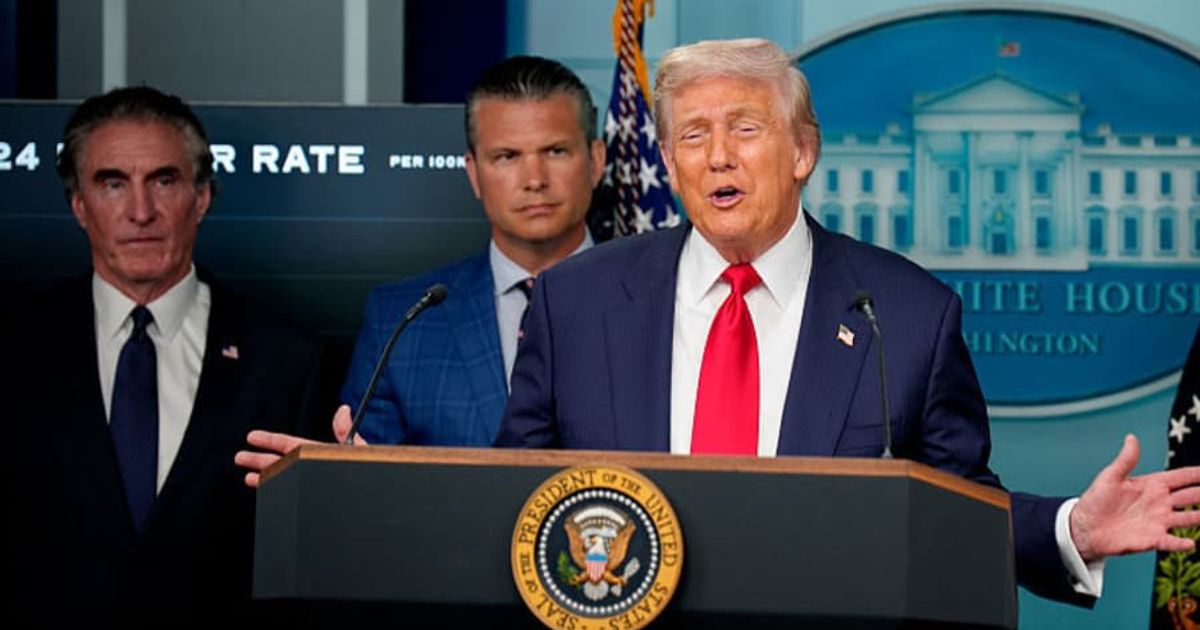
WASHINGTON, DC: President Donald J. Trump on Tuesday, April 21, defended the June 22, 2025, “Operation Midnight Hammer” airstrikes, stating that three key Iranian nuclear facilities remain inaccessible and under continuous US monitoring.
In a Truth Social post, the President said the US Space Force is tracking activity at Fordow, Natanz, and Isfahan, where weapon-grade material is believed to remain buried following the strikes.
The operation involved seven B-2 Spirit stealth bombers deploying 14 GBU-57 Massive Ordnance Penetrator (MOP) bunker-buster bombs on the three sites.
Trump said the facilities were “brilliantly hit,” adding that Iran has been unable to “get to it, or dig it out,” referring to enriched material he has repeatedly described as “Nuclear Dust,” now buried under extensive layers of rock and reinforced concrete.
The remarks come as the administration continues to defend the outcomes of the operation during the ongoing 60-day conflict timeline.
President lashes out at ‘low IQ’ critics
In the same statement, Trump sharply criticized Democratic leaders and sections of the media over their assessment of the strikes.
He referred to House Minority Leader Hakeem Jeffries as a “low-IQ person” and criticized Senate Minority Leader Chuck Schumer, accusing them of attempting to “demean or criticize” the military’s actions.

The President also targeted major media outlets, including The Wall Street Journal, The New York Times, and CBS’s 60 Minutes, alleging that coverage has not reflected what he described as the scale of the military outcome.
He argued that the strikes had significantly disrupted Iran’s nuclear capabilities.
Democratic lawmakers have raised concerns about the intelligence basis for the operation and its long-term effectiveness, particularly as the conflict approaches the 60-day threshold under the War Powers framework.

Space Force maintains total orbital surveillance
Trump also stated that the US Space Force is maintaining continuous satellite surveillance over the three sites.
He claimed the monitoring system covers “every inch” of the targeted locations, aimed at detecting any attempt by Iran to access or recover buried material.
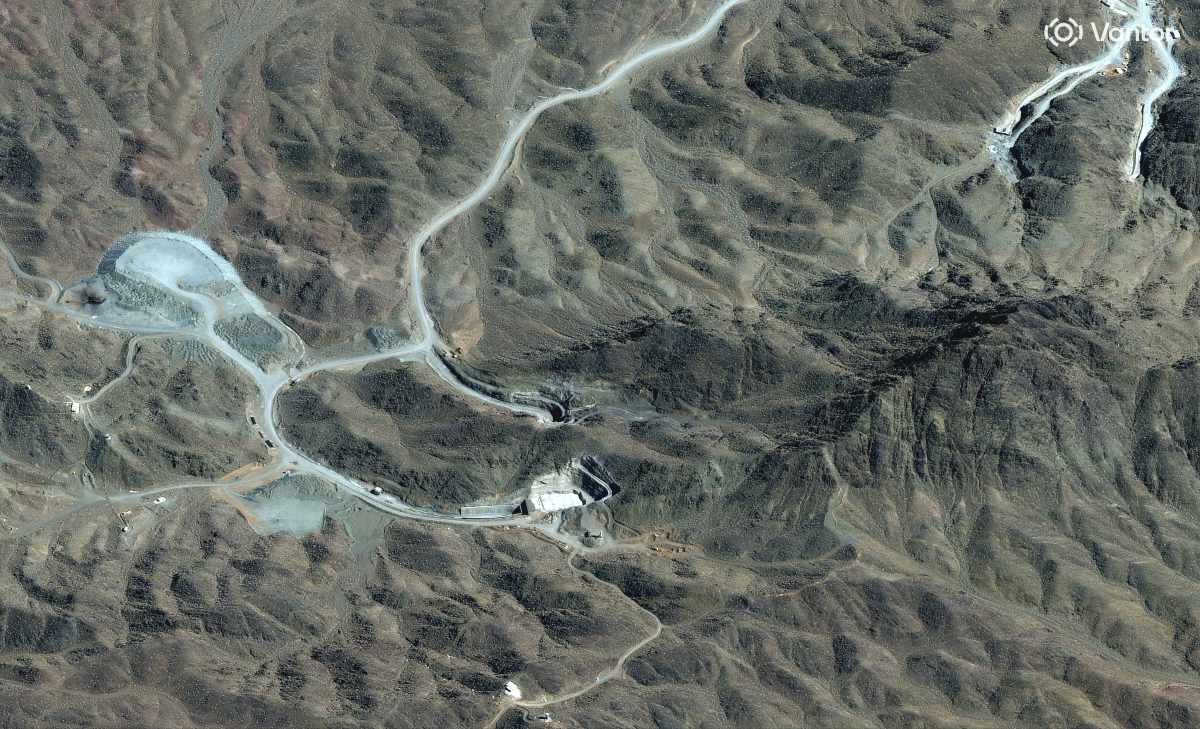
While operational specifics were not disclosed, US officials have previously confirmed that satellite intelligence plays a central role in monitoring nuclear and military infrastructure.
The President’s remarks indicate that surveillance remains active as part of ongoing enforcement and verification efforts.
The administration has pointed to this capability as evidence that any movement involving enriched uranium would be detected in real time.
Nuclear dust remains the ultimate red line

The status of Iran’s enriched uranium stockpile remains a central issue in ongoing negotiations.
Trump reiterated that any agreement must prevent Iran from regaining access to the material located at the struck sites, signaling that this remains a key condition in talks.
Officials have previously referenced approximately 1,000 pounds of enriched uranium as a critical concern.
The President’s comments suggest that control over this material continues to shape the diplomatic framework as negotiations proceed.
With a second round of talks underway in Pakistan, the administration has maintained that both military outcomes and verification mechanisms will determine the path forward.