White House praises ‘more reasonable’ Iranian negotiators following Hormuz tanker test
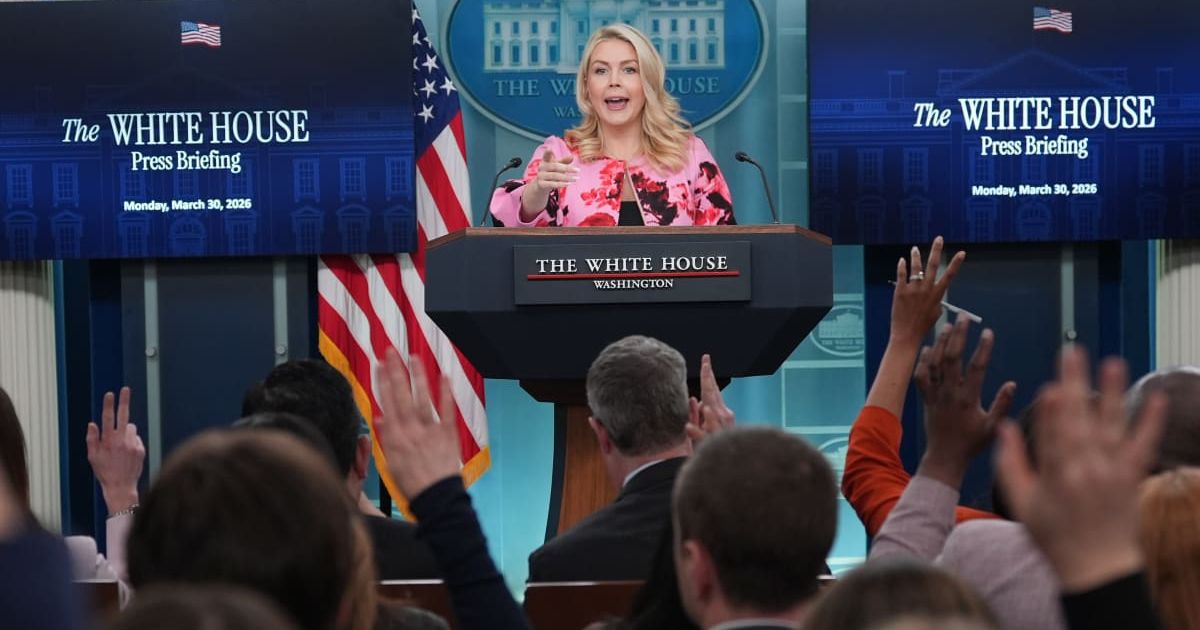
WASHINGTON, DC: White House Press Secretary Karoline Leavitt declared Monday, March 30, that the arrival of a limited shipping corridor in the Strait of Hormuz is direct evidence that President Trump’s ‘maximum pressure’ diplomacy is yielding results.
During a high-stakes briefing, Leavitt confirmed that 10 oil tankers have already transited the strategic waterway, with an additional 20 expected in the coming days, a breakthrough she attributed to "direct and indirect talks" between Washington and Tehran.
The movement through the Strait, which has been severely hampered since the February 28 escalation of "Operation Epic Fury," serves as a critical release valve for global oil prices, which have spiked during the month-long conflict.
However, Leavitt made it clear that the administration remains "opposed" to any Iranian attempts to establish a tolling system or "cherry-pick" which vessels are allowed passage, insisting that the President’s ultimate goal remains a fully open and free international thoroughfare.
Negotiators appearing ‘more reasonable’ behind scenes
In a surprising shift in rhetoric, the White House characterized the current crop of Iranian officials engaged in these shadow negotiations as significantly more pragmatic than their predecessors.
The President has said that the administration is talking to a new and more reasonable regime. How confident are you that they are legitimate and have enough grip on power? - @DashaBurns
— Faytuks Network (@FaytuksNetwork) March 30, 2026
"When the president says more reasonable, these folks are appearing more reasonable behind… pic.twitter.com/bXSpSbID4f
Leavitt noted that these individuals appear "more reasonable behind the scenes" than leaders who are "no longer on planet Earth", a reference to the high-ranking Iranian officials, including the Supreme Leader, killed in the opening salvos of the war.
Despite the reported progress, the administration continues to keep the identities of these negotiators secret.
President Trump has claimed that negotiations are "progressing well," but neither he nor his team has specified who they are communicating with.
Leavitt emphasized that this is a "historic opportunity" for these new leaders to rid themselves of nuclear ambitions and align with Trump’s terms.
Accountability ‘tested’ as military remains ready
Reporter: If the President does seek or the United States seeks a ground war, does he intend to get congressional authorisation of that march?
— Viory Video (@vioryvideo) March 30, 2026
Leavitt: The President obviously declined to rule them out. It's the Pentagon's job to provide maximum optionality to the president. pic.twitter.com/4HofRsTnA1
The White House warned that any commitments made by these "reasonable" Iranian figures will be rigorously "tested" to ensure compliance. Leavitt issued a stark ultimatum: if it becomes clear that Tehran is unwilling to reach a diplomatic resolution on the President's terms, the US military will not hesitate to act.
She explicitly stated that the military would "seek to kill them" if negotiations were found to be a stalling tactic.
This hardline posture comes as the Pentagon considers a $200 billion supplemental funding request and the deployment of 10,000 additional ground troops to provide "maximum optionality."
The administration’s message is singular: Iran must choose between a negotiated settlement that dismantles its nuclear work or facing the "grave consequences" of the United States Armed Forces.
Tanker movement as a sign of compliance
.@PressSec: "The President has always said that diplomacy is his number one option and priority ... So if there’s ever a chance for a deal, the president is open to listening, but it does not deter him from focusing on the military objectives that he set out 30 days ago." pic.twitter.com/allI25VZtL
— Trump War Room (@TrumpWarRoom) March 30, 2026
The 30-tanker surge is being viewed by the White House as a preliminary "test of compliance" for the new Iranian leadership. Leavitt asserted that these ships would not be moving "if not for the president’s diplomacy and his team engaging on this matter."
The administration expects this compliance to move forward as they pressure Iran to relinquish its nearly 1,000 pounds of enriched uranium as a condition for ending the war.
While intermediaries from Pakistan, Turkey, and Egypt continue to facilitate these exchanges, the limited transit of oil remains the only public sign of a potential de-escalation.
For the White House, the focus remains on the April 6 deadline for the destruction of Iran's energy plants, a timeline that serves as the ultimate backdrop for these "reasonable" private conversations.