CBS host corners Trump official with poll showing Americans aren't buying Iran deal
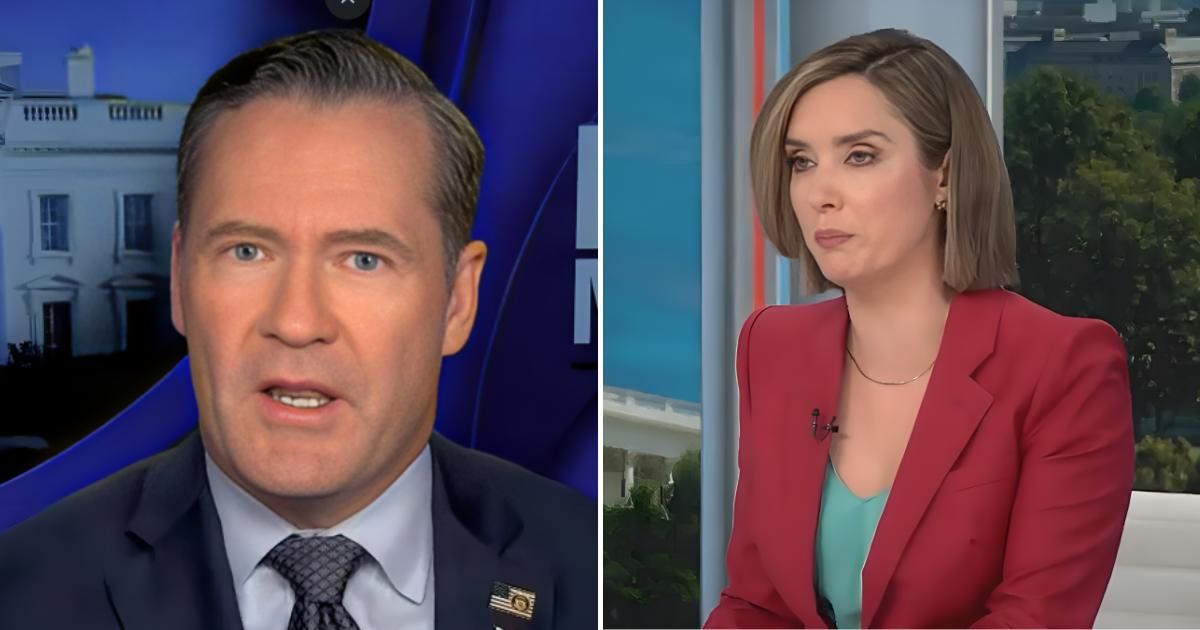
WASHINGTON, D.C.: CBS anchor Margaret Brennan has forcefully put the Trump administration on the defensive, confronting United Nations Ambassador Mike Waltz with damning network poll data that reveals an American public deeply unconvinced by the White House's West Asia victory narrative.
Appearing Sunday on Face the Nation, Waltz struggled to salvage the political messaging surrounding the unreleased 14-point memorandum of understanding (MOU) as high-stakes bilateral talks got underway at the Bürgenstock ski resort in Switzerland.
Brennan: Our CBS news poll out this morning shows that more than three-quarters of Americans want to end the conflict now, with 69% saying the conflict with Iran was not worth the costs. More than half say the president's war with Iran created more problems than it solved. pic.twitter.com/IoctzlfVjI
— Acyn (@Acyn) June 21, 2026
The televised confrontation highlights an intensifying domestic battle for the administration, which is racing to sell its preliminary 60-day bridge framework to an increasingly fatigued electorate. The conflict, sparked by intensive aerial bombardment campaigns in late February, has inflicted significant economic friction across the United States.
Brennan utilized the fresh dataset to systematically dismantle the executive branch's messaging strategy, emphasizing that widespread public exhaustion and mounting institutional distrust within the president's own national security cabinet are rapidly outstripping the administration's defensive talking points.
Voters reject executive Middle East victory claims
"Our CBS News poll out this morning shows that more than three-quarters of Americans want to end the conflict now," Brennan stated, revealing that a staggering 78% of the public demands an immediate halt to hostilities. She added that 69% believe the war was simply not worth the costs, while 57% maintain the intervention created more problems than it solved.
BRENNAN: The war is unpopular, as you just heard. And if even the president's own team doubts this is a win, how do you sell this to the public?
— Aaron Rupar (@atrupar) June 21, 2026
MIKE WALTZ: I'll go back to other polling that shows the American people absolutely agree with President Trump that Iran can never… pic.twitter.com/3oudeUzTU8
Brennan pressed Waltz on why the administration is celebrating an agreement that two-thirds of Americans view merely as a hasty escape hatch rather than a decisive triumph.
She further cornered the ambassador with intelligence leaks showing that Secretary of State Marco Rubio and the CIA harbor profound doubts regarding Tehran's authentic intent to honor its non-proliferation commitments, asking: "If even the president’s own team doubts this is a win, how do you sell this to the public?"
Envoy points to falling domestic fuel metrics
Waltz aggressively pushed back by attempting to pivot the conversation toward economic stabilization metrics and core national security imperatives. He argued that alternative polling demonstrates absolute public alignment with Trump's foundational mandate that the Islamic Republic can never be permitted to develop an active nuclear device.
.@USAmbUN: Just a few months ago, analysts said oil would be upwards of $150-$200 a barrel, and it is now under $80. Everyone wants cheaper energy. What @POTUS is doing is striking that balance with ensuring that a genocidal regime can never have a nuclear weapon. pic.twitter.com/dYx2jiZyng
— Rapid Response 47 (@RapidResponse47) June 21, 2026
"We’ll remember just a few months ago when analysts were saying oil would be upwards of $150 to $200 a barrel. And it is not – it’s now under $80," Waltz insisted, highlighting that regular gasoline prices have successfully fallen below the $4 threshold.
He maintained that Trump has struck a vital balance between achieving energy normalization and initiating a strict verification process, which Vice President JD Vance is currently anchoring alongside envoys Jared Kushner and Steve Witkoff during high-level trilateral sessions with Pakistani and Qatari mediators.