‘Don’t know what that sentence means’: Lawmaker puzzled by Trump’s Abraham Accords plan for Iran
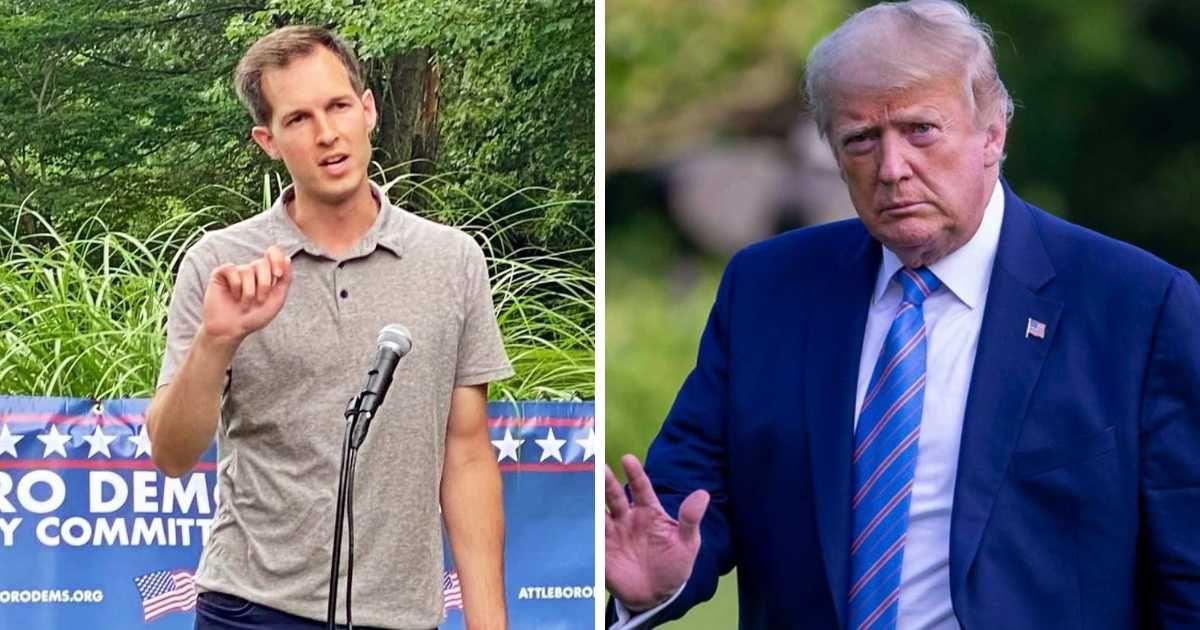
WASHINGTON, DC: Rep Jake Auchincloss (D-MA) admitted he was struggling to understand President Donald Trump's demand that multiple Middle Eastern nations join the Abraham Accords as part of ongoing Iran negotiations, saying bluntly, “I don’t know what that sentence means.”
Trump sparked fresh confusion after posting on Truth Social that countries including Saudi Arabia, Qatar, Pakistan, Turkey, Egypt and Jordan should “simultaneously” sign onto the Abraham Accords as part of any settlement tied to Iran. Pakistan reportedly rejected the proposal within hours, while several other nations stayed silent.
Trump proposal sparks confusion
During an interview on CNN, the confusion became the story itself when anchor Boris Sanchez pressed Auchincloss on whether Trump’s idea was “actually realistic” or merely “a distraction.”
“I support the Abraham Accords,” the Massachusetts Democrat responded. “I think the Abraham Accords were a credible achievement of the first Trump administration. And I don’t know what that sentence means, though.”
Trump’s Truth Social post framed the proposal as a sweeping regional reset tied directly to Iran negotiations. “It should be mandatory that all of these Countries, at a minimum, simultaneously, sign onto the Abraham Accords,” Trump wrote, adding that such a settlement could become “a far more Historic Event than it would, otherwise, be.”

The original Abraham Accords, brokered during Trump’s first term in 2020, normalized relations between Israel and countries including Bahrain and the United Arab Emirates. Morocco and Sudan later joined the framework.
But Auchincloss argued Trump was blending together diplomatic tracks that do not naturally fit together.
“The challenge with the Abraham Accords expansion is not that these countries share an aversion to Iran,” he said. “They always have.”
Saudi Arabia remains sticking point
Auchincloss pointed instead to the unresolved Palestinian issue and ongoing violence tied to the West Bank and Gaza conflict as the central obstacle blocking further normalization.
“The challenge with the Abraham Accords has been getting Saudi Arabia on board, given challenges in the West Bank and ongoing attacks against Israel and its right to defend itself,” he said.
He added, “So, the Abraham Accords expansion runs through resolving West Bank issues, not on trying to foment further aversion to Iran, which has always been there.”
That distinction has become increasingly important as Trump attempts to link Iran containment, Arab-Israeli normalization and broader regional diplomacy into one negotiating framework.
The tensions surrounding the Gaza war have further complicated the politics. As per the source, Saudi Arabia has repeatedly indicated that recognition of Israel would require a “credible, binding commitment” toward Palestinian statehood, while countries like Qatar and Turkey remain politically distant from Israeli Prime Minister Benjamin Netanyahu’s government.
Ali Vaez, Iran Project Director at the International Crisis Group, criticized the broader diplomatic logic behind Trump’s proposal, saying, “Trump is trying to sell an Iran deal as an Abraham Accords sequel: good for Israel, good for the region, tough enough for Washington. But he is trading one fantasy for another.”
The disconnect between Trump’s sweeping regional ambitions and the practical realities facing Middle Eastern governments appeared to fuel Auchincloss’ bewildered reaction — a moment that quickly underscored how difficult Trump’s proposal may be to translate into actual diplomacy.