Doomsday alert US E-4B ‘Nightwatch’ circles Strategic Command as Iran strike deadline hits zero
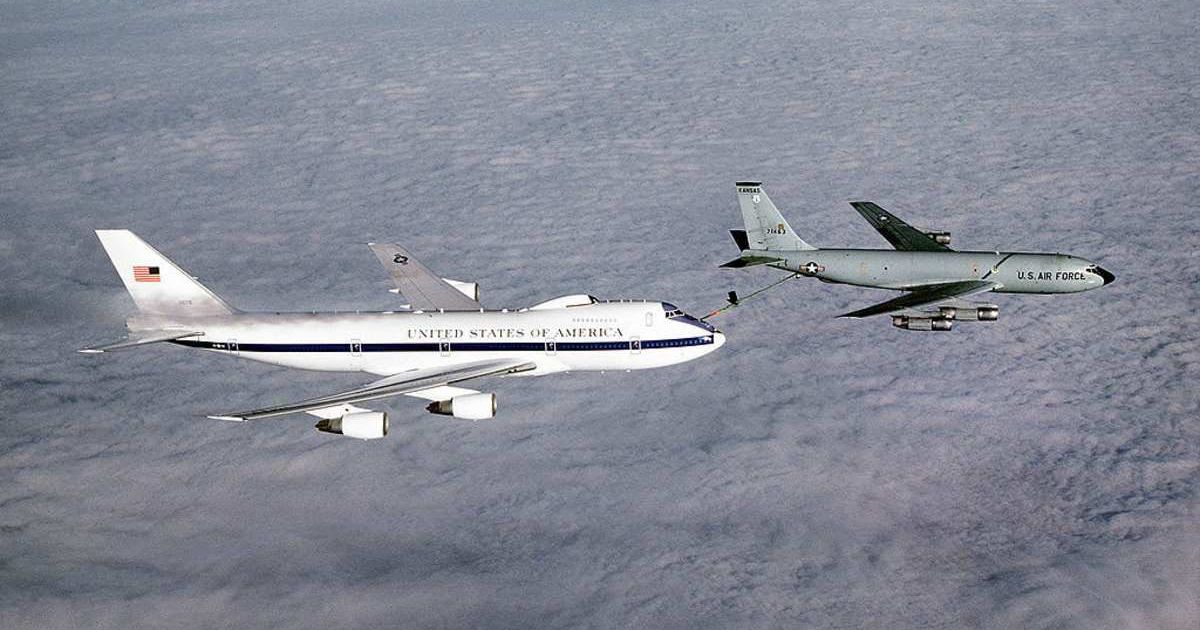
OFFUTT AIR FORCE BASE, NEB: A key US Air Force command-and-control aircraft, the E-4B “Nightwatch,” was tracked flying over the central United States on Monday, April 6, hours before President Donald Trump’s deadline for Iran to reopen the Strait of Hormuz.
The aircraft’s movement drew attention due to its role in national emergency operations and its timing amid heightened tensions between Washington and Tehran.
Flight tracking data showed the Boeing E-4B departing from Offutt Air Force Base, home to US Strategic Command, at approximately 10:17 am EST.
The aircraft conducted multiple loops over the region before returning to base. The US maintains a fleet of four E-4B aircraft, which are periodically flown as part of readiness and training missions.
However, the timing of this flight coincides with a critical phase in the ongoing conflict with Iran.
The flight also comes as the White House weighs next steps following Trump’s public ultimatum tied to reopening the Strait.
US officials have not issued a formal statement linking the aircraft’s movement to any specific operation.
A ‘Flying Pentagon’ for nuclear war
The E-4B Nightwatch is designed to function as an airborne command post for senior US leadership during national emergencies.
Built on a modified Boeing 747 platform, the aircraft is equipped to support the President, Secretary of Defense, and Joint Chiefs of Staff in scenarios where ground-based command centers may be compromised.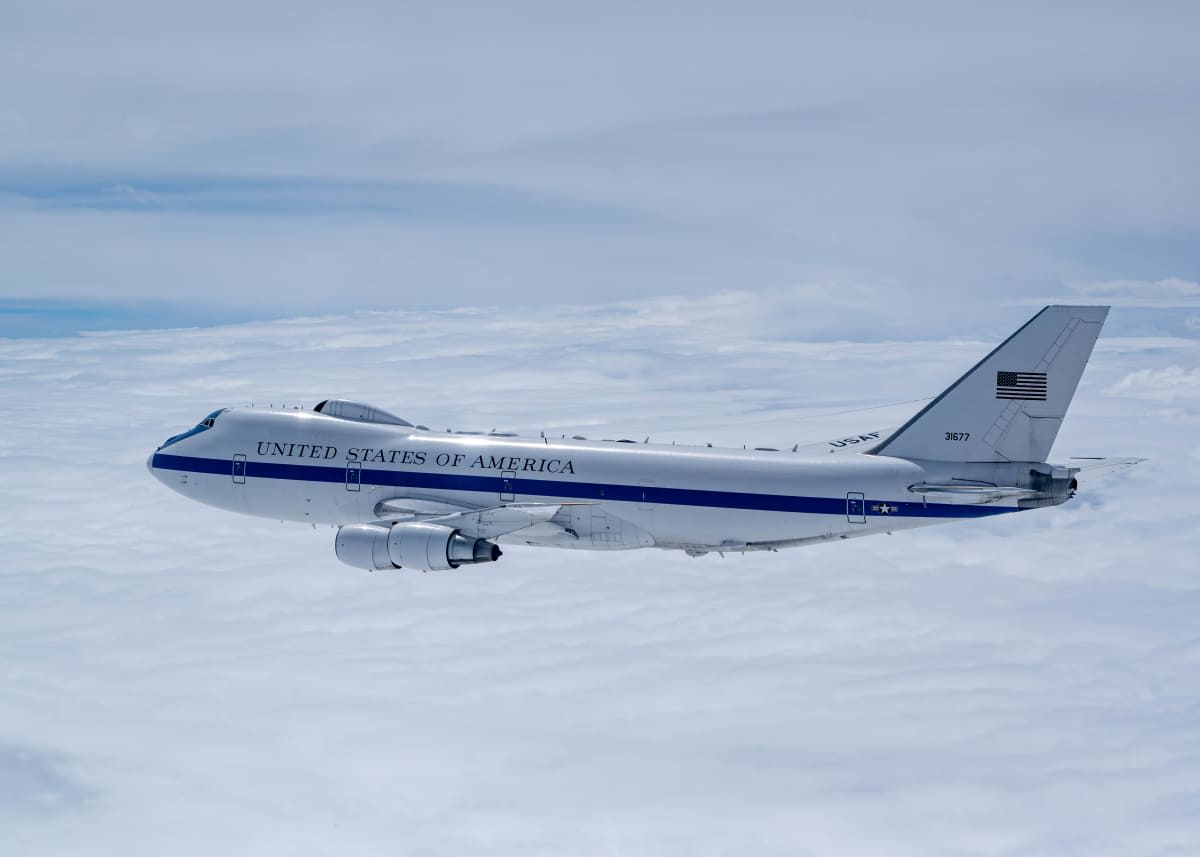
The aircraft includes operational spaces such as briefing rooms, conference facilities, communications centers, and rest areas.
It can remain airborne for extended periods with aerial refueling, allowing continuity of government operations during crises.
Its design includes protection against electromagnetic pulses and other disruptions that could impact communications infrastructure.
This capability enables command and control functions to continue even under severe conditions.
Sixty-seven antennas for global control
A defining feature of the E-4B is its extensive communications suite. The aircraft carries dozens of antennas and satellite systems that enable secure communication with military units and command structures worldwide.

This system allows connectivity across multiple frequencies and platforms, ensuring coordination with nuclear and conventional forces if required. The aircraft’s capabilities are intended to maintain operational command in complex or degraded environments.
The presence of the aircraft in flight on Tuesday has prompted discussion among defense observers, particularly given the ongoing military posture in the Middle East. The US has not indicated any change in nuclear readiness levels.
‘Taken out in one night’ ultimatum
The flight took place as President Trump reiterated his warning to Iran regarding the Strait of Hormuz. Speaking on Monday, he said, “The entire country can be taken out in one night,” while emphasizing that negotiations were still ongoing ahead of the 8:00 PM Tuesday deadline.
U.S. President Donald Trump on Iran:
— Open Source Intel (@Osint613) April 6, 2026
"The entire country can be taken out in one night, and that night might be tomorrow night." pic.twitter.com/xj0n6Xc0si
The administration has stated that reopening the Strait remains a key objective, with diplomatic channels involving regional intermediaries continuing in parallel with military positioning.
US defense officials have not confirmed any direct operational link between the E-4B flight and potential military action. However, the timing reflects the broader state of readiness as Washington evaluates its options.