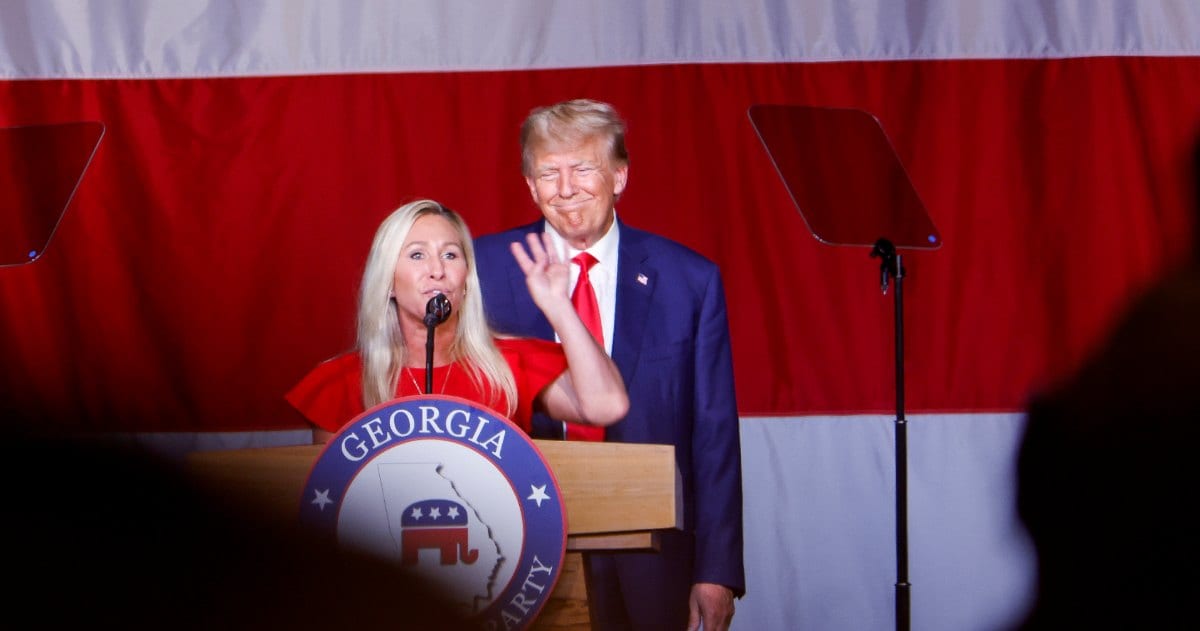
GOP split exposed as Senate pushes ahead with hearing despite Trump's cancellation demand

WASHINGTON, DC: For a party that has spent years presenting a united front behind President Donald Trump, Wednesday, June 17, delivered a rare public display of Republican disagreement, and it happened in full view of the country.
Just hours after Trump announced that the Senate hearing for his intelligence chief nominee Jay Clayton should be canceled, top Senate Republicans effectively signaled they were not prepared to immediately fall in line.
Jay Clayton is a pending nominee before the Intelligence Committee. We will proceed with his hearing as scheduled unless the president directs him not to appear or withdraws his nomination.
— Tom Cotton (@SenTomCotton) June 17, 2026
The result was an unusual spectacle: a president publicly demanding a halt, while key GOP leaders publicly indicated the process would continue.
DNI hearing exposes GOP divisions
The clash began when Trump took to Truth Social with an explosive message aimed at both Democrats and Republicans.
Furious over the collapse of negotiations surrounding the renewal of Section 702 surveillance powers, Trump accused Republicans of being outmaneuvered and declared that he wanted Clayton's confirmation process frozen.
Trump argued that Republicans had moved too quickly to replace Acting Intelligence Chief Bill Pulte and claimed Democrats had failed to honor what he described as an understanding regarding support for FISA renewal. His solution was dramatic.
The Republicans agreed with Dumocrats to remove very fair, and talented, William Pulte, from serving as Acting DNI in return for getting FISA approved by the Dumocrats. However, the Republicans moved so fast with the hearings of the Great Jay Clayton, current U.S. Attorney for… pic.twitter.com/Lr5zicenLy
— Commentary Donald J. Trump Truth Social Posts On X (@TrumpTruthOnX) June 17, 2026
The president announced that Clayton's hearing should be canceled and declared he would not support reauthorizing surveillance powers unless Congress also passed the SAVE America Act, a controversial voter identification measure. In Trump's telling, Republicans had "fallen into a trap."
But what happened next exposed a crack in today's Republican Party.
Instead of immediately complying, Senate Intelligence Committee Chairman Tom Cotton publicly announced that the hearing would proceed.
"Jay Clayton is a pending nominee before the Intelligence Committee. We will proceed with his hearing as scheduled unless the president directs him not to appear or withdraws his nomination," Cotton wrote on X.

John Thune questions Trump's push to halt hearing
Then came Senate Majority Leader John Thune.
Asked by reporters why Trump was attempting to halt the hearing, Thune offered an answer that immediately grabbed attention. "Good question," he said.
Thune confirmed that Cotton intended to move forward with the hearing and acknowledged uncertainty about where exactly the White House stood.
"All I know is that Chairman Cotton is planning to proceed," Thune said.
NEWS: Thune says Cotton still planning to hold Clayton hearing, adds: “And then from there on, we'll just have to take it a day at a time until we get more clarity on what the White House position is on this”
— Andrew Desiderio (@AndrewDesiderio) June 17, 2026
I asked why he thinks Trump is doing this
“Good question,” Thune said
The episode highlights growing tension between Trump's political priorities and the Senate Republican leadership's desire to keep government business moving.
Trump wanted to use Clayton's nomination as leverage to force action on both surveillance powers and election legislation.
Senate Republicans, meanwhile, appeared unwilling to abruptly derail a confirmation process that had already been scheduled.