Greg Gutfeld roasts AOC for botching history on Spanish roots of American cowboys: 'She's wrong'

WASHINGTON, DC: Fox News host Greg Gutfeld roasted Rep Alexandria Ocasio-Cortez after she mocked Secretary of State Marco Rubio's comments about the Spanish origins of American cowboy culture during the Munich Security Conference.
On Tuesday, February 17, episode of 'The Five', Gutfeld addressed AOC’s dismissal of the Spanish roots of cowboy traditions.
“She’s wrong," he declared. "They were brought there, I don’t know, in the 15th century by some guy, get this, do you know what his name is? Cortez. She’s a direct descendant of the guy that brought the horses to Mexico and then to America," he quipped. "So, weirdly enough, it was Cortez who brought the horses and then later gave us an a**.”
🚨 Gutfeld just ROASTED AOC with a savage historical twist!
— Gunther Eagleman™ (@GuntherEagleman) February 17, 2026
AOC mocked JD Vance over cowboys & horses from Spain being “so stupid.”
Gutfeld: “She’s wrong, they were brought in the 15th century by…
CORTEZ! She’s literally a descendant of the guy who brought the horses… and… pic.twitter.com/wJWNyPnTfb
Gutfeld linked AOC’s surname to Spanish conquistador Hernán Cortés, who reintroduced horses to the Americas in 1519. However, Gutfeld erroneously credited the original Munich statement to Vice President JD Vance rather than Rubio, who actually delivered the line in Germany.

AOC’s comments in Munich
In his address at the Munich Security Conference on February 14, Secretary Rubio spoke of the shared cultural heritage between the United States and Europe. “Our horses, our ranches, our rodeos—the entire romance of the cowboy archetype that became synonymous with the American West—these were born in Spain," he remarked.
AOC responded during a separate discussion. “My favorite part was when he said that American cowboys came from Spain... And I believe the Mexicans and descendants of African enslaved peoples would like to have a word on that," she quipped.
Ocasio-Cortez appeared to ignore the historical fact that Spanish colonizers introduced horses and cattle-herding practices in the 1500s, which then evolved in the New World.
@AOC @RepAOC
— Joni Job (@jj_talking) February 15, 2026
"Our horses, our ranches, our rodeos – the entire romance of the cowboy archetype that became synonymous with the American West – these were born in Spain"
AOC "SPANISH COWBOYS?" 🤡
“It's very thin!"
Rubio huge standing ovation 👏👏👏 pic.twitter.com/LIQtNSKNQ6
That said, the gaffe wasn't isolated. AOC's Munich outing included several other blunders.

She incorrectly described Venezuela as lying “below the equator” (the country is entirely north of it), confused the Trans-Atlantic Partnership with the Trans-Pacific Partnership, and provided a rambling and unclear answer when asked about US defense commitments to Taiwan.
The historical record
Historical records show that Spanish colonizers brought horses (extinct in the Americas since the end of the last Ice Age) and cattle-ranching techniques from Iberia beginning in the early 1500s. Hernán Cortés landed horses in Mexico in 1519, and the animals spread northward over the following centuries.
The Spanish term “vaquero,” from “vaca” (cow), gave rise to the word “buckaroo” and the foundational practices of open-range herding that later defined the American West.
Considering, the evolution of the American cowboy traces directly to Spanish vaquero culture established in colonial Mexico. Spanish settlers imported cattle and horses, developed large-scale ranching systems, and trained workers in roping, branding, and herding techniques suited to vast open ranges. Those methods migrated northward into present-day Texas, New Mexico, and California during the 17th and 18th centuries.
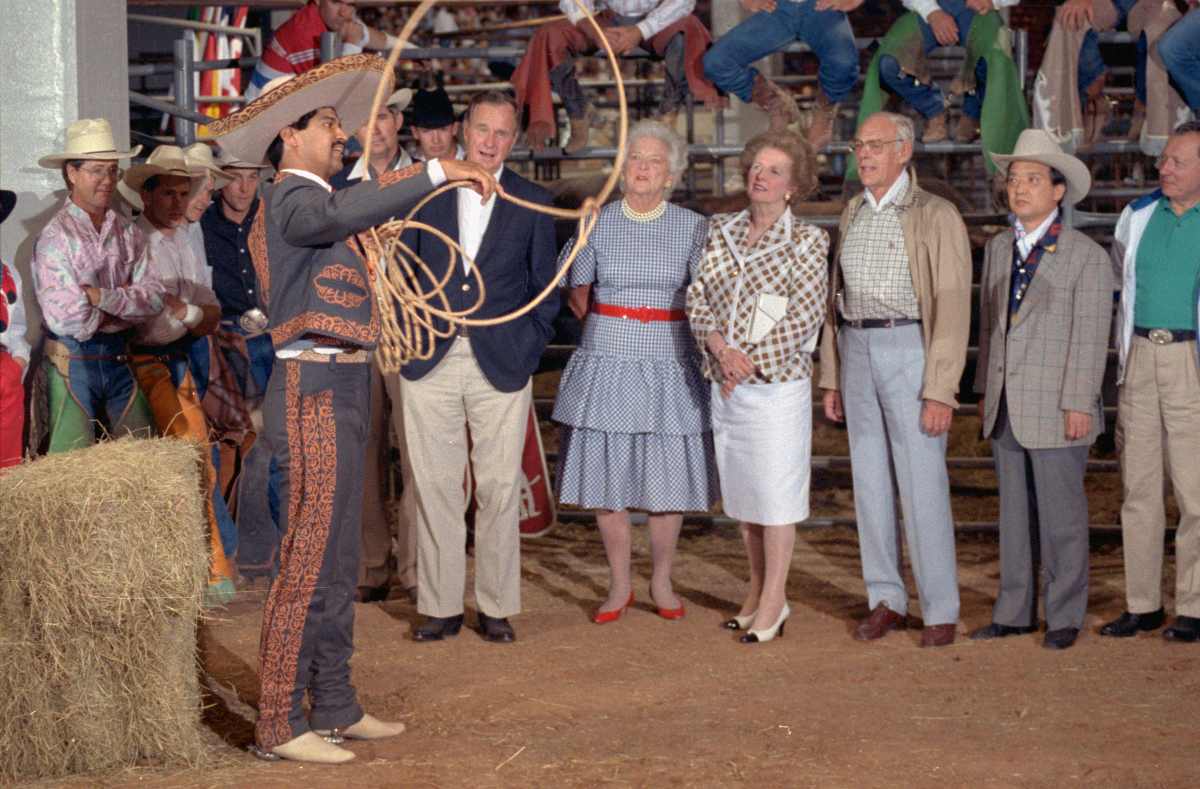
Indigenous groups, especially the Comanche, adopted horses by the mid-1600s and became expert riders, while mixed-heritage vaqueros were able to blend European and local knowledge. After the Civil War, freed Black men joined cattle drives in large numbers.
The iconic American cowboy image with a saddle, lasso, and wide-brimmed hat owes much to this history, and its origins can be traced back to Spain.