Hegseth hints at NATO rethink as Trump considers the alliance’s future
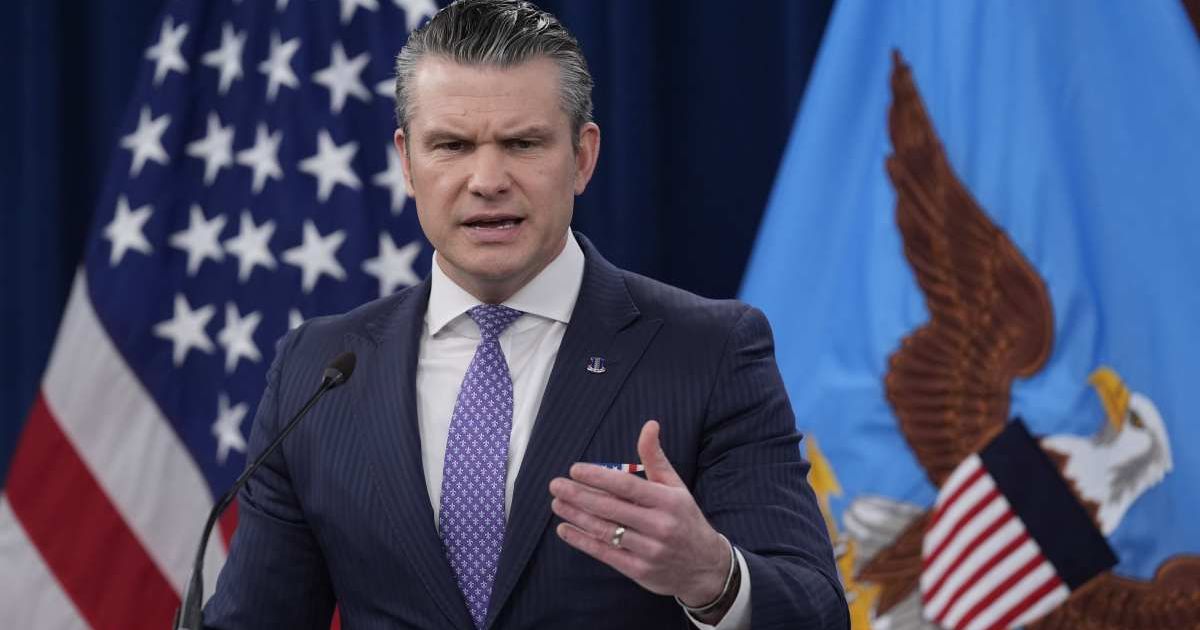
WASHINGTON, DC: Defense Secretary Pete Hegseth delivered a blunt ultimatum to America’s oldest allies today, signaling that President Donald Trump will formally "decide" the future of the North Atlantic Treaty Organization (NATO) once the military operation in Iran is complete.
During a heated Pentagon presser, Hegseth revealed that the administration is deeply frustrated by what it views as a lack of support from European partners, noting that the ongoing conflict has "laid bare" which nations are truly willing to stand with the United States.
The Secretary’s remarks follow years of escalating tension regarding NATO’s 2% spending target and the "America First" demand for an alliance that functions as a reciprocal security pact rather than a "one-way street."
Allied ‘roadblocks’ trigger White House fury
Hegseth slammed unnamed NATO allies for meeting US requests for assistance, basing, and overflight rights with ‘questions, roadblocks, and hesitation.’
The Secretary echoed President Trump’s private assessments, stating, "You don't have much of an alliance if you have countries that are not willing to stand with you when you need them."
Hegseth: "As far as NATO, that's a decision that will be left to the president, but a lot has been laid bare ... you don't have much of an alliance if you have countries that are not willing to stand with you when you need them." pic.twitter.com/Utw9NEnSu7
— Aaron Rupar (@atrupar) March 31, 2026
This friction comes as the US continues to shoulder what Hegseth called the "lion's share" of the burden for securing the free world.
The administration is particularly incensed that while the US Navy ensures the flow of global commerce, many nations that rely more heavily on the Strait of Hormuz have failed to provide meaningful naval support.
Royal Navy urged to ‘step up’
In a direct jab at the United Kingdom, Hegseth called for the "big, bad Royal Navy" and other international partners to take responsibility for the Strait of Hormuz.
He pointed out that the US uses the waterway "dramatically less than most" other nations, yet has been left to do the "heavy lifting" to address the Iranian threat.
Hegseth: On the Strait of Hormuz, there are many more vessels flowing through today than there were, as the president has arranged. The president's been clear to Iran. Open it for business or we have options and we certainly do.
— Acyn (@Acyn) March 31, 2026
There are countries around the world who ought be… pic.twitter.com/D7FKhGC33A
"The world ought pay attention and be prepared to stand up," Hegseth warned. The administration’s stance is that the security of international waterways is an international problem, not a uniquely American one.
This demand for burden-sharing is expected to be a central pillar of any post-war NATO "decision" made by the President.
Adversaries aiding Iran with ‘intel’
The urgency for allied support is heightened by intelligence suggesting that US rivals are actively aiding Tehran. Hegseth acknowledged that the US is aware of adversaries providing intelligence on American assets to Iran, allowing the regime to target sensitive systems like the US Air Force E-3 Sentry recently destroyed on a Saudi air base.
Hegseth: Russia and China—we know exactly what they're doing, what they are or are not doing. We don't have to air publicly what all of that is, but where necessary, we're addressing it, we're mitigating it and or we're confronting it head on pic.twitter.com/nqLfxDewUk
— Acyn (@Acyn) March 31, 2026
Reports indicate that Russia is providing real-time data on US troop and ship movements, while China may be preparing to supply Iran with missile components and financial aid.
In response, Hegseth stated that commanders are working to eliminate "predictable patterns" and adjust asset locations in real-time to avoid becoming easy targets.
Strait of Hormuz ‘open for business’
Despite the lack of allied help, Hegseth touted the President’s success in managing the Strait of Hormuz, noting that many more vessels are flowing through today thanks to direct arrangements made by the White House. He reiterated the President’s ultimatum to Tehran: "Open it for business or we have options."
Hegseth: On the Strait of Hormuz, there are many more vessels flowing through today than there were, as the president has arranged. The president's been clear to Iran. Open it for business or we have options and we certainly do.
— Acyn (@Acyn) March 31, 2026
There are countries around the world who ought be… pic.twitter.com/D7FKhGC33A
As military movements continue in response to evolving intelligence, the administration has indicated that diplomatic efforts remain ongoing alongside operational planning.
President Donald Trump has stated that a negotiated resolution is preferred, while also warning of consequences if US conditions are not met.
Officials have not commented on the broader implications for alliances, including NATO, as the situation in Iran continues to develop.