Hegseth says Project Freedom is separate from Iran war, calls mission ‘temporary in duration’
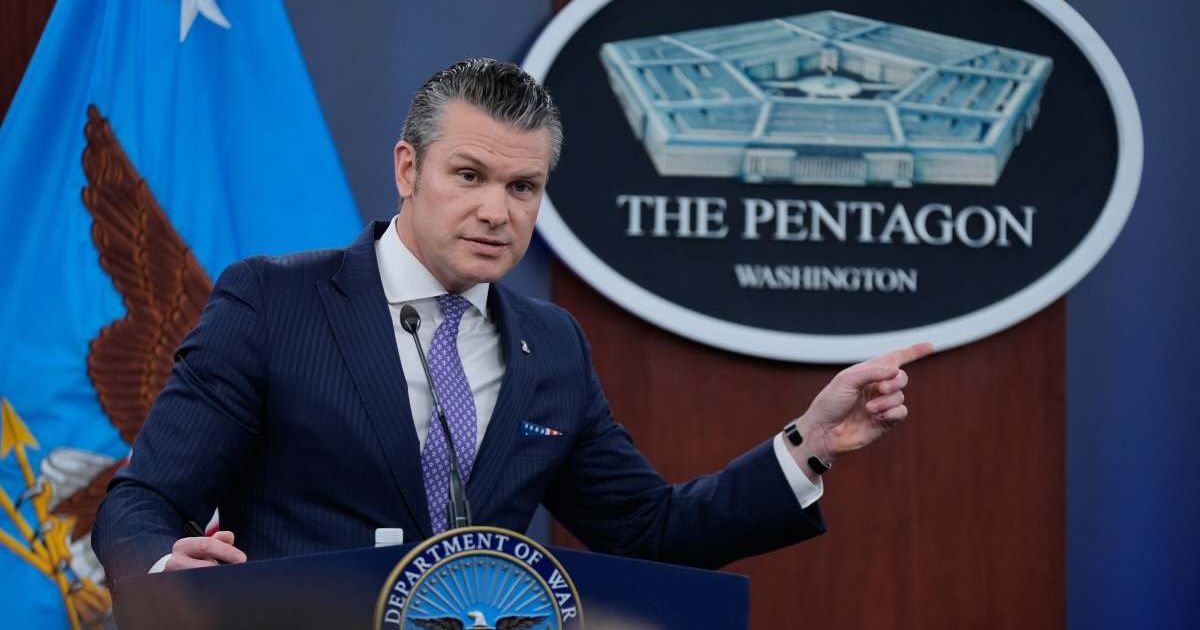
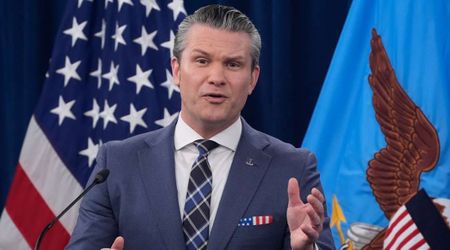
WASHINGTON, DC: Defense Secretary Pete Hegseth said on Tuesday, May 5, that the Pentagon’s newly launched maritime security operation, Project Freedom, is a limited and defensive mission aimed at protecting commercial shipping through the Strait of Hormuz.
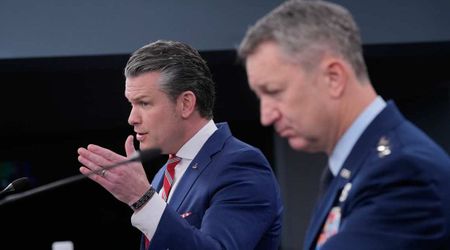
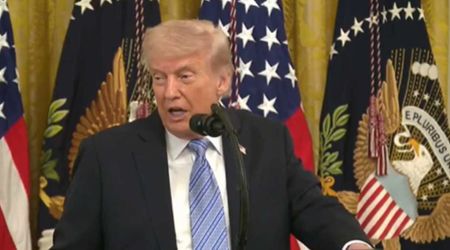
Speaking at a Pentagon briefing, Hegseth said the operation is distinct from the broader US-Iran military confrontation that began with joint US-Israeli strikes on Iran in late February.
The mission comes amid heightened tensions in the Gulf, where commercial vessels have faced repeated disruptions following Iranian actions in the waterway.
Hegseth says Project Freedom is defensive, limited
Hegseth said Project Freedom was launched specifically to support commercial vessels stranded in the Persian Gulf and ensure safe transit through the Strait of Hormuz, which remains one of the world’s most critical oil shipping routes.
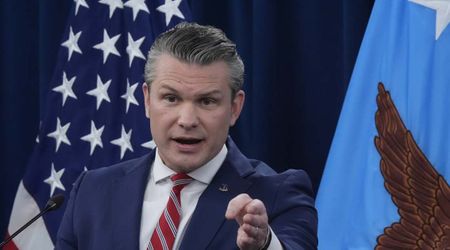
“This operation is separate and distinct from Operation Epic Fury. Project Freedom is defensive in nature, focused in scope, and temporary in duration, with one mission: protecting innocent commercial shipping from Iranian aggression,” Hegseth said.
He said the operation would not require US forces to enter Iranian territorial waters or airspace, stressing that the United States was not seeking direct confrontation. “We’re not looking for a fight,” Hegseth said.
Pete Hegseth: “ We're not looking for a fight. But Iran also cannot be allowed to block innocent countries and their goods from an international waterway." pic.twitter.com/xpkOVAyG4o
— Lavy (@Lavy02) May 5, 2026
At the same time, he said Washington would not accept attempts to restrict access to international waters.
“But Iran also cannot be allowed to block innocent countries and their goods from an international waterway,” he said, calling Iran the “clear aggressor.”
Hegseth also accused Tehran of using control over the strategic shipping lane for economic leverage. “Iran’s plan, a form of international extortion, is unacceptable,” he said. “That ends with Project Freedom.”
Our strategy remains laser-focused — Hegseth
— RT (@RT_com) May 5, 2026
'Project Freedom is a separate and distinct effort, temporary in nature, that we plan to hand over to the world'
'As is often the case — or maybe almost always the case — American leadership is required' https://t.co/xBi0K8rrXy pic.twitter.com/ALkc19XSeg
He added that US Central Command remains in contact with hundreds of commercial vessels seeking to exit the area.
“We’d prefer this to be a peaceful operation, but are locked and loaded to defend our people, our ships, our aircraft and this mission without gestation,” he said. “To Iran: Let innocent ships pass freely. These international waters belong to all nations, not to Iran to tax, toll for control.”
US military says Iran attacks remain below threshold
Alongside Hegseth, Dan Caine said US forces remain on standby for broader combat operations if directed by President Donald Trump, but said recent incidents had not crossed that threshold.
"No adversary should mistake our current restraint with a lack of resolve,” Caine said.
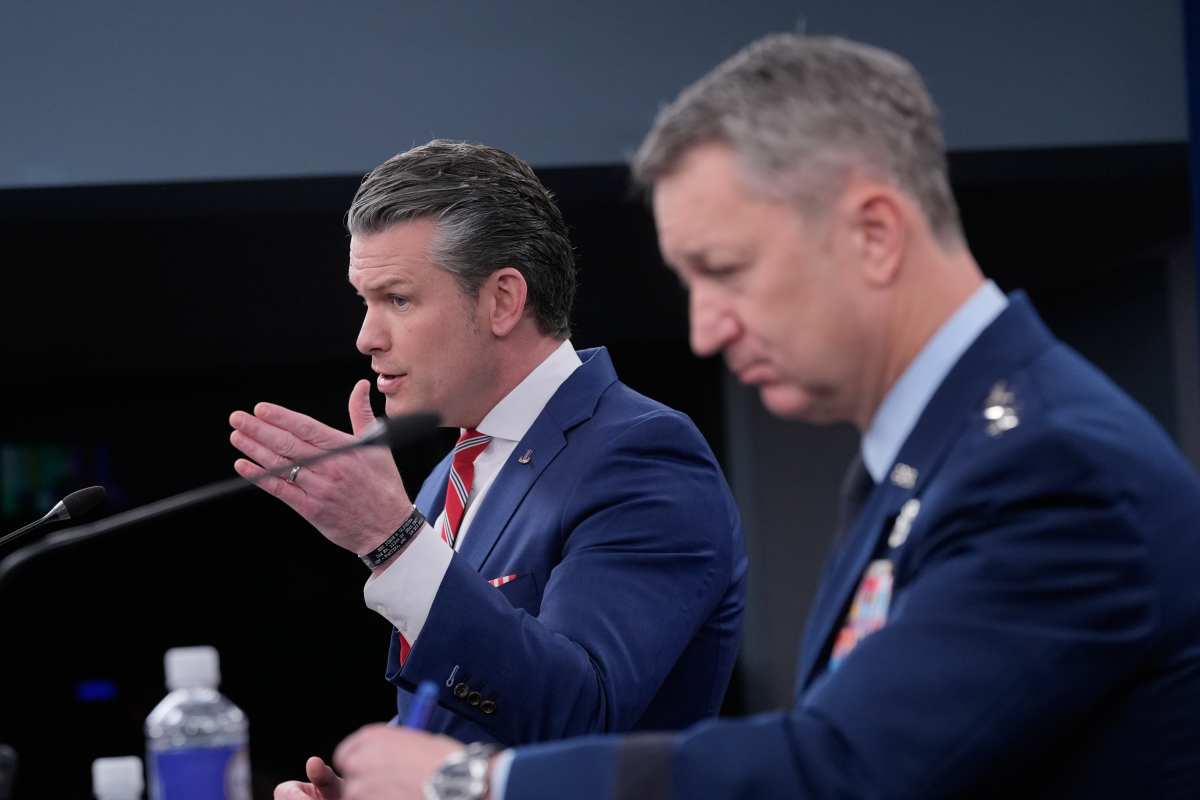
Caine said Project Freedom began on Sunday, May 3, under presidential orders, with the goal of facilitating safe passage for international commercial shipping through the Strait of Hormuz.
He said the operation currently involves guided missile destroyers, warships, and more than 100 aircraft, supported by over 15,000 American service members.
“Commercial vessels that transit through the area will see, hear and frankly feel US combat around them, on the sea, in the skies and on the radio,” Caine said.
Caine: "Since the ceasefire was announced, Iran has fired at commercial vessels nine times and seized two container ships. They've attacked US forces more than 10 times. All below the threshold of restarting major combat operations at this point." pic.twitter.com/5EA1HMofB6
— Aaron Rupar (@atrupar) May 5, 2026
Caine said Iran had continued low-level attacks despite the ceasefire announced on April 8, but those incidents had not yet triggered a return to large-scale combat.
“Since the ceasefire was announced, Iran has fired at commercial vessels nine times and seized two container ships,” Caine said. “And they’ve attacked US forces more than 10 times, all below the threshold of restarting major combat operations at this point.”