Hegseth defends fragile ceasefire as US confronts Iranian naval threats
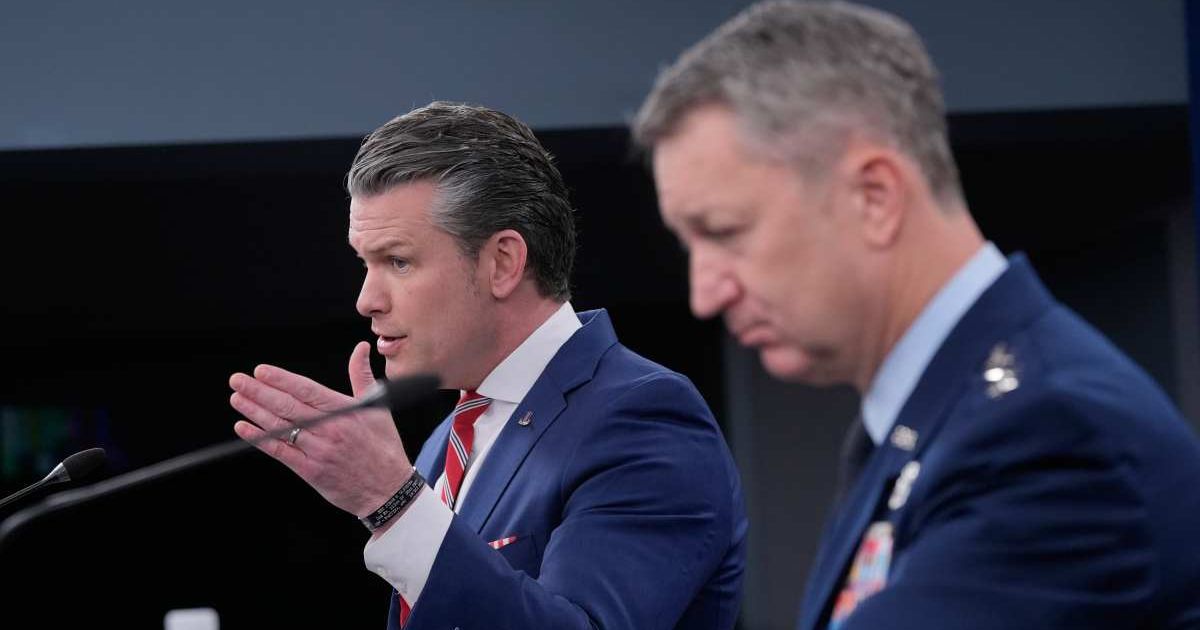
WASHINGTON, DC: During a high-stakes press briefing at the Pentagon on Tuesday, May 5, Secretary of Defense Pete Hegseth reiterated that the ceasefire between the United States and Iran is not over, despite a significant spike in hostilities within the Strait of Hormuz.
Hegseth maintained that the current "military operation" to secure international waterways is a "separate and distinct project" from the broader diplomatic agreement.
While acknowledging "some churn at the beginning," the Secretary insisted that the truce remains functional even as both nations exchange fire in the world’s most vital oil transit point.
Q: In the last 24 hours, Iran has fired at us. We've fired at Iran. Is the ceasefire over?
— Aaron Rupar (@atrupar) May 5, 2026
HEGSETH: No, the ceasefire is not over. Ultimately, this is a separate and distinct project. pic.twitter.com/LnxMQoWaIv
The administration’s defense of the ceasefire comes amidst rising skepticism over Tehran’s compliance.
Hegseth clarified that the US will continue to "defend aggressively" to ensure the free flow of commerce.
He urged Iran to be "prudent" in its future actions to prevent the conflict from escalating beyond the current state of limited engagements.
Hostilities remain below major combat threshold
.@realDailyWire’s @MaryMargOlohan: “You said that the attacks by Iran so far are below the threshold of restarting major combat operations. What is that threshold? And then for Secretary Hegseth, are there still concerns about mines in the Strait? And can you kind of clarify… pic.twitter.com/8ZHt4rfLy0
— Curtis Houck (@CurtisHouck) May 5, 2026
Chairman of the Joint Chiefs of Staff Gen. Dan Caine revealed that Iran has targeted US forces more than ten times since the ceasefire was officially announced.
However, Caine asserted that these provocations remain "below the threshold of restarting major combat operations".
The General dismissed the recent surge in Iranian aggression, suggesting that "it feels like Iran is grasping at straws" as they attempt to challenge the US presence in the region.
US forces neutralize Iranian small boats
🚨SecWar Pete Hegseth just laid it out:
— Don Keith (@RealDonKeith) May 5, 2026
Project Freedom is defensive in nature, focused in scope and temporary.
Its mission is protecting innocent commercial shipping from Iran.
Iran cannot block international waterways. pic.twitter.com/UxWhLuYUK9
The military reality on the water remains volatile. Adm. Brad Cooper, commander of US Central Command, confirmed on Monday that US forces "blew up" six Iranian small boats in the Strait of Hormuz.
Secretary Hegseth defended these actions as necessary defensive measures to protect international waterways and the principle of freedom of navigation.
He emphasized that the US mission is focused specifically on the security of the straits and the protection of international trade routes from illegal interference.
Ceasefire stands despite ongoing maritime churn
Pete Hegseth:
— Open Source Intel (@Osint613) May 5, 2026
The ceasefire is not over; this is a separate project...
Right now, the ceasefire certainly holds, but we’re going to be watching very closely. pic.twitter.com/3McY2I3sQe
Despite the tactical exchanges, Hegseth doubled down on the administration's position that the diplomatic ceasefire has not collapsed.
He categorized the recent violence as expected friction associated with a new maritime security regime.
By framing the naval clashes as isolated incidents rather than a total resumption of war, the Pentagon appears determined to preserve the current diplomatic framework while simultaneously utilizing force to repel Iranian "fast boat" harassment.