House Democrat drops massive 26-article impeachment resolution targeting Trump
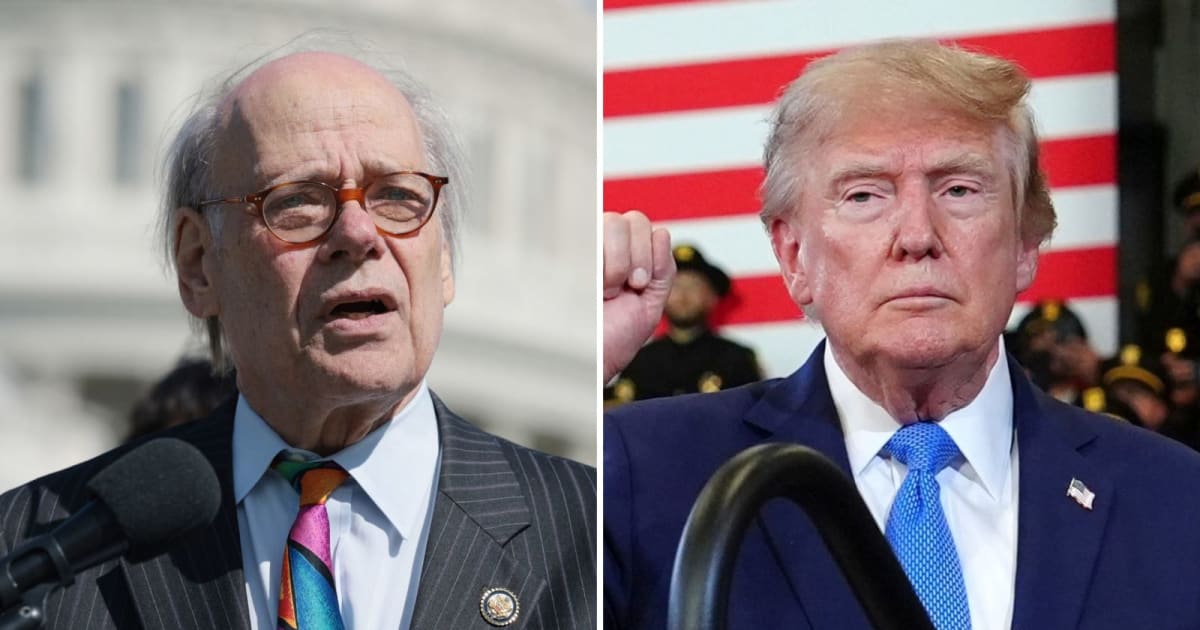
WASHINGTON, DC: With the fight for the House ramping up before the 2026 midterms, outgoing Democratic Rep. Steve Cohen of Tennessee has introduced 26 articles of impeachment against President Trump.
The resolution covers a wide range of issues involving the Trump administration, including military operations, immigration policies, executive power, economic decisions and press freedom. Cohen has framed the filing as a roadmap for the incoming 120th Congress if Democrats regain control of the House.
Steve Cohen introduces 26 articles of impeachment
Cohen’s resolution doesn't leave much out. It covers almost every major move from the administration’s second term: military operations near Venezuela, sending federal forces to cities in the US, the executive order to end birthright citizenship, and new mass deportation rules.
In 2017, I introduced 5 articles of impeachment against President Trump, and today, I am compelled to introduce 26 more. Just because the GOP majority in Congress has been derelict in its duty to hold the President accountable, does not mean I must abandon my duties and the oath… pic.twitter.com/09UXSRac3p
— Steve Cohen (@RepCohen) September 24, 2026
“Trump is clearly the most impeachable President our country has ever endured,” Cohen wrote in a statement on Thursday.
“His continued presence in office is a danger to our democracy. That the sycophantic Republican majority in Congress is derelict in its duty does not mean that I must abandon my responsibilities.”
“I took an independent oath to support and defend the Constitution,” he continued.
“That commitment compels me to introduce this resolution today. When historians write about this period, and our constituents ask who stood up to President Trump’s lawlessness, this resolution is the answer.”
While the measure stands virtually no chance of moving in the current Republican-controlled House, Cohen openly framed the resolution as a roadmap for the incoming 120th Congress, warning that a shift in congressional power will immediately trigger a high-stakes constitutional showdown.
Nine days before the unveiling of Cohen’s articles of impeachment, the House rejected Representative Al Green’s (D-TX) motions. The House voted 232-147 on September 15 to shelve the Houston, Texas, representative’s motions.
What the 26 impeachment articles cover
The resolution covers six main areas: elections and democratic integrity; military and foreign operations, like taking military action against Iran without Congress’s approval and alleged extrajudicial killings in Venezuelan waters.

Immigration and civil rights, such as the birthright citizenship order and detention conditions at CECOT facilities; executive power and control over government agencies, including breaking up the Department of Education and firing inspectors general en masse; economic and financial decisions, like using emergency powers to impose tariffs.
Conduct by the Justice Department, focusing on prosecutions of figures like James Comey, Letitia James, and Adam Schiff.
It also addresses press freedom, including barring reporters from the White House, and ethical issues, like the demolition of the East Wing and alleged personal profit from the presidency.
Cohen frames resolution as a roadmap for Congress
The Tennessee congressman, who serves on the House Judiciary Committee, framed his resolution as a blueprint for the 120th Congress if Democrats take control in the midterm elections. Like Green’s motions, Cohen’s will likely be tabled under current House leadership.

“I sincerely believe that the 120th Congress will better live up to its duties as co-equal branch of government and a check on the executive,” Cohen stated. “I hope this resolution paves the way to accountability. We cannot tolerate this kind [of] lawlessness and corruption.”
While GOP leadership will almost certainly push these articles into procedural limbo, as it did with Green’s earlier attempt, the resolution serves its true purpose. It serves as a rallying cry for the Democratic base and an explicit promise of what lies ahead.