House Freedom Caucus rejects Senate DHS bill, says ‘no’ to deal without immigration funding
Freedom Caucus opposition complicates House push to quickly pass Senate-approved DHS bill
PUBLISHED MAR 27, 2026
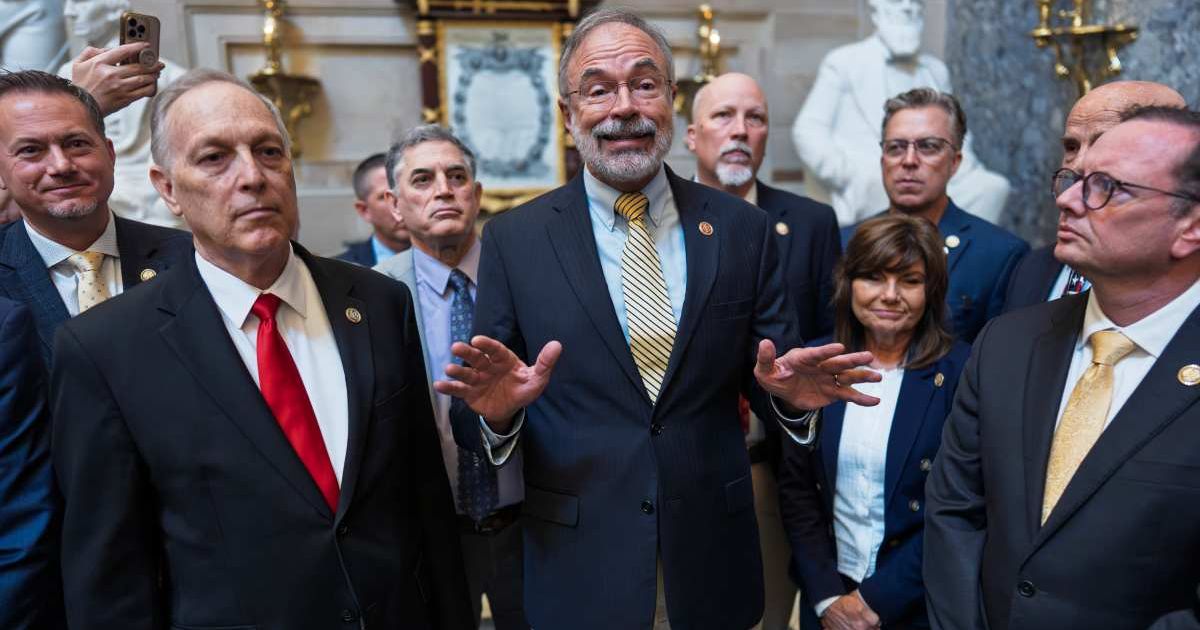
House Freedom Caucus members, Andy Biggs, R-Ariz (left), and Andy Harris (right), oppose a deal funding the DHS that excludes immigration operations at the Capitol in Washington on Friday, March 27, 2026 (AP Photo/J. Scott Applewhite)

WASHINGTON, DC: The House Freedom Caucus on Friday, March 27, has voiced strong opposition to a Senate-passed funding package for the Department of Homeland Security (DHS), raising uncertainty about the bill’s prospects in the House.

The measure, approved in a late-night Senate session, funds several DHS agencies but excludes immigration enforcement divisions.

Conservative lawmakers are now pushing for revisions before the legislation can move forward. The standoff adds to ongoing challenges in resolving the partial DHS funding lapse.

Freedom Caucus demands changes to DHS funding bill

Members of the Freedom Caucus said they would not support the current version of the bill, calling for the inclusion of funding for immigration enforcement agencies and additional policy provisions.

Specifically, lawmakers want funding restored for the US Border Patrol and for divisions within Immigration and Customs Enforcement (ICE), including units focused on combating child abuse.

“We can’t believe that the Senate abdicated its responsibility this morning of not funding the child s*x tr*fficking division of ICE, that they don’t didn’t fund the Border Patrol. I guess the Democrats want a wide open border,” said Rep Andy Harris, chair of the caucus. He added, “The only thing we’re going to support is adding that funding into the bill, adding voter ID, sending it back to the Senate, make them come back in and do their work. The bottom line is, this deal is bad for America.”
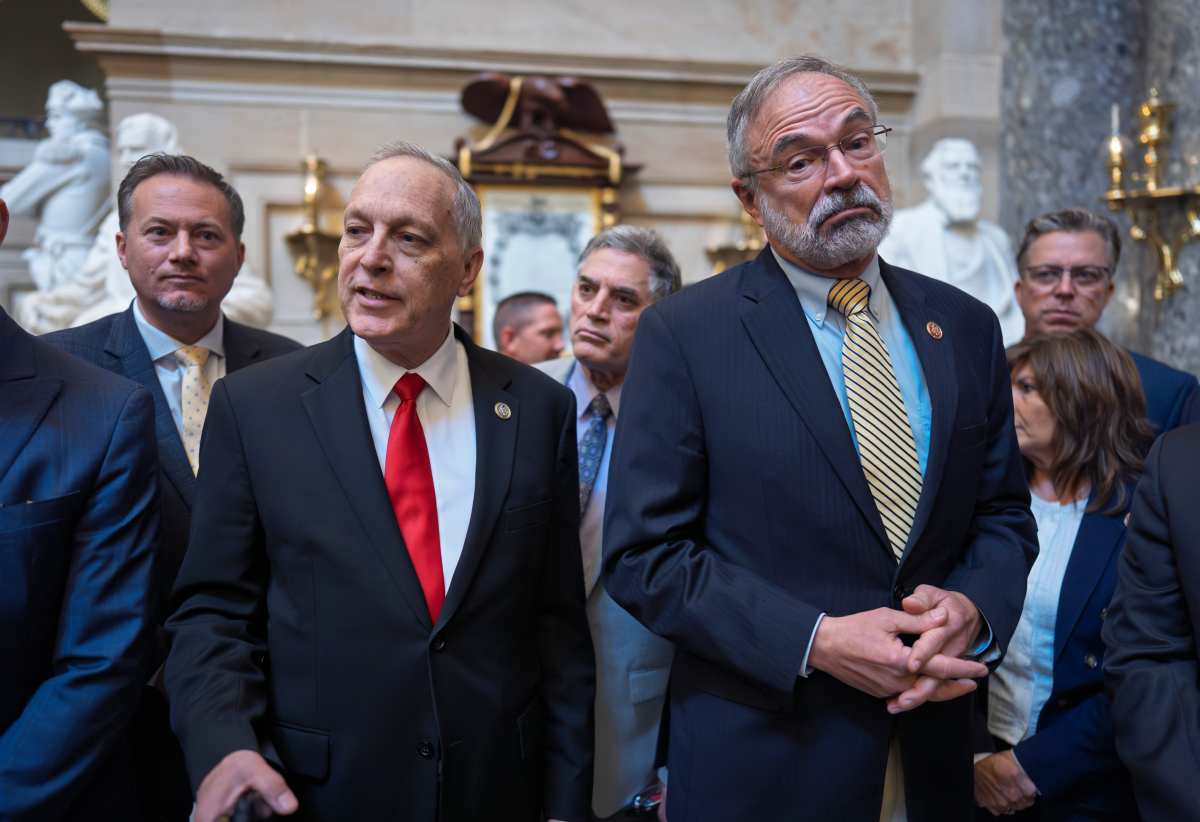
After a deal was approved to fund the Department of Homeland Security, except for immigration operations, members of the conservative House Freedom Caucus, including Rep. Andy Biggs, R-Ariz., left, and Rep. Andy Harris, R-Md., right, tell reporters that they won't vote in the House to pass it as is, at the Capitol in Washington, Friday, March 27, 2026. (AP Photo/J. Scott Applewhite)
After a deal was approved to fund the Department of Homeland Security, except for immigration operations, members of the conservative House Freedom Caucus, including Andy Biggs and Andy Harris, told reporters that they won't vote in the House to pass it as is, at the Capitol in Washington, Friday, March 27, 2026 (AP Photo/J. Scott Applewhite)

Other members echoed similar concerns, arguing that the Senate bill fails to address key immigration enforcement priorities.

Rep Chip Roy described the measure as inadequate, saying it was “offensive” that the Senate would pass a bill without funding immigration enforcement. “Could the Senate be any more lazy than to send to us a bill that doesn't do the job and then leave town,” he said. “We're going to stand up and say no to that.”
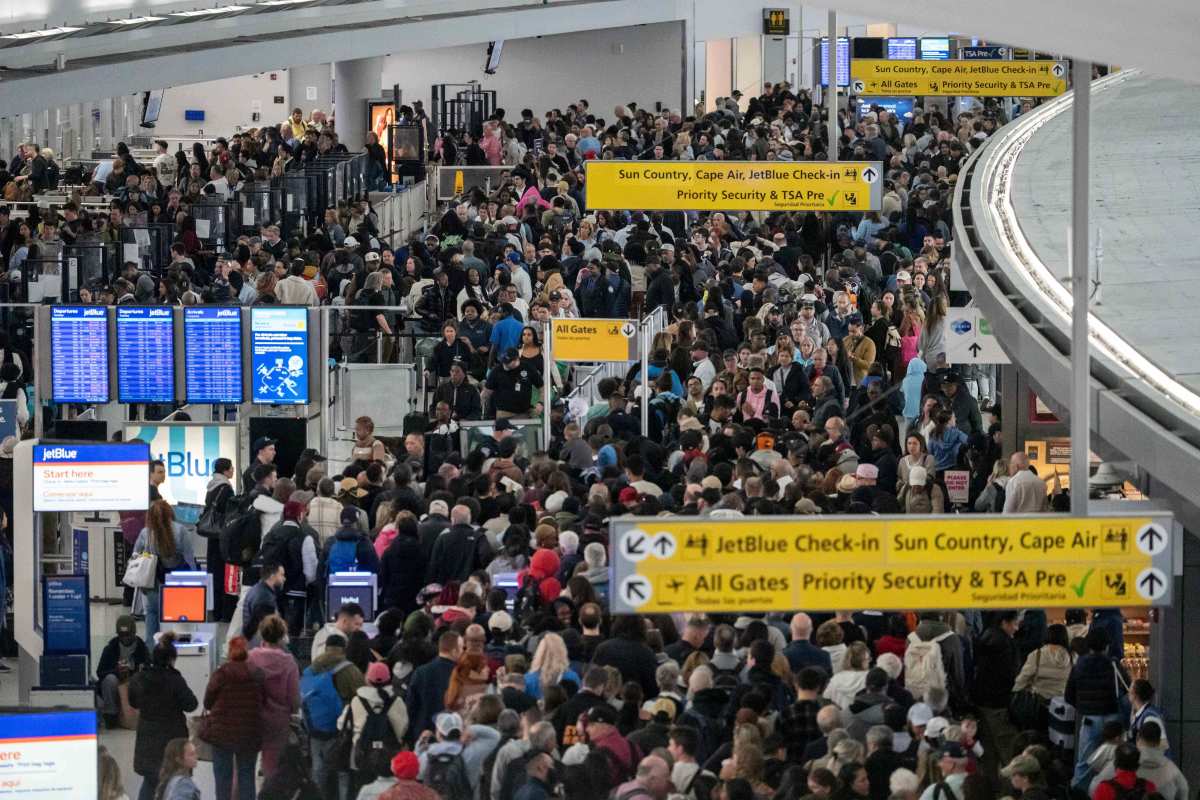
People wait in a TSA line at the John F. Kennedy International Airport, Sunday, March 22, 2026, in New York. (AP Photo/Yuki Iwamura)
People wait in a TSA line at the John F Kennedy International Airport, Sunday, March 22, 2026, in New York (AP Photo/Yuki Iwamura)

Lawmakers also emphasized the need to include a voter identification provision as part of any revised package. The caucus signaled that it remains unified in its opposition unless these changes are incorporated.

Procedural hurdles mount as House considers next steps

The opposition from the Freedom Caucus complicates efforts by House Speaker Mike Johnson to bring the Senate-passed bill to the House floor quickly.

One potential path, passing the legislation under a suspension of the rules process, would require unanimous consent to advance, a move caucus members have indicated they would block.

WASHINGTON, DC - JANUARY 05: Speaker of the House Mike Johnson (R-LA) speaks to the media as he arrives for a bicameral congressional leadership briefing with administration officials at the U.S. Capitol on January 05, 2026 in Washington, DC. The briefing addressed U.S. actions in Venezuela, including the capture of Venezuela’s Nicolas Maduro and his wife, Cilia Flores. (Photo by Anna Moneymaker/Getty Images)
Speaker of the House Mike Johnson speaks to the media as he arrives for a bicameral congressional leadership briefing with administration officials at the US Capitol on January 05, 2026, in Washington, DC. The briefing addressed US actions in Venezuela, including the capture of Venezuela’s Nicolas Maduro and his wife, Cilia Flores (Photo by Anna Moneymaker/Getty Images)

House rules limit the suspension process to certain days, further narrowing the window for swift action.

Another option involves bringing the bill through the Rules Committee with same-day authority, which would require a two-thirds majority vote in the House. It remains unclear whether Democrats would support such a move, making this path uncertain as well.
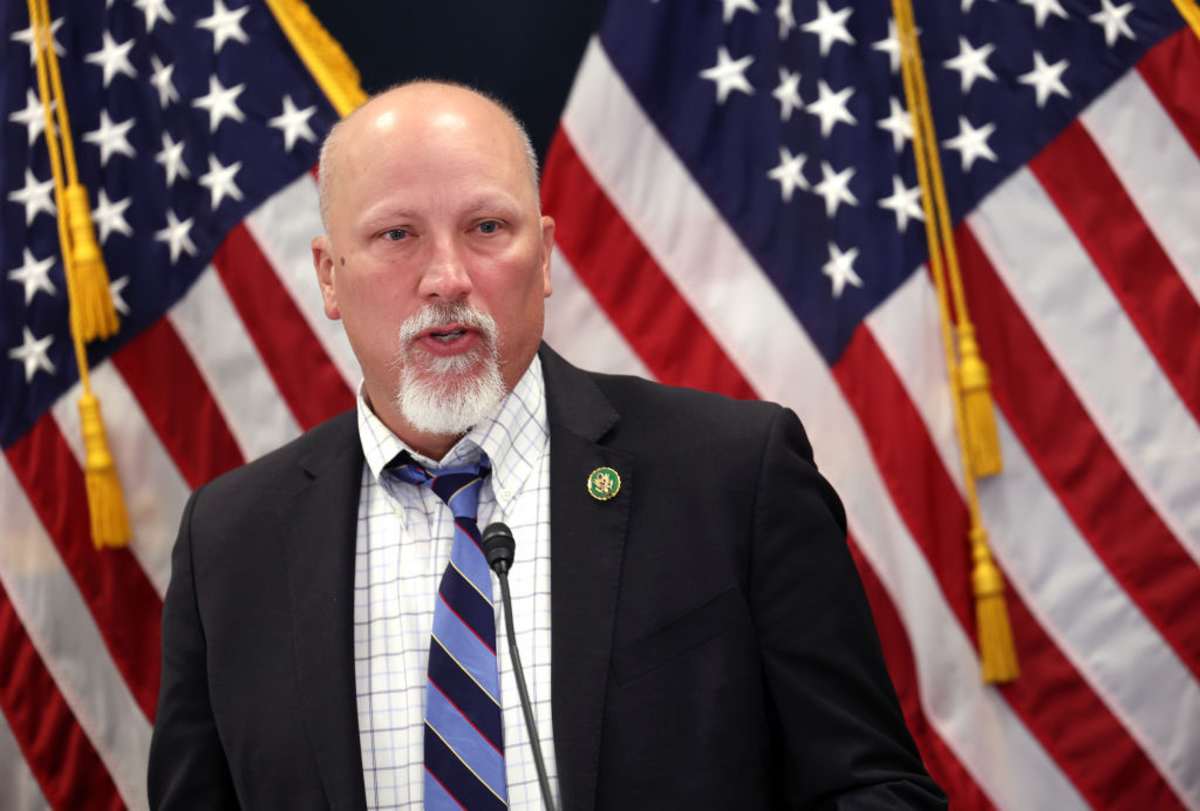
WASHINGTON, DC - SEPTEMBER 19: Rep. Chip Roy (R-TX) speaks after a House Republican caucus meeting at the U.S. Capitol on September 19, 2023 in Washington, DC. A deal between factions of House Republicans to pass a stopgap spending bill and avoid a government shutdown will be tested Tuesday with a procedural vote. (Photo by Kevin Dietsch/Getty Images)
Rep Chip Roy speaks after a House Republican caucus meeting at the US Capitol on September 19, 2023, in Washington, DC. A deal between factions of House Republicans to pass a stopgap spending bill and avoid a government shutdown will be tested Tuesday with a procedural vote (Photo by Kevin Dietsch/Getty Images)

Following public remarks, Freedom Caucus members met with Johnson to discuss the legislation. Emerging from the meeting, Roy said there had been “good conversations” but confirmed that their position remained unchanged. “We’ll see what happens, but we’re not going to move the Senate bill today,” he said.

The Senate-approved measure funds several DHS agencies but excludes ICE and parts of Customs and Border Protection, reflecting a compromise reached after weeks of negotiations. 
GET BREAKING U.S. NEWS & POLITICAL UPDATES
STRAIGHT TO YOUR INBOX.

MORE STORIES

Democrats seek ‘trove’ of records, probe Kushner’s $2B Saudi investment and war policy
1 hour ago
HHS Secretary RFK Jr maintained that President Trump was fit for office and dismissed suggestions of invoking constitutional measures
1 hour ago
Trump claims Iran halt nuclear program 'No years, unlimited,' rejects release of frozen funds
1 hour ago
Trump indicated that key elements of a proposed framework were agreed, with remaining issues expected to be resolved in upcoming negotiations
1 hour ago
'Sixty days is important with respect to the War Powers Resolution, and I'm not quite clear what the strategic objectives are', Thom Tillis said
3 hours ago
'They are desperately looking for a reason to criticize President Donald Trump over the Iran issue, but simply cannot find it', Trump wrote
3 hours ago
Trump risks ‘rights and privileges’ as lawmakers avert April 20 lapse of surveillance powers
4 hours ago
Once a key supporter, Tucker Carlson had recently challenged President Trump's Iran war rhetoric, marking a shift in their political alignment
4 hours ago
Trump said the alliance had offered help only after the situation stabilized, reinforcing his long-standing concerns about delayed allied support
4 hours ago
US officials linked the Lebanon ceasefire to Iran nuclear talks, aiming to separate conflicts while advancing negotiations on Tehran's program
5 hours ago