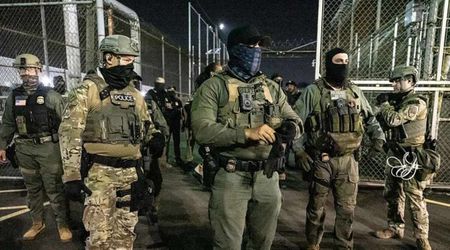
ICE turns to Border Patrol's mobile facial recognition tech to ramp up arrests and reduce mistakes

WASHINGTON, DC: Immigration and Customs Enforcement (ICE) has deployed a mobile facial recognition technology as part of President Donald Trump’s immigration crackdown, according to a new report.
In recent months, ICE agents have been using a government-built app called Mobile Fortify to confirm the identities of people they encounter in the field, the Wall Street Journal reported.
Officials say the tool is designed to speed up arrests and reduce mistakes, but critics warn it opens the door to sweeping government surveillance.

How the app Mobile Fortify works
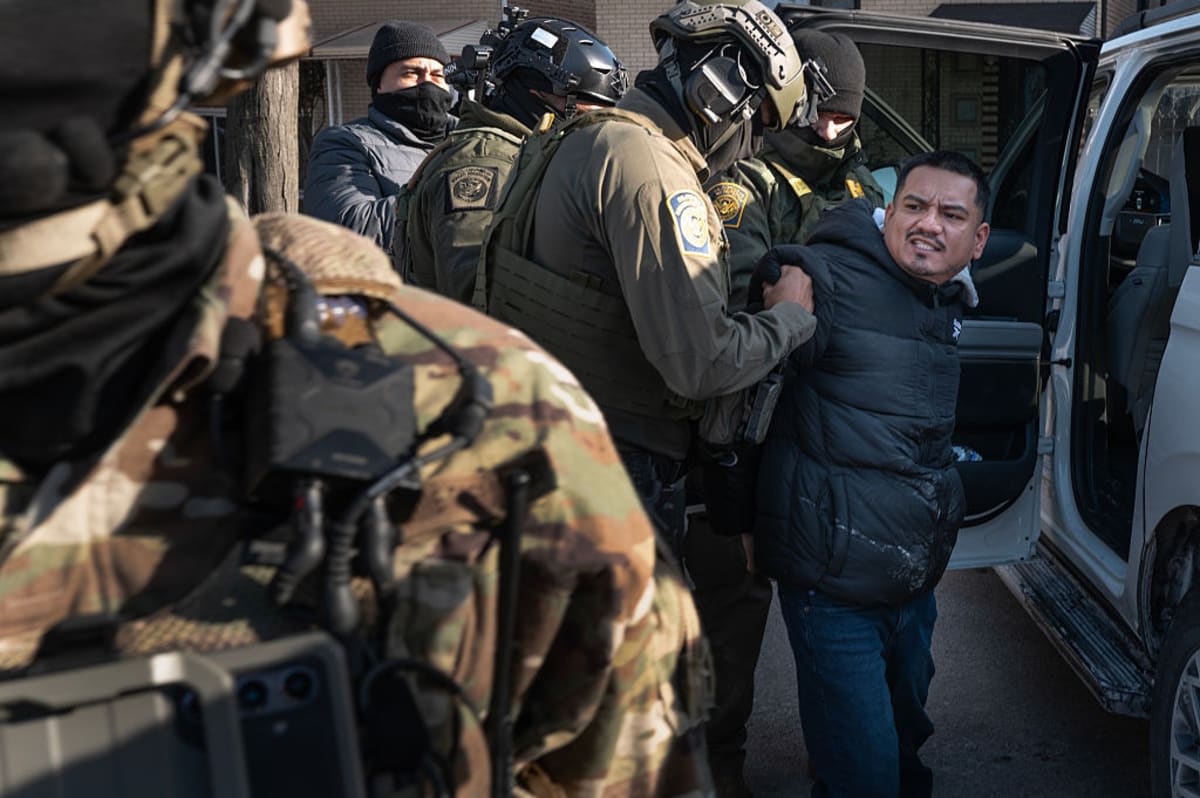
Mobile Fortify allows ICE agents to snap a photo of a person’s face using a phone and quickly retrieve identifying information. That can include the individual’s name, location, social media history, and even their immigration status in some cases.
“Mobile Fortify is a lawful law-enforcement tool developed under the Trump Administration to support accurate identity and immigration-status verification during enforcement operations,” a spokeswoman for the Department of Homeland Security, ICE’s parent agency, said in a statement.
Agency officials say the app has already been used more than 100,000 times. According to DHS, its use has helped speed up arrests and reduce the number of people with legal status who are mistakenly detained.
From the border to the interior
The technology itself isn’t brand new. Mobile Fortify was developed by the US Customs and Border Protection during former President Joe Biden’s term, adapting facial recognition tools already in use at US ports of entry. Initially, it was limited to Border Patrol agents operating near the southern border.
That changed under Trump, who has vowed to carry out the largest deportation program in American history. With Congress allocating an additional $75 billion to ICE, the agency now has the resources to test and roll out new technologies on a broad scale.
The Journal reported that ICE has also recently pushed forward with a contract for technology capable of scanning a person’s eyes and has hired artificial intelligence firms to help locate immigrants.
“President Trump’s core promise to the American people was to remove criminal and public-safety threats in large numbers, and these technologies provide federal law enforcement tools to make that challenge more manageable,” said Chad Wolf, chairman of homeland security and immigration at the America First Policy Institute and a former acting Homeland Security secretary during Trump’s first term.

Mobile Fortify in action
A Journal reporter observed Mobile Fortify being used during a July enforcement operation in Lake Worth, Florida.
ICE officers photographed two men from Guatemala who had been stopped by a state trooper. The app showed that one of the men had previously been issued a notice to appear in court.
“We have a new app—it’s facial recognition,” one officer said. “If they’ve ever been arrested before and we have their photo in one of our databases…we’ll get a hit.”
According to the report, Mobile Fortify can access multiple criminal databases, along with some publicly available information, including social media activity.
A DHS spokesperson disputed that claim, saying the app does not “access open-source material, scrape social media or rely on publicly available data,” and adding that “its use is governed by established legal authorities and formal privacy oversight, which set strict limits on data access, use, and retention.”
Privacy fears and pushback
Privacy advocates warn that widespread use of facial recognition could allow authorities to collect massive amounts of data with little transparency or accountability. “It can be used to point at people in the street, people in cars, and scan their facial prints without their consent,” Kate Voigt, a senior policy counsel at the American Civil Liberties Union, told the newspaper.
ACLU senior policy analyst Jay Stanley went further in a November critique. “The Mobile Fortify program represents a dangerous expansion in the government use of face recognition in American life and would fundamentally reorient the relationship between the authorities and individuals in this country if it is allowed to continue,” Stanley wrote. “It must not be.”
Leaked emails indicate that ICE is now using 'Mobile Fortify,' a facial recognition tool that lets agents ID anyone just by pointing a smartphone camera at them.
— Jason Bassler (@JasonBassler1) July 7, 2025
It may start with "illegal immigrants" — but make no mistake, this technology will be used against you next. pic.twitter.com/f3fVFjNhcG
However, a DHS spokeswoman rejected those concerns, saying the app is “lawfully used nationwide in accordance with all applicable legal authorities.”