Iran's supreme leader admits opposing Iran-US deal, claims Trump forced it out of 'desperation'
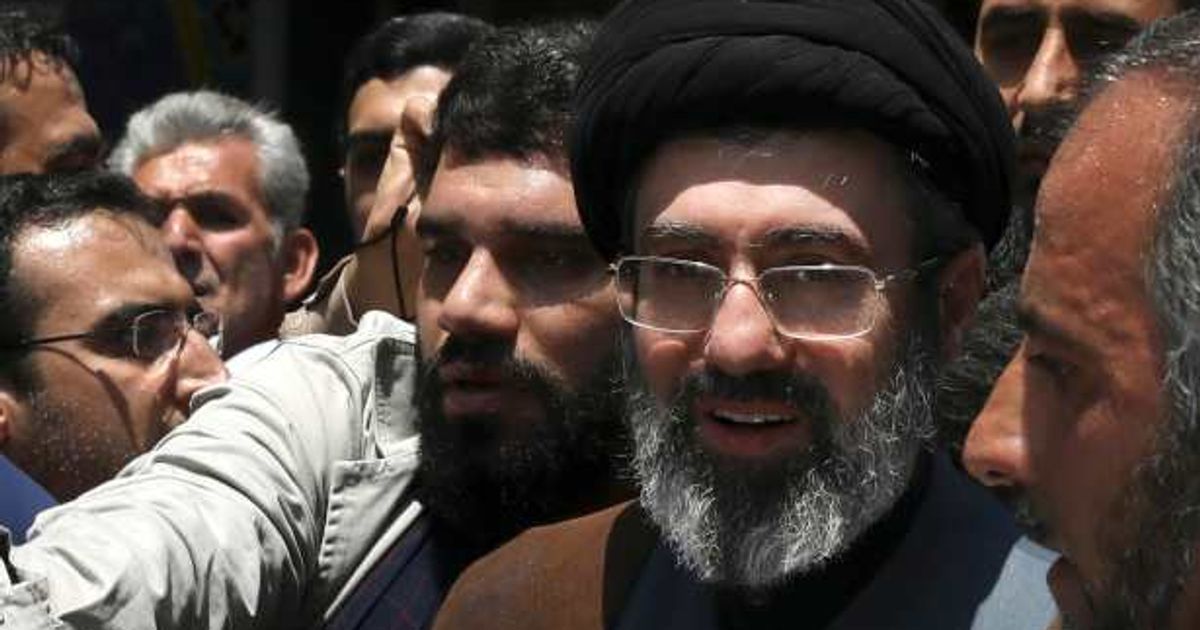
TEHRAN, IRAN: Iran’s Supreme Leader Mojtaba Khamenei, on Thursday, June 18, publicly acknowledged that he opposed the controversial US-Iran Memorandum of Understanding before ultimately allowing it to proceed, while also claiming that President Donald Trump was the driving force behind the agreement and used “all kinds of leverage” to secure it.
The unusually candid statement offers a rare glimpse into internal disagreements within Iran’s leadership and raises new questions about how much support the deal actually enjoys among the country’s ruling establishment.
In the Name of God, the Compassionate, the Merciful
— Ayatollah Mojtaba Khamenei (@MKhamenei_ir) June 18, 2026
To the passionate and loyal nation of Iran
As you have been informed, a memorandum of understanding was signed between the presidents of Iran and the United States of America.
Iranian leader says he backed deal reluctantly
In a lengthy message addressed to the Iranian people via X, Khamenei disclosed that he personally disagreed with the path taken by Iranian negotiators during talks with Washington.
“As a matter of principle, I held a different view,” Khamenei wrote, referring to the memorandum signed between Iran and the United States.
The admission is significant because Iranian leaders have largely attempted to project unity since the agreement was announced.
In the course of reaching this stage, the officials in charge, out of sincere concern and goodwill, made extensive efforts—and of course, it was the American president who, out of desperation, used all kinds of leverage to bring this about.
— Ayatollah Mojtaba Khamenei (@MKhamenei_ir) June 18, 2026
Instead, Khamenei’s remarks suggest there was resistance at the highest levels of power before Tehran moved forward.
The supreme leader said he only granted approval after receiving direct assurances from Iranian President Masoud Pezeshkian and members of the Supreme National Security Council that the interests of both the Iranian people and the broader “Resistance Front” would be protected.
According to Khamenei, Iranian officials accepted full responsibility for safeguarding those interests during future negotiations.
I, as a matter of principle, held a different view; however, out of the commitment that the esteemed president—as the head of the Supreme National Security Council—gave to me on his own behalf and on behalf of the other members
— Ayatollah Mojtaba Khamenei (@MKhamenei_ir) June 18, 2026
Perhaps the most striking section of Khamenei’s statement was his portrayal of Trump’s role in the negotiations.
Rather than describing Iran as the side under pressure following months of conflict and crippling sanctions, Khamenei argued the opposite.
regarding the safeguarding of the rights of the Iranian nation and the Resistance Front, and his explicit acceptance of that responsibility, I granted my permission.
— Ayatollah Mojtaba Khamenei (@MKhamenei_ir) June 18, 2026
“Of course, it was the American president who, out of desperation, used all kinds of leverage to bring this about,” he wrote.
Iran warns against future US demands
Although Khamenei authorized the agreement, his statement contained a clear warning that Tehran would not automatically accept future American demands.
He said Pezeshkian personally assured him that Iranian negotiators would refuse to bend if Washington attempted to expand the scope of the deal.
He also explicitly stated that if the American side seeks to make excessive demands, they will not submit to them. From this moment on, we—that is, you, the proud nation, and this humble servant—will await the realization of the aforementioned conditions.
— Ayatollah Mojtaba Khamenei (@MKhamenei_ir) June 18, 2026
“He explicitly stated that if the American side seeks to make excessive demands, they will not submit to them,” Khamenei wrote.
The supreme leader also stressed that future face-to-face negotiations should not be interpreted as acceptance of the US position.
“It’s self-evident that the in-person negotiations in the future will not mean acceptance of the enemy’s position,” he added.
However, it's self-evident that the in-person negotiations in the future will not mean acceptance of the enemy's position. We hope the blessed prayers of our Master (may God hasten his noble reappearance) will bring all kinds of victories & triumphs to honorable Iranian nation.
— Ayatollah Mojtaba Khamenei (@MKhamenei_ir) June 18, 2026
For the Trump administration, the memorandum has been presented as proof that military pressure, sanctions, and diplomacy forced Iran back to the negotiating table.
Khamenei, however, is attempting to highlight the outcome as a concession extracted from a White House eager to secure a major foreign policy victory.