Midterms 2026: Is your congressional district different? Here's what voters need to know
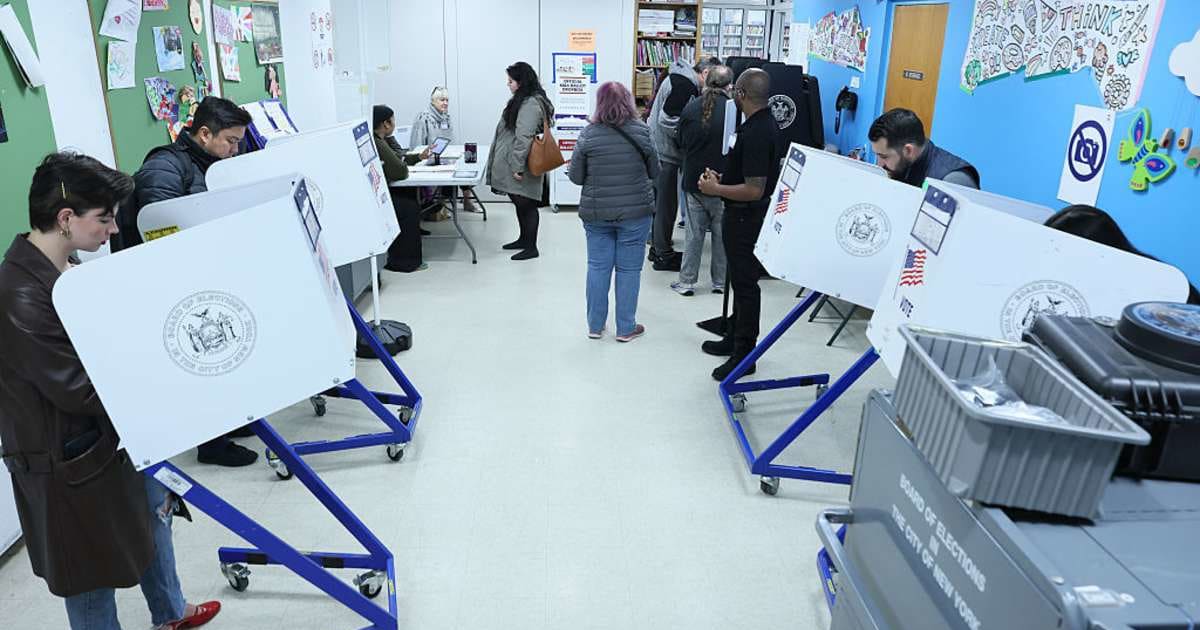
WASHINGTON, DC: The congressional map voters remember from 2024 may not be the map they see in the 2026 midterms.
Redrawn boundaries have altered the makeup of districts in several states, moving communities from one congressional seat to another.
For some voters, the change could be substantial even if their district number remains unchanged, with a new mix of neighborhoods, candidates and incumbents shaping the race.
MEAWW spoke exclusively to Christian Grose, director of the USC Democracy and Fair Elections Lab, about what California voters should check and how much a district can change even when its number stays the same.
The 2026 election cycle has produced an unusual round of mid-decade congressional redistricting. Normally, congressional boundaries are redrawn following the once-a-decade census.
This time, 10 states took action before the next census, creating a complicated mix of new maps, court decisions and ballot measures, while efforts in other states stalled.
For voters, however, the central question is much simpler: What congressional district is my address in now and which candidates will appear on my November ballot?
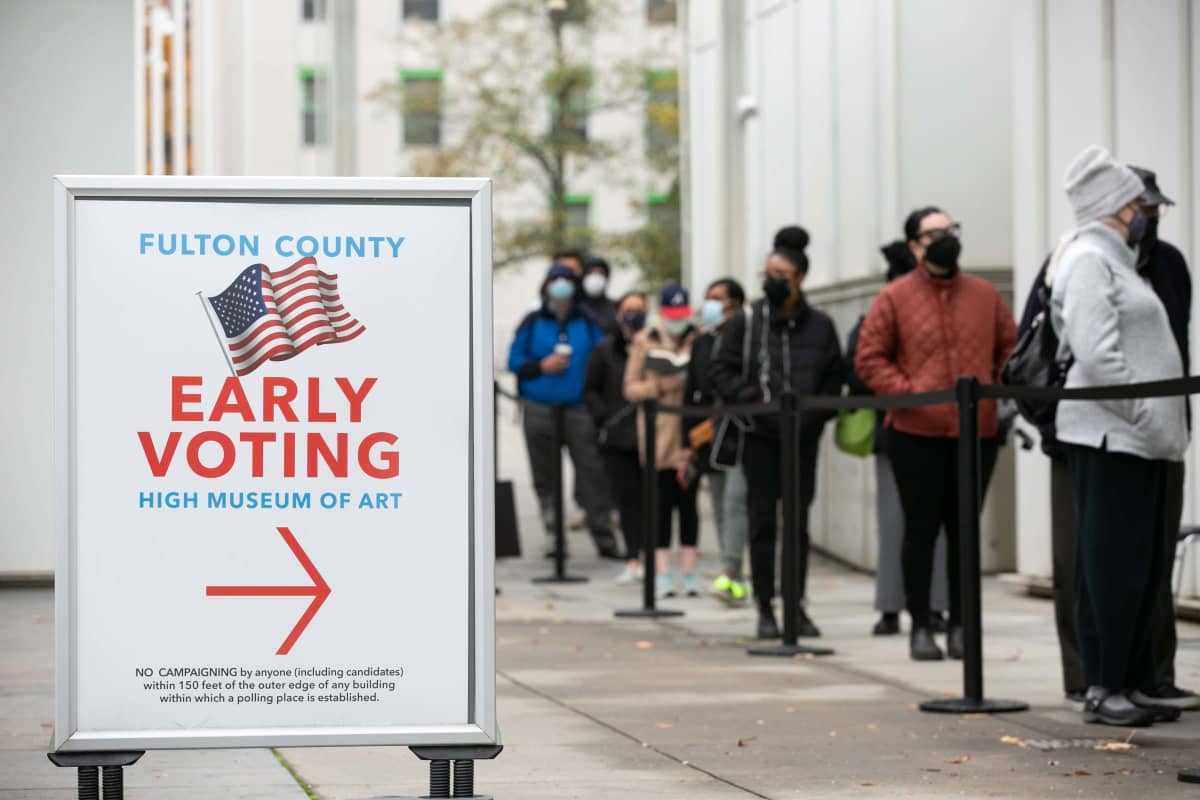
Which states have new maps
The 2026 midterms are unfolding under a new set of congressional boundaries in several states.
Alabama, California, Florida, Louisiana, Missouri, North Carolina, Ohio, Tennessee, Texas and Utah all took steps to change their congressional maps during the current redistricting cycle.
But voters in all 10 states will not use those newer boundaries in November.
Nine states, namely, Alabama, California, Florida, Louisiana, North Carolina, Ohio, Tennessee, Texas and Utah are using new congressional maps for the 2026 general election.
Missouri is the exception. Its new map was used during the August primary but was later blocked for the November election, putting the previous boundaries back in place.
The reasons for the changes also differ.

California voters approved Proposition 50, temporarily replacing the state's commission-drawn congressional map with legislatively drawn districts.
Florida adopted a new map through a special legislative session, while Louisiana changed its boundaries following a major legal battle.
North Carolina and Ohio also adopted new maps, while Tennessee changed its redistricting rules before approving new congressional boundaries.
Texas lawmakers approved another map through a special legislative process.
Court action played a significant role in some states.
BREAKING: The Supreme Court stayed lower court orders requiring Missouri to use its 2025 congressional map in November, allowing the state to continue using its 2022 map. The Court cited its earlier stay and concerns about changing election rules after voting has begun. pic.twitter.com/5NbgVPWRjr
— SCOTUS Wire (@scotus_wire) September 25, 2026
Alabama's current map has been shaped by years of litigation, while Utah's 2026 boundaries came through a court-ordered process. Louisiana's changes also followed legal challenges.
Virginia is another important example: its proposed new congressional map was struck down, leaving the state's existing districts in place for November.
What happened to Missouri's map
Missouri voters face an unusual situation in the 2026 midterms because the congressional map used for the August primary will not be the one used for the November general election.
The state adopted a new congressional map in 2025, and those boundaries were in effect when voters cast ballots in the August primary.
The new map was later challenged through a referendum effort.
On September 3, the Missouri Supreme Court ruled that the map could be put before voters and paused its use for the general election.
That brought Missouri's previous congressional boundaries back into effect for November.
The US Supreme Court later declined to restore the newer map for the general election.
As a result, Missouri voters are heading into November under the older congressional map, even though they selected their primary candidates under the newer boundaries.
The candidates who won their respective primary races will still appear in the general election, but the geographic areas represented by their district numbers may not be the same as they were during the primary.
Voters will also decide the referendum on the newer map.
For Missouri voters, that makes it important to check the congressional district assigned to their current address rather than relying on primary-election information.
The district number may look familiar, but the voters and communities included within it can be different.
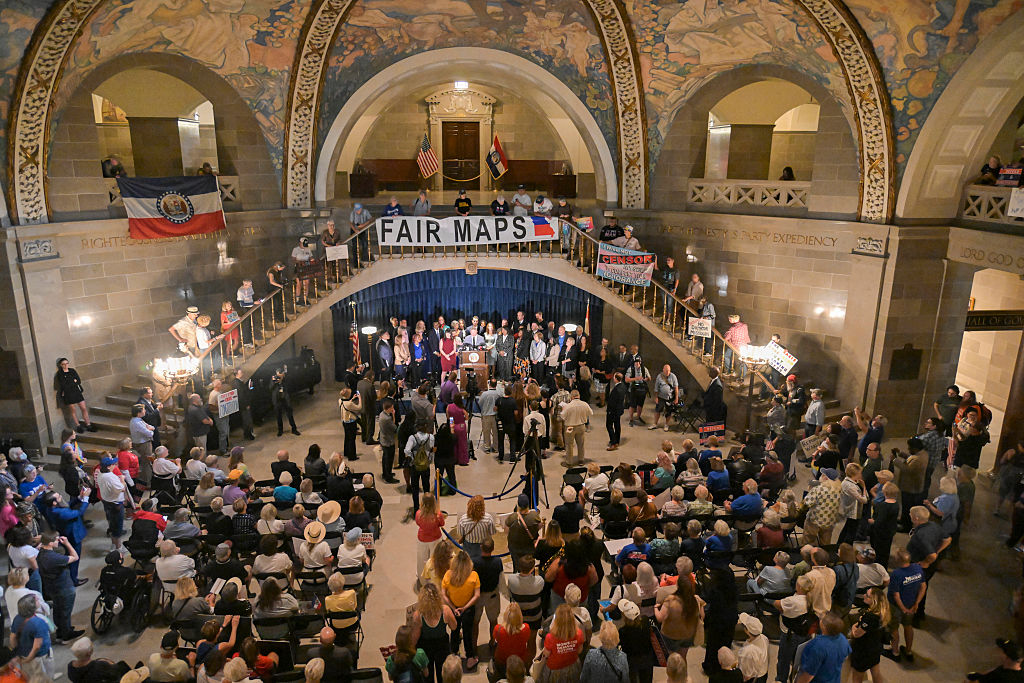
California voters face new lines
California presents one of the clearest examples of why voters should look beyond a district number.
California normally relies on the Citizens Redistricting Commission to draw its congressional boundaries.
The commission's maps based on the 2020 census were used for the 2022 and 2024 congressional elections.
Proposition 50 changed that arrangement for the current congressional election cycle.
California voters approved the measure in November 2025, allowing legislatively drawn congressional maps to be used beginning with the 2026 elections.
That means a California voter who remembers their district from 2024 cannot automatically assume that the same geographic area is still part of that district.
Christian Grose, Director of the USC Democracy and Fair Elections Lab, while speaking exclusively to MEAWW, said the first thing California voters should pay attention to is who is actually listed as a candidate for their district.
That is particularly important for voters who discover that their address has been moved into a different congressional district.

Grose, while speaking to MEAWW, said, “Even if the congressional district number did not change, the boundaries may have changed a lot.”
He added, “For instance, CA48 is a competitive election in the San Diego County and Riverside County area. Some voters in the old map were in CA48 and also the new CA48, while others who previously were in CA41 or other districts are now in CA48.”
Grose also noted that not every California district changed to the same degree.
Some voters may see only relatively modest boundary adjustments, while others live in areas where the congressional map looks considerably different.
"Regions with the biggest changes will include parts of San Diego County, Riverside County, far northern California, part of the Sacramento area, and a bit of the Central Valley," Grose said, adding, "Especially those living in rural far northern California and in areas near Sonoma, Marin, and Napa will have pretty different maps compared to the Commission."

Grose said voters should therefore compare their current district information with the district they had in 2024, particularly if a familiar representative is no longer associated with their address.
Another practical check is the ballot itself.
California's secretary of state confirms that the Proposition 50 congressional districts apply to the 2026 congressional elections.
Voters whose addresses fall into newly configured districts will see candidates for those districts on their 2026 ballots.
While speaking to MEAWW, Grose specifically advised California voters to check their sample ballot and mail ballot and to research unfamiliar candidates rather than relying on memories from the previous election.
The timing can also cause confusion. The new congressional boundaries govern the 2026 election, but the newly elected members will begin serving under those districts in January 2027.
The important point for voters is that the congressional race on the 2026 ballot is based on the new map.
Utah and Virginia commission disputes
Utah and Virginia took very different paths during the 2026 redistricting process, showing why voters should distinguish between a proposed map and the boundaries actually used in an election.
In Utah, the congressional map was shaped by a court ruling after a dispute over the state's redistricting system.
The legal fight involved Proposition 4, Utah's 2018 ballot measure that established an independent redistricting commission, and whether lawmakers had properly changed that framework.
Utah courts ultimately found problems with the congressional boundaries and ordered a new map. Those court-ordered districts are being used for the 2026 election.
Virginia followed a different path. The state sought to change its constitution to allow congressional redistricting during the decade and held a referendum in April 2026.
The Virginia Supreme Court later invalidated the referendum, finding that the constitutional amendment process had not followed the required procedure.

That decision also nullified the proposed congressional map, leaving Virginia's existing districts in place for November.
For voters, the takeaway is simple: a proposed redistricting plan does not necessarily become the final election map.
What voters actually need to check
The first thing voters should establish is their current congressional district based on their home address.
Do not rely solely on the district remembered from the 2024 election. In a redistricted state, that information may now be outdated.
The second check should be the candidate list.
If the incumbent a voter expects isn't on the ballot, or the names are unfamiliar, the address may now be in another district.
But voters should also remember that the opposite can happen: the district number can stay the same while its geographic boundaries change.
That is why the number printed beside a congressional race should not be treated as the entire story.

Voters should also review their sample ballot or official mail ballot before voting. These documents can help confirm which congressional contest is associated with their address.
This is particularly important in Missouri, where the map changed after the primary.
If different websites display different district information, voters should give priority to the latest information provided by their state or local election officials.
An old candidate website, campaign page or map can remain online even after district boundaries have changed.
And if the district number looks familiar, voters should still check the geography.

The biggest takeaway for voters is simple: do not assume that your 2024 congressional district is still your 2026 district.
Check the district attached to your current address. Check the candidates. Check the sample ballot or mail ballot. And if a district number looks familiar but the candidates or boundaries look different, investigate before casting your vote.