'Must remain open': How the Trump-Xi summit quietly set a red line for Iran
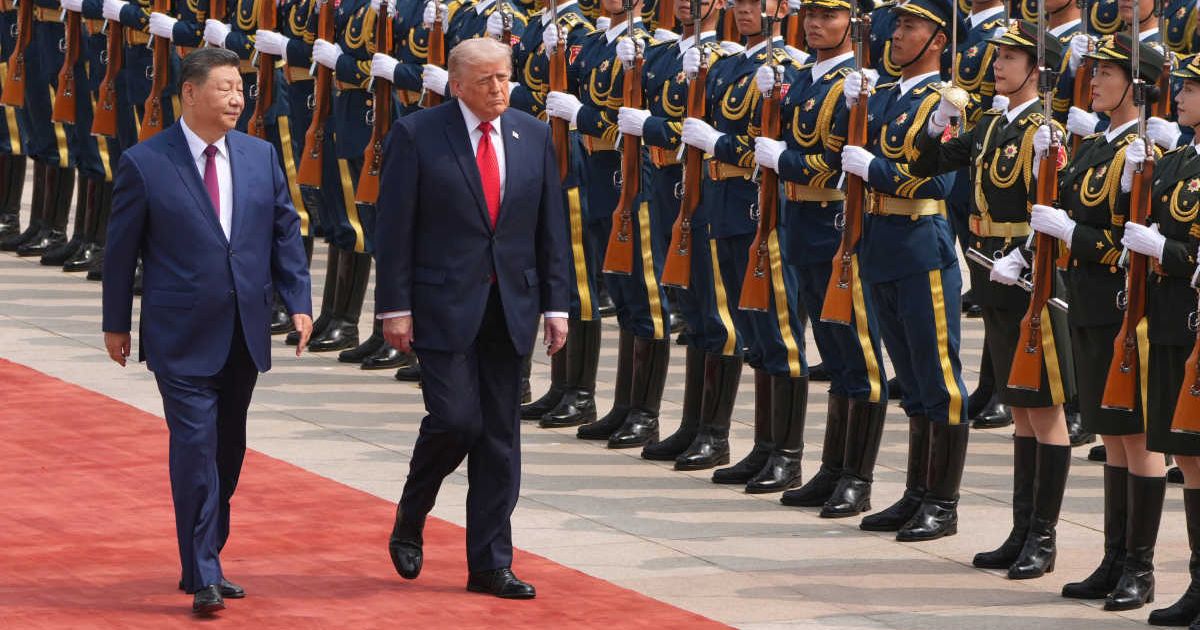
BEIJING, CHINA: President Donald Trump and Chinese President Xi Jinping agreed during high-level talks in Beijing on Thursday, May 14, that the Strait of Hormuz “must remain open” and that Iran “can never have a nuclear weapon,” according to a White House readout issued after the summit.
The meeting came amid ongoing tensions surrounding the Iran war and concerns over disruptions to global oil supplies passing through the critical shipping route.
Trump’s visit marked his first trip to China in nearly nine years and included bilateral talks focused on trade, energy security, artificial intelligence, tariffs and the Middle East conflict.
President Trump walks the red carpet with President Xi outside of the Great Hall of the People
— Rapid Response 47 (@RapidResponse47) May 14, 2026
🎥: @MargoMartin47 pic.twitter.com/OcVvT2UFUA
Trump and Xi discuss Iran war and global energy routes
According to the White House, both leaders agreed that maintaining open access to the Strait of Hormuz was essential to global energy stability.
“The two sides agreed that the Strait of Hormuz must remain open to support the free flow of energy,” the White House said in its official readout of the meeting.
The statement added that Xi “made clear China’s opposition to the militarization of the Strait and any effort to charge a toll for its use,” while also expressing interest in increasing purchases of American oil to reduce China’s reliance on the strategic waterway.
The White House also said the two countries agreed that “Iran can never have a nuclear weapon,” a position Trump has repeatedly emphasized during negotiations surrounding the conflict.
From the Bilateral Meeting in Beijing:
— The White House (@WhiteHouse) May 14, 2026
President Trump had a good meeting with President Xi of China. pic.twitter.com/WaH8hR1ZV3
The Iran war had been expected to dominate discussions between the two leaders, particularly as Tehran has publicly sought Beijing’s support for its terms in a potential peace agreement with Washington.
Prior to the summit, Secretary of State Marco Rubio said the administration had warned China against providing support to Iran.
“We’ve made clear to them that any support for Iran would obviously be detrimental for our relationship,” Rubio said during an appearance on Fox News, arguing that Beijing also had a strong economic interest in stabilizing oil shipments through the region.
.@SecScottBessent on meeting with the Chinese Vice Premier: "We’re going to talk about forming a board of trade for the bilateral trade between the U.S. and China, and we’re going to talk about a board of investment that will be responsible for investment in nonsensitive areas." pic.twitter.com/jnYYrsCZJ9
— Rapid Response 47 (@RapidResponse47) May 14, 2026
Treasury Secretary Scott Bessent, who traveled to Beijing alongside Trump, said China would likely work “behind the scenes” to help reopen the Strait fully.
“I think they’re going to do what they can,” Bessent told CNBC, adding that the Iranian leadership had become increasingly difficult to negotiate with following recent military developments.
Trump invites Xi to the White House after extended Beijing talks
Thursday’s summit included more than two hours of discussions between Trump and Xi, with both leaders emphasizing the importance of maintaining stable ties between the world’s two largest economies.
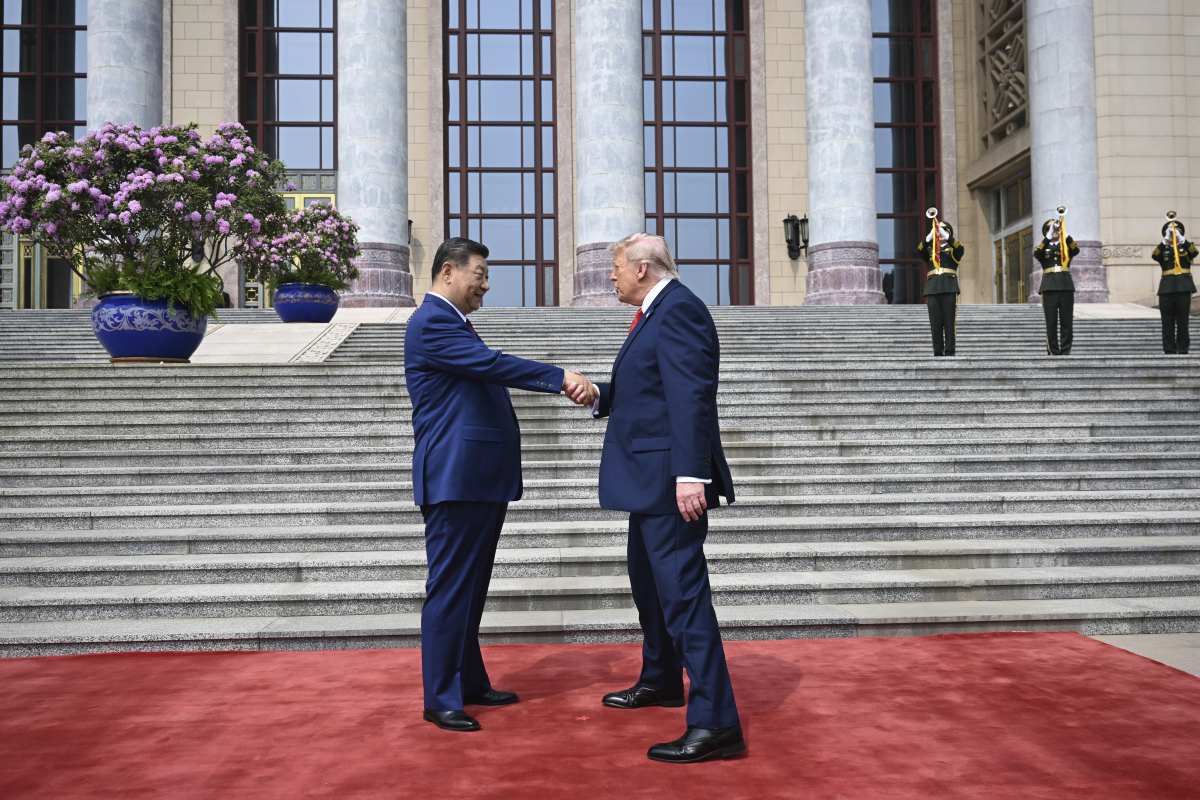
Speaking during a state banquet later in the day, Trump publicly invited Xi to visit Washington.
“Thank you again, President Xi, for this beautiful welcome, and tonight, it is my honor to extend an invitation to you, Madam Peng, to visit us at the White House this September 24 and we look forward to it,” Trump said.
.@POTUS delivers remarks at the state banquet dinner at the Great Hall of the People: "It was a fantastic day, and in particular, I want to thank President Xi, my friend, for this magnificent welcome... and for so graciously hosting us on this very historic state visit." pic.twitter.com/lcFTC7wUY9
— Rapid Response 47 (@RapidResponse47) May 14, 2026
Xi also stressed the significance of US-China relations during the banquet remarks. “We both believe that the US-China relationship is the most important bilateral relationship in the world. We must make it work and not mess it up,” the Chinese leader said.