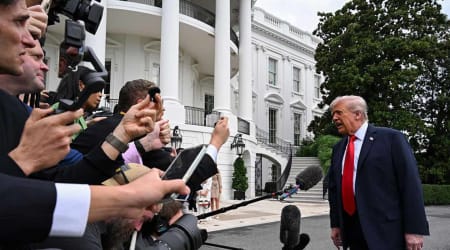
NATO chief Mark Rutte praises Trump for making world ‘safer’ after Iran war
CNN’s Jake Tapper: “Is the world safer today than before the [Iran] war started?”
— RedWave Press (@RedWavePress) April 8, 2026
NATO Secretary General Mark Rutte: “Absolutely! This is thanks to President Trump's leadership. Degrading these capabilities is really very important for your and my safety here in the U.S.,… pic.twitter.com/VzMWJjorFH
WASHINGTON, DC: NATO Secretary-General Mark Rutte said on Thursday, April 9 that the world is “safer” under President Donald Trump, citing recent US military actions targeting Iran’s capabilities.
Rutte’s remarks come amid escalating tensions over the Iran conflict and growing divisions between Washington and European allies on NATO’s role. While he praised Trump’s leadership, conflicting signals from the White House have highlighted a widening rift within the alliance.
The comments follow a series of meetings and public statements that underscore disagreements over military cooperation, defense commitments and responsibility-sharing within NATO.
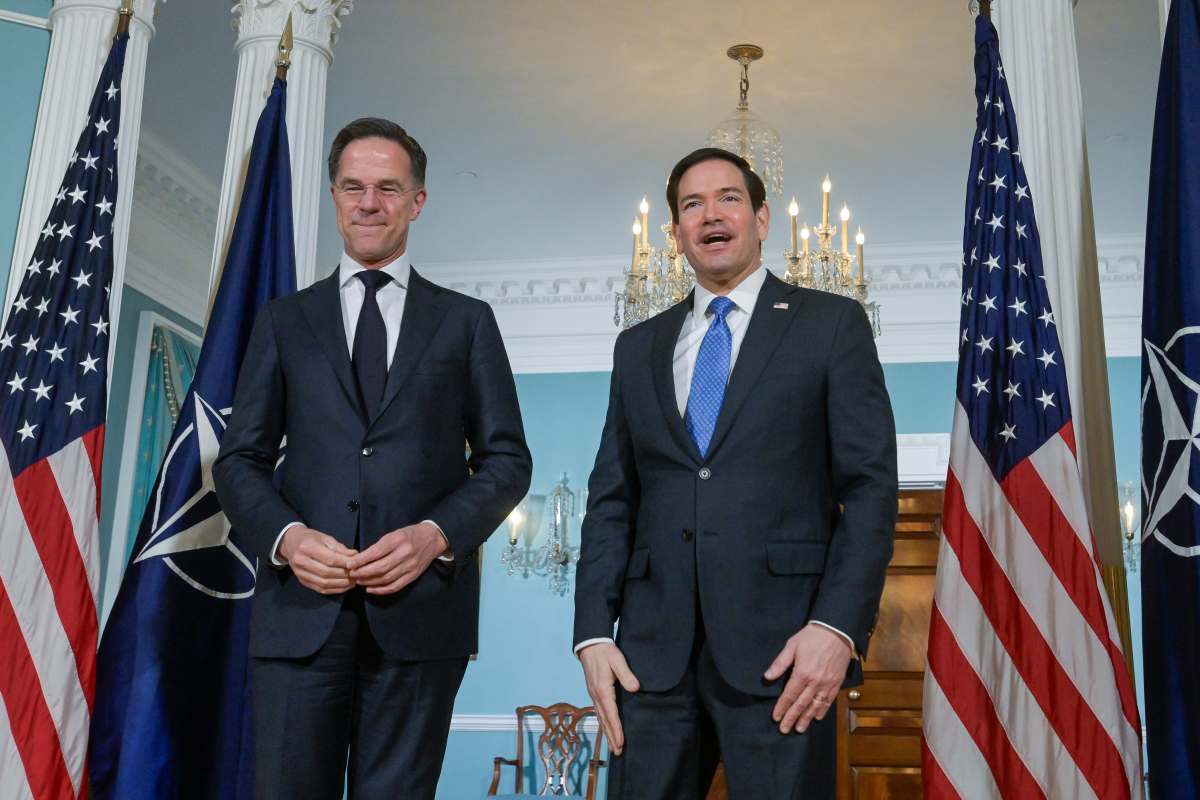
Rutte praises Trump leadership
Rutte made the remarks during an interview on 'The Lead with Jake Tapper', when asked whether the world had become safer.
"Absolutely, because this is thanks to President Trump’s leadership," Rutte said.
"Degrading these capabilities is really, really very important for your and my safety here in the U.S., in Europe, in the Middle East," he added.
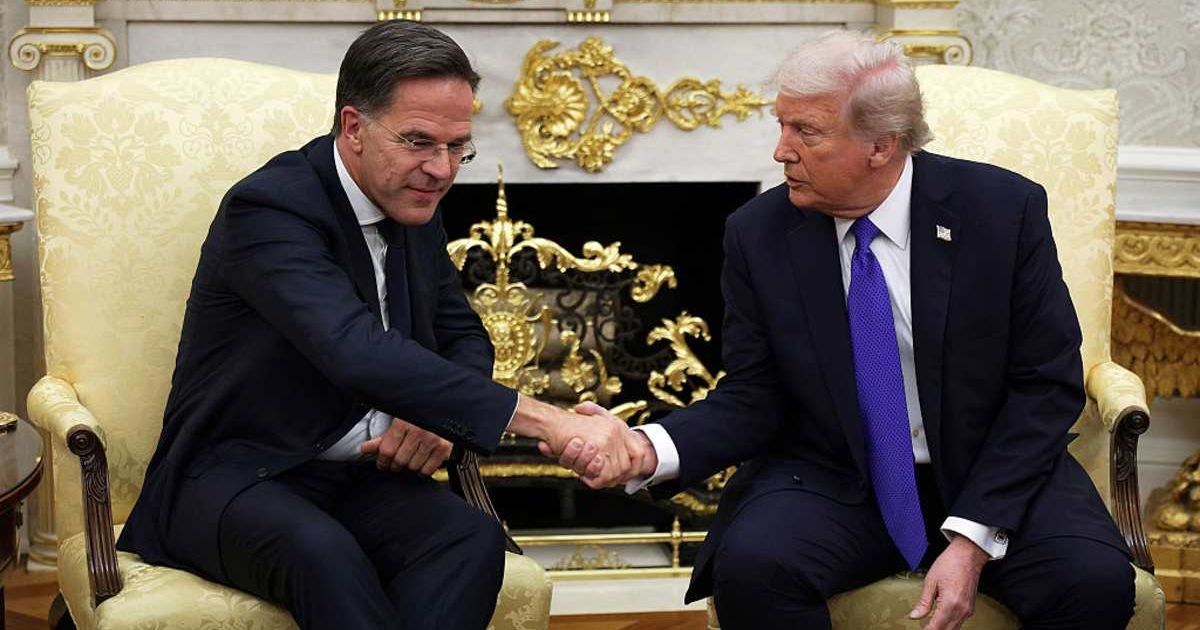
He also described a recent meeting with Trump as candid but cooperative despite disagreements with some NATO allies.
"There is a disappointment, clearly, but at the same time he was also listening carefully to my arguments of what is happening," Rutte said. "This was a very frank, very open discussion, but also a discussion between two good friends."

Rutte acknowledged that some European nations refused to support US operations linked to Iran, including denying access to airspace and military bases.
"Some specifically said, 'You can’t use our bases, you can’t even fly over our airspace,'" he said. "But the large majority - including France - of European nations has been doing what they committed before they would do in a case like this."
He added that European cooperation still enabled US military operations.
"Europe as a platform of power projection for the United States was in full play over the last six weeks," he said. "Not all European nations lived up to those commitments, and I totally understand that he is disappointed."
NATO role sparks tensions
Rutte suggested NATO allies could assist in securing the Strait of Hormuz after discussions in Washington, indicating a potential coalition effort.
"If NATO can help, obviously, then there is no reason not to be helpful," he said.

However, a White House official rejected that possibility, saying, "As President Trump said yesterday, NATO was tested, and they failed. He has zero expectations for NATO at this point and did not ask them for anything, even though it's a fact that they benefit from the Strait of Hormuz far more than the United States."
The conflicting statements reflect deepening tensions over whether NATO should play a role in the conflict.
Defense gap highlighted
Rutte credited Trump with pushing NATO members toward increased defense spending commitments.
"It was his leadership which brought about the Hague spending commitment, the 5%, which is a transformational change in NATO," he said. "Without him, we would never have gotten there."
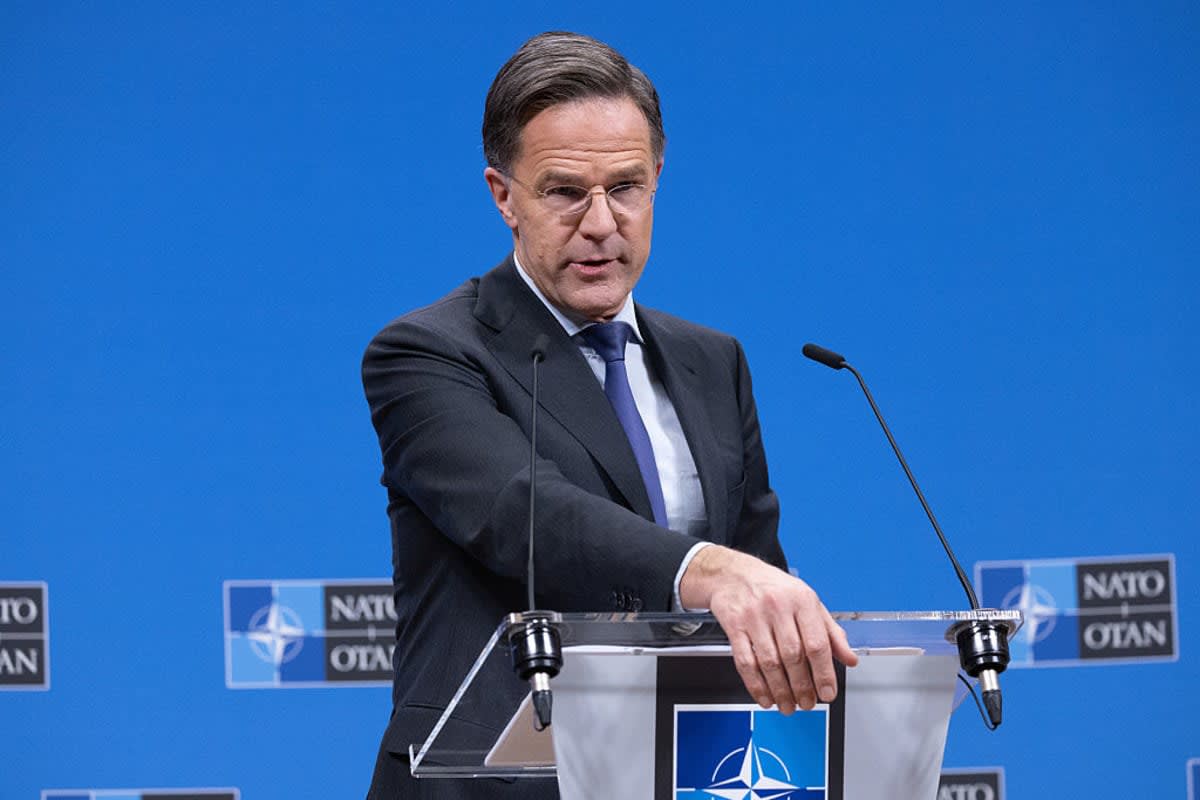
He also warned that Europe’s reliance on US military power has created an “unhealthy codependence,” arguing that the alliance must evolve toward a more balanced partnership.
"Western European forces shrank, and defense budgets shriveled… in favor of what I would call an unhealthy codependence," Rutte said. "This is a move from codependence to a transatlantic alliance grounded in true partnership. There will be no going back."