Taiwan commits to $250B US investment as part of landmark tariff reduction deal
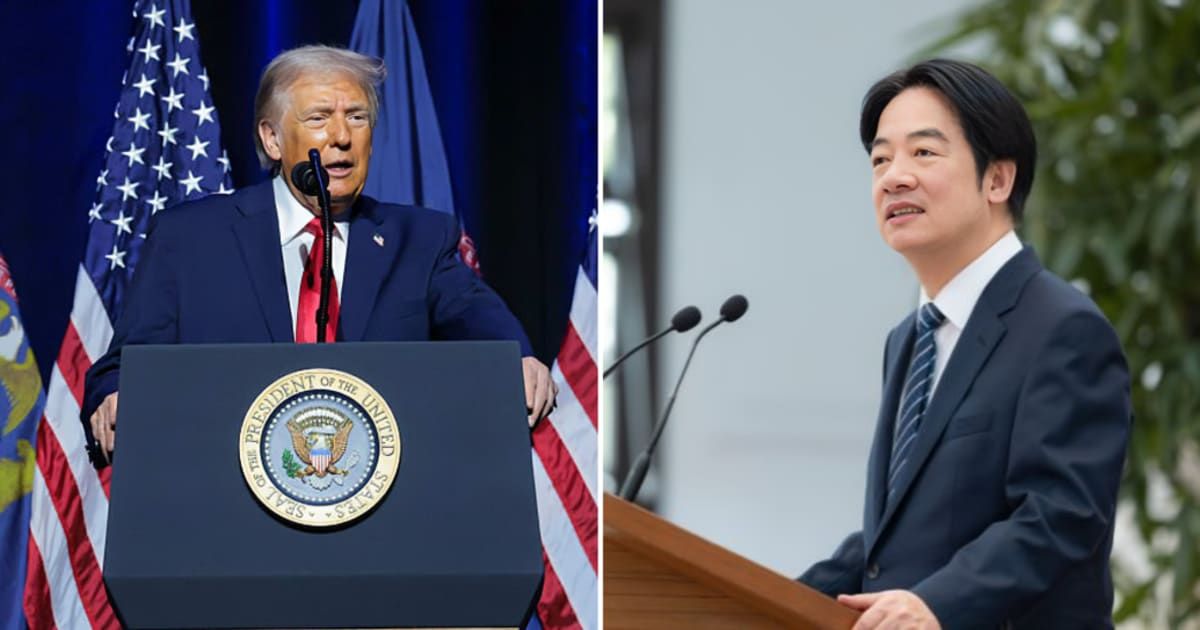
WASHINGTON, DC: The United States and Taiwan finalized a major trade agreement that lowered tariffs on Taiwanese goods in exchange for sweeping investment commitment in the American technology sector.
Announced on Friday, January 16, the deal secured a pledge of $250 billion from Taiwan, with the bulk directed toward the strategically critical semiconductor industry.
The agreement recalibrated economic ties with Taiwan, cutting levies to match those imposed on other key Asian partners.
US officials said that the move was designed to expand domestic production capacity while tightening commercial and technological links with Taipei, even as China voiced strong objections.
Tariffs slashed to fifteen percent
Today, #Taiwan & the #US reached a landmark agreement lowering tariffs on Taiwanese goods to 15%. We'll also see boosted economic integration, high-tech collaboration & two-way investments across key sectors, paving the way for a stronger partnership & more prosperous future.
— 賴清德Lai Ching-te (@ChingteLai) January 16, 2026
Under the terms of the pact, the United States will reduce tariffs on Taiwanese imports from 20% to 15%, bringing Taiwan into parity with regional allies such as Japan and South Korea.
Taiwan President Lai Ching-te announced the breakthrough on social media. “Today, #Taiwan & the #US reached a landmark agreement lowering tariffs on Taiwanese goods to 15%,” Lai wrote on X.
He said that the deal would drive “boosted economic integration” and expand “two-way investments across key sectors.”
Billions invested in the semiconductor sector
🚨 BREAKING: President Trump just reached a HALF-TRILLION DOLLAR trade deal with TAIWAN, in a monumental victory
— Eric Daugherty (@EricLDaugh) January 15, 2026
This is HUGE!
$250 BILLION is coming in to invest in USA chipmaking.
The other $250B is coming from the Taiwanese government for the supply chain.
TRUMP WINS. 🇺🇸 pic.twitter.com/XYdH4YsXiT
In return for the tariff relief, Taiwanese firms will commit $250 billion in new US investment. The funding is expected to concentrate on semiconductors, energy infrastructure, and artificial intelligence.
Taiwan Semiconductor Manufacturing Company (TSMC), already building multiple facilities in Arizona, is positioned to anchor the expansion.
The US Department of Commerce said in a fact sheet that the capital influx will “drive a massive reshoring of America’s semiconductor sector,” strengthening supply chains viewed as vital to national security.
Paving way for stronger partnership
WATCH: Secretary Lutnick breaks down the historic U.S.–Taiwan deal:
— U.S. Commerce Dept. (@CommerceGov) January 15, 2026
"Taiwan goes from 20% to 15% tariffs on key goods like generic pharmaceuticals, airplane parts, and certain natural resources. The objective is to bring 40% of Taiwan's semiconductor supply chain domestically,… pic.twitter.com/vNW7NXOQdg
Lai framed the agreement as a long-term strategic step. He said that it opened the door to deeper “high-tech collaboration” between the two economies.
“We’ll also see boosted economic integration… paving the way for a stronger partnership & more prosperous future,” Lai wrote. US officials echoed that view, describing the pact as a framework to lock in cooperation across industries central to future growth.
Beijing opposes new trade agreement
The Chinese side always firmly opposes countries having diplomatic relations with China negotiating and signing any agreement with China's Taiwan region that carries sovereign implications and is of an official nature, Chinese Foreign Ministry spokesperson Guo Jiakun said on…
— Global Times (@globaltimesnews) January 16, 2026
The response from Beijing was swift. China’s foreign ministry criticized the deal, reiterating its position that Taiwan is part of Chinese territory.
Chinese officials warned that no country should enter agreements with Taipei that imply sovereign standing. The ministry condemned the pact as a breach of the “One China” principle, arguing it undermined China’s territorial claims and regional stability.