‘They shouldn’t have entered the storm’: Expert questions Learjet pilots’ final route call
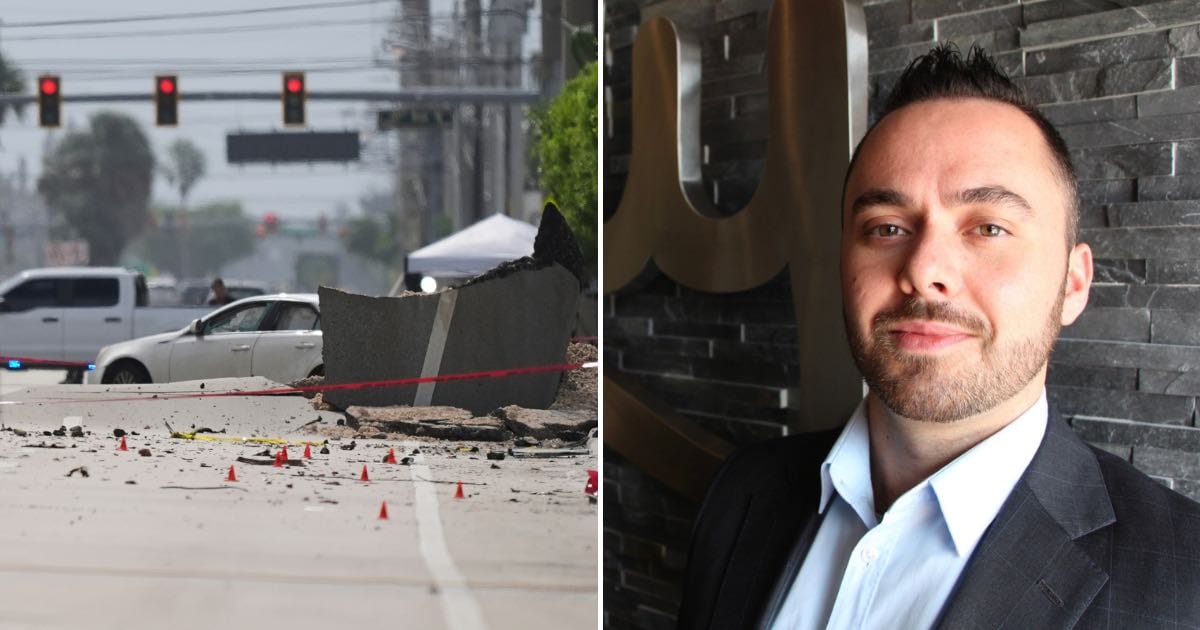
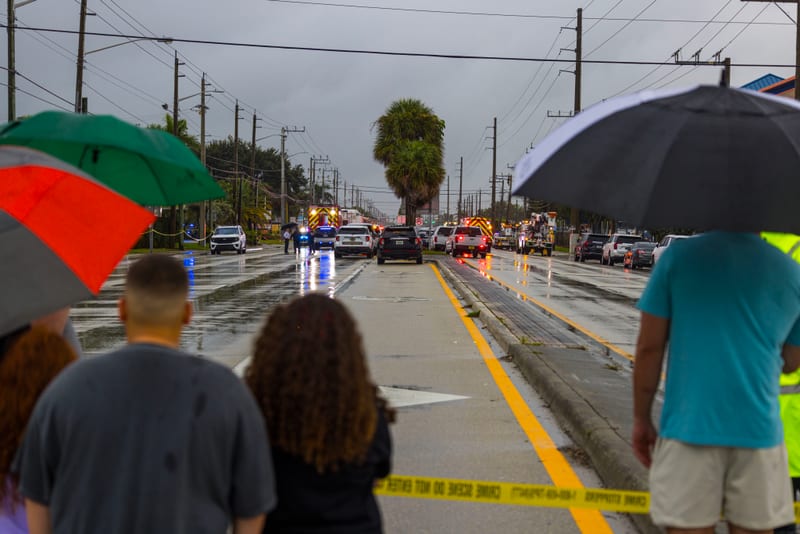
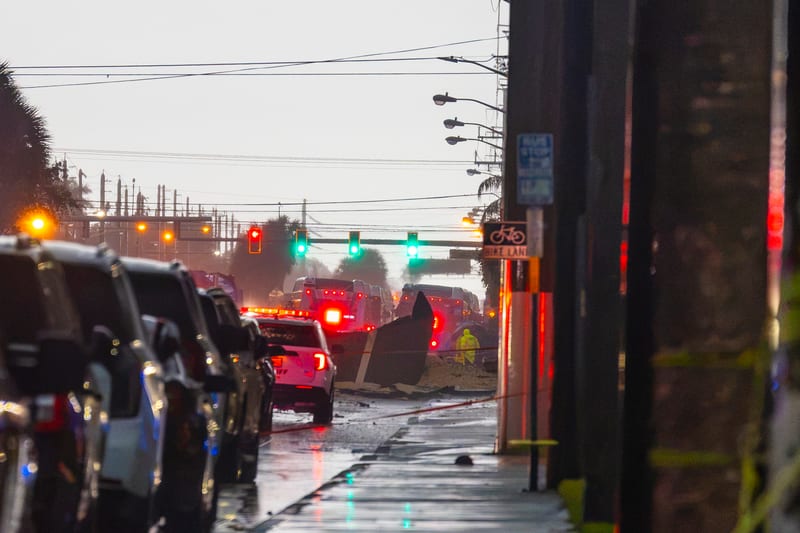
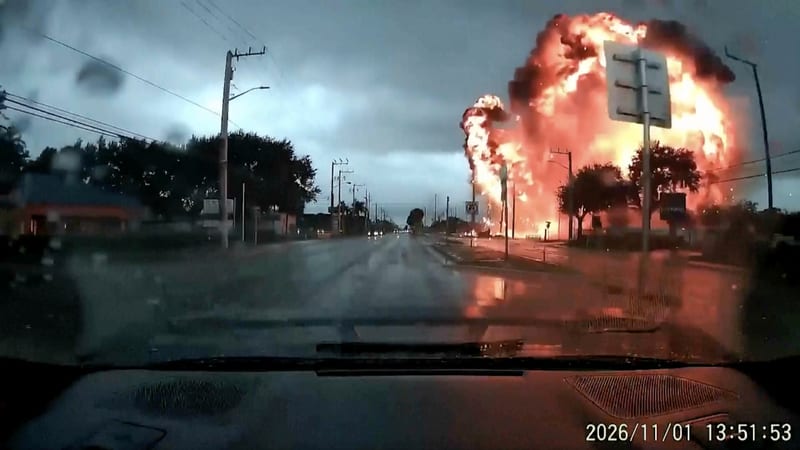
WEST PALM BEACH, FLORIDA: A Learjet 60 plunged thousands of feet before crashing into a residential area in Palm Beach County, Florida, on Sunday, November 1, killing all nine people aboard. Aviation expert Justin Crabbe has questioned the crew's decision to enter stormy weather, describing it as a possible "poor judgement call."
Crabbe, CEO of private jet rental platform Jettly, spoke to MEAWW about the aircraft's final moments, including reports of icing, turbulence, an attempted climb and an overspeed condition. He also discussed the discovery of parts of the aircraft's left elevator away from the main crash site and what investigators will need to examine before determining the cause.
Justin Crabbe questions Learjet pilots' decision to enter storm
Crabbe believes the crew should have avoided the storm rather than attempting to fly through the weather. According to him, pilots are taught early in flight school to stay away from storm systems. He questioned why the aircraft did not deviate far enough from the weather.
The crew had reportedly requested deviations to the left and right of their course, which Crabbe described as standard procedure. He understood that air traffic control had approved the requests but questioned whether the aircraft moved far enough away from the storm.
"Ultimately, I believe this incident came down to a poor judgement call. They shouldn't have entered the storm," he said.
Crabbe added that modern aircraft radar makes storm systems relatively easy to identify and avoid. He also raised the possibility that the crew's decision-making may have been affected by what pilots call "get-there-itis," a tendency to focus on reaching a destination despite conditions that may require a change of plan.
He said the reported icing conditions also needed closer examination. Before the crash, the crew had reported manageable clear icing and moderate turbulence at 35,000 feet. They subsequently requested permission to climb to 37,000 feet.
Crabbe said investigators would need to establish how much ice had accumulated on the aircraft and whether its anti-icing systems were working correctly. Clear ice can build up rapidly and affect an aircraft's aerodynamic performance.
He also pointed out that a climb at such a high altitude can leave an aircraft with limited performance margins, particularly when it is already dealing with icing and turbulence.

Learjet 60's attempted climb raises questions about final moments
The emergency reportedly began shortly after the aircraft was cleared to climb. Crabbe said the additional demands of climbing could have affected the aircraft if it was already experiencing increased drag from ice accumulation.
At higher altitudes, available excess thrust decreases, while the margin between an aircraft's low-speed and high-speed operating limits can become narrower. If the aircraft cannot maintain sufficient airspeed during a climb, it could approach an aerodynamic stall.
However, Crabbe cautioned that the timing did not establish that the climb caused the emergency.
"That doesn't mean the climb caused the emergency. The timing is certainly worth investigating, but timing alone doesn't establish causation," he said.
Investigators would need to examine the aircraft's recorded airspeed, altitude, vertical speed, pitch attitude, autopilot status and engine performance before and after the climb clearance. They would also need to establish whether the aircraft actually began climbing and how it responded.
The crew subsequently reported an overspeed condition before the aircraft entered an extremely rapid descent. Crabbe said an overspeed can develop when an aircraft enters a steep nose-down position and accelerates beyond its operating limits.
He listed several possible explanations, including an aerodynamic stall, severe turbulence, an autopilot or flight control malfunction, or structural failure.
One possibility is that the aircraft initially experienced a low-speed event, lost control and then accelerated rapidly during its descent. However, Crabbe stressed that this was only one possible explanation.
He also said air traffic control recordings could not establish what triggered the emergency or reveal the aircraft's actual attitude. The recordings provide information about what the pilots reported and how quickly the situation developed, but investigators will need physical and flight data to understand what happened.
Separated Learjet left elevator could reveal clues about crash
Another important part of the investigation is the discovery of parts of the aircraft's left elevator away from the main crash site.
Crabbe explained that the elevator is a primary flight control surface responsible for controlling the aircraft's pitch, or the movement of its nose up and down. If it becomes damaged or separates, the crew's ability to control the aircraft can be seriously affected.
The main question is whether the elevator broke away before the aircraft lost control or during the rapid descent.
"If the elevator separated before the aircraft entered its rapid descent, investigators would need to consider whether a flight control or structural failure contributed to the initial loss of control," he said.
However, Crabbe believes the component may have separated during the overspeed event rather than because of the turbulence. He made clear that this was his speculation and not an established finding.
Investigators will examine the fracture surfaces, attachment points, hinges and surrounding structure to understand how the component broke. They will also study where the pieces were recovered and whether the damage points to aerodynamic overload, fatigue, a pre-existing defect or impact forces.
Speaking to MEAWW, Crabbe said flight recorder data, if available, would also be important. Airspeed, altitude, control inputs, autopilot engagement and engine performance could help establish whether the aircraft first experienced a weather-related problem or a mechanical failure.
The aircraft's maintenance history, particularly records involving flight controls, trim systems, autopilot components and anti-icing equipment, will also need to be reviewed.
He cautioned that weather-related problems and structural failure were not necessarily separate possibilities. An aircraft could initially experience an aerodynamic problem before suffering structural damage during an uncontrolled descent. Equally, an initial mechanical or structural failure could have caused the loss of control.

Adam Robinson, Helen Sharp and their children among nine Florida crash victims
The November 1 crash claimed the lives of all nine people aboard the Learjet 60, including 55-year-old pilot-in-command Jeff Gregory and 20-year-old co-pilot Nathalia Gadelha Filgueiras, along with passengers Adam Robinson, Helen Sharp and their two young children.
The family's friends, Charmi Fehr and Rachael Reed, were also on board, along with the children's nanny, Anita Maria Apellido Cetina.
Florida Governor Ron DeSantis described the aircraft's final moments while speaking about the crash.
"It looked like a missile going down. It left a big crater," he said.