Could the Jensen Huang scandal hurt Trump’s AI agenda? Expert flags potential political fallout
WASHINGTON, DC: President Donald Trump was still reeling from Democrats’ blue tsunami shattering his Republicans’ red castle when another storm began gathering at his doorstep.
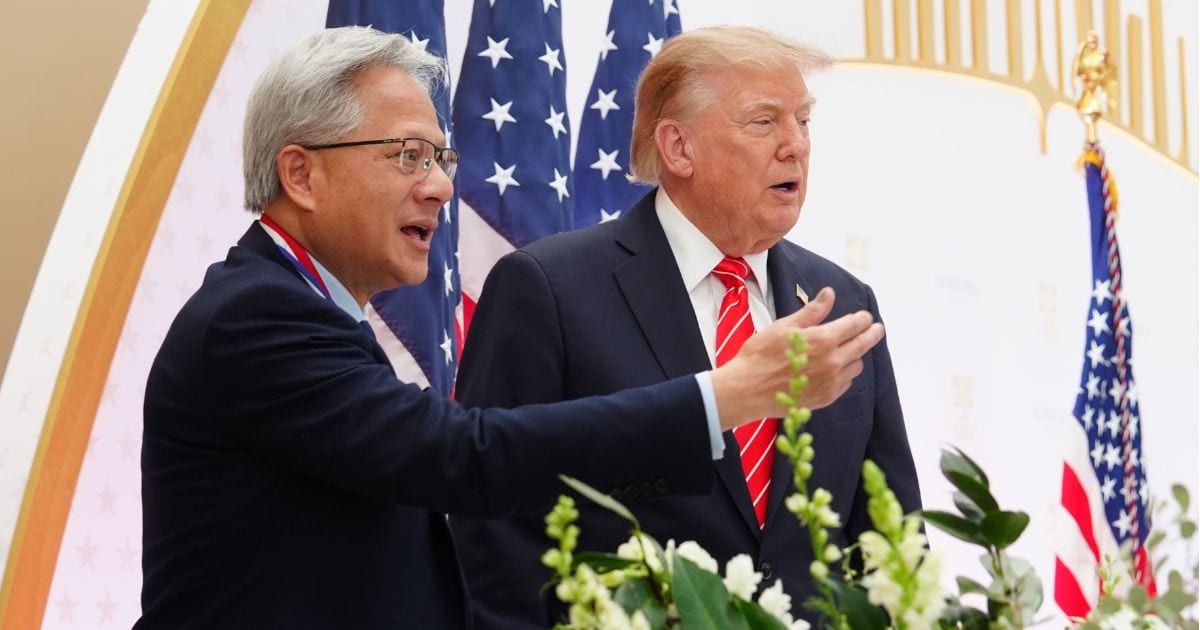
The 80-year-old president has found himself thrust into an unexpected spotlight as his close relationship with Nvidia CEO Jensen Huang faces renewed scrutiny after the tech mogul’s personal life turned into a wider national security controversy.
The controversy, which has prompted the tech giant to launch an independent investigation and triggered FBI involvement, began after Jensen admitted he was "unfaithful" to his wife and apologised for hurting her and their children.
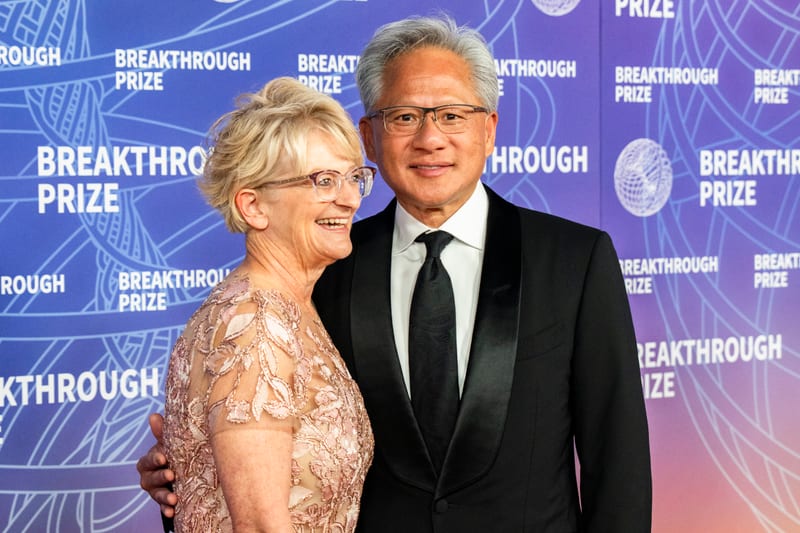
Jensen did not reveal the name of the woman he was involved with, but the New York Times reports that she has been identified as Alice Huang.
Alice is a former Megaspeed executive whom US intelligence agencies reportedly suspected of working as an asset for China's Ministry of State Security.
The fallout has raised questions about what the White House knew, when Trump was informed, and whether the administration adequately considered the potential security risks while engaging with the Nvidia chief.
These questions are particularly significant because Jensen has become an influential figure in Trump's technology strategy, while Nvidia's advanced processors remain central to the global competition between Washington and Beijing.
Ali Wyne, Senior Research and Advocacy Adviser for US-China Relations at the International Crisis Group, exclusively told Meaww that Trump's relationship with Jensen could come under strain with the upcoming Congress.
Jensen Huang scandal raises US national security concerns
Experts believe the episode has significant implications for US intelligence, relations with China and the global AI race.
The US restricts exports of its most advanced Nvidia chips to China over concerns that they could accelerate Chinese AI development and undermine American technological and military advantages.
Ryan Ellis, an associate professor at Northeastern University who specialises in communication law and policy, infrastructure politics and cybersecurity, spoke to Northeastern Global News about the allegations.
He said that if Alice's Megaspeed purchased Nvidia chips to supply Chinese customers while circumventing US restrictions, it could amount to a serious violation of American export-control laws.
“If they were to make their way to China, [the Chinese] would be able to either use them or reverse-engineer them in … ways that are counter to US interests,” he said.
The allegations also raise questions about whether Jensen may have knowingly or unknowingly sought to influence US policy on behalf of a foreign power.
Ellis warned that his alleged position could have made him vulnerable to blackmail, potentially giving Chinese intelligence agencies leverage over him.
黄仁勋和情人Alice Huang更多照片首次曝光 https://t.co/2zOmMkOBcm
— 大厂白洁 (@santoulang) November 9, 2026
Ellis also highlighted the risk of sensitive information being leaked, including technical specifications, chip design details and confidential information about companies using Nvidia's technology.
However, Nvidia has maintained that its board had no reason to believe the company's secrets or national security had been compromised.
But Nvidia's claims do not appear to have convinced lawmakers, who are seeking to examine both the intelligence concerns and the administration's relationship with major technology executives.
House Republican leaders have requested a closed-door briefing with Huang on November 18, seeking explanations about the reported relationship and Nvidia's safeguards against foreign intelligence activity.
Democratic Senator Chris Coons, who is expected to become chairman of the Senate Foreign Relations Committee, is also planning to focus on the links between the Trump administration, foreign intelligence concerns and influential technology executives.
These issues are expected to feature in investigations planned for January, when Democrats take control of Congress.
Wyne said lawmakers who believe such relationships could compromise US national security may put pressure on the president to distance himself from Jensen.
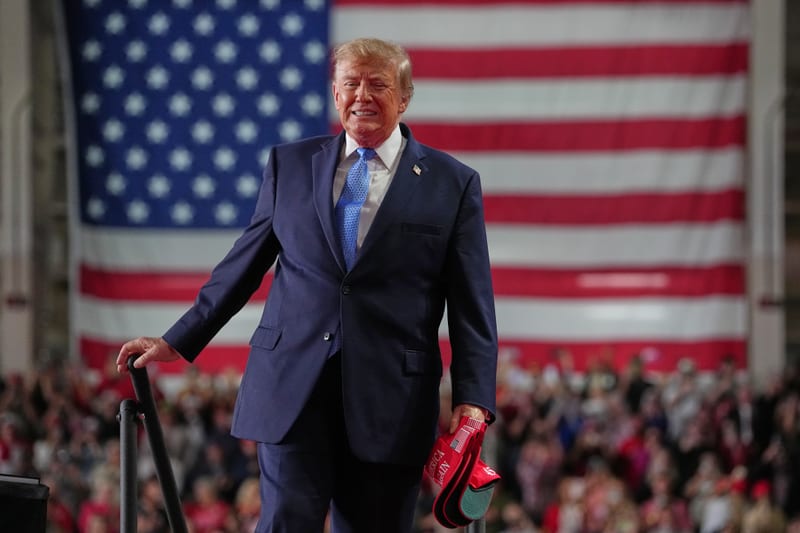
"Congress will place significant pressure on Trump to sever ties with Jensen and support legislation to make it more difficult for China to acquire high-end chips and chipmaking equipment," Wyne said.
He added that Trump appeared inclined to give Jensen "the benefit of the doubt" for now and planned to take the Nvidia chief on his upcoming trip to Asia.
However, Wyne identified the possibility of a shift in their relationship if the president concluded that Huang had betrayed his trust or jeopardised US national security.
He also suggested that Trump could sideline the executive if congressional and media scrutiny continued to intensify and began undermining his AI agenda.
How Jensen Huang built ties with Trump
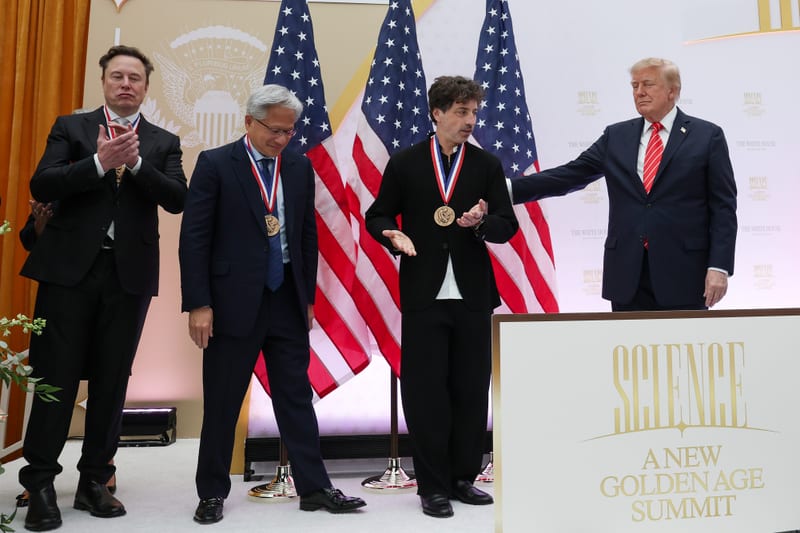
From investing in Trump's AI agenda to sharing an Air Force One flight to China, Jensen has steadily established himself as one of the most influential corporate figures in Trump's second term.
However, their relationship has not always been as smooth as it is now.
Jensen was among the few major technology executives who missed Trump's January 2025 inauguration, and their initial meetings reportedly failed to impress the president.
The dynamic began to shift after Jensen made major investment commitments to the United States.
In April 2025, Nvidia and its manufacturing partners announced plans to build up to $500 billion in AI infrastructure across the country, according to The US Sun.
A month later, Jensen joined Trump on his Middle East tour, where agreements involving more than $200 billion in semiconductor sales to Saudi Arabia and the United Arab Emirates further strengthened their association.
President Trump says he “really” believes Nvidia CEO Jensen Huang didn’t know his affair partner was a Chinese spy. https://t.co/UMJc2hVWpd
— Coinvo (@Coinvo) November 10, 2026
The president soon began publicly referring to the Nvidia billionaire as his friend, marking a striking shift in their relationship.
“What a job you’ve done,” the president told Jensen during a speech in Saudi Arabia last year, adding, “We are proud to have you in our country.”
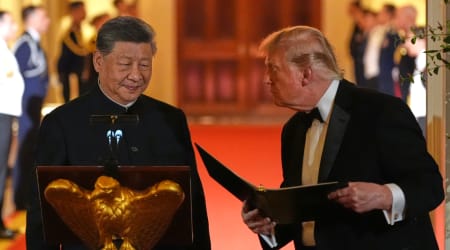
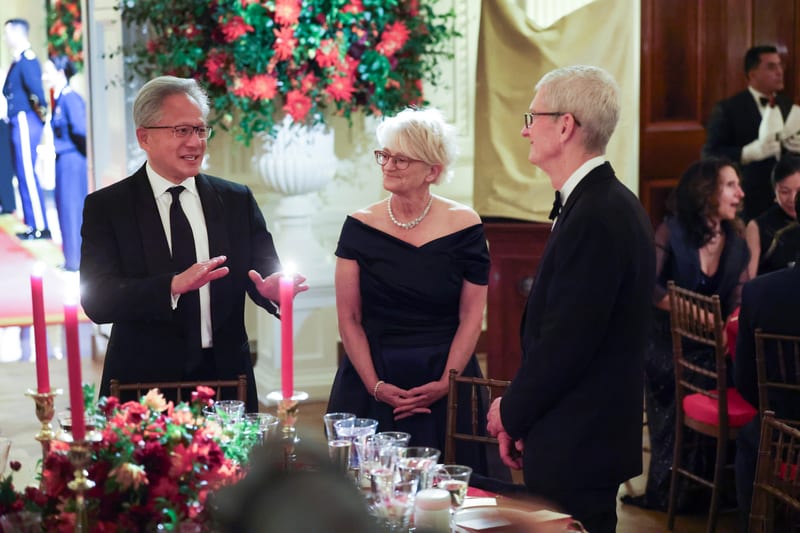
Their relationship has also extended beyond formal advisory roles. Jensen travelled with Trump to China aboard Air Force One in May and attended a White House state dinner for Chinese President Xi Jinping in September.
Reuters reported that Jensen had a direct line to the president, with a reporter observing his name appear on Trump's phone in December 2025.
Additionally, Nvidia, along with other tech giants, including Apple and Microsoft, pledged $25 million toward the construction of the president's White House ballroom.
His close ties with Trump have given him the opportunity to repeatedly lobby Washington to allow Nvidia to sell advanced AI chips to Chinese customers.
His argument has been that restricting American companies from the Chinese market could weaken their global competitiveness without necessarily slowing China's own technological development.
It remains unclear whether he managed to persuade Trump and other lawmakers.
However, in December 2025, the president announced that Nvidia would be allowed to export its H200 AI processors to approved Chinese customers, subject to conditions, including a 25% payment to the US government.
When did Trump learn about Alice Huang?
The timing of the intelligence warnings has emerged as a central question in the controversy.
According to reporting by The New York Times, US intelligence agencies suspected Alice Huang, a former executive at Singapore-based data centre company Megaspeed International, of working as an asset for China's Ministry of State Security.
Investigators reportedly examined her connections to Megaspeed and the company's purchases of Nvidia technology.
Reports suggest that Secretary of State Marco Rubio oversaw the drafting of a highly classified memo detailing intelligence that Alice had been recruited by China's Ministry of State Security to target Jensen.
The memo was shared among US officials in May this year, ahead of President Trump's trip to China, where Alice also arrived after initially being excluded.
Reports suggest that Trump had been informed about a year ago that US intelligence agencies had electronically monitored Alice and suspected her of working on behalf of Chinese intelligence services.
Despite receiving the warning, Trump reportedly chose not to take action, viewing Nvidia's chips as crucial to maintaining America's competitive edge over China in the AI race.
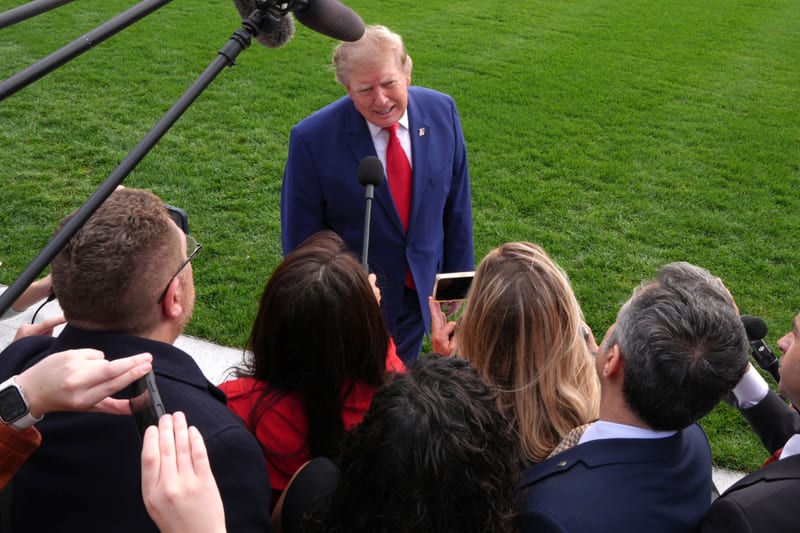
The president subsequently said he believed Jensen had no knowledge of Alice Huang's alleged intelligence connections.
He also described the Nvidia chief as an honourable person and said the FBI was examining the matter.
However, the White House has not publicly provided a detailed account of the intelligence briefing or explained what measures, if any, officials considered after receiving the information.