Trump blasts the 'swayed' Supreme Court and promises stronger alternative tariffs
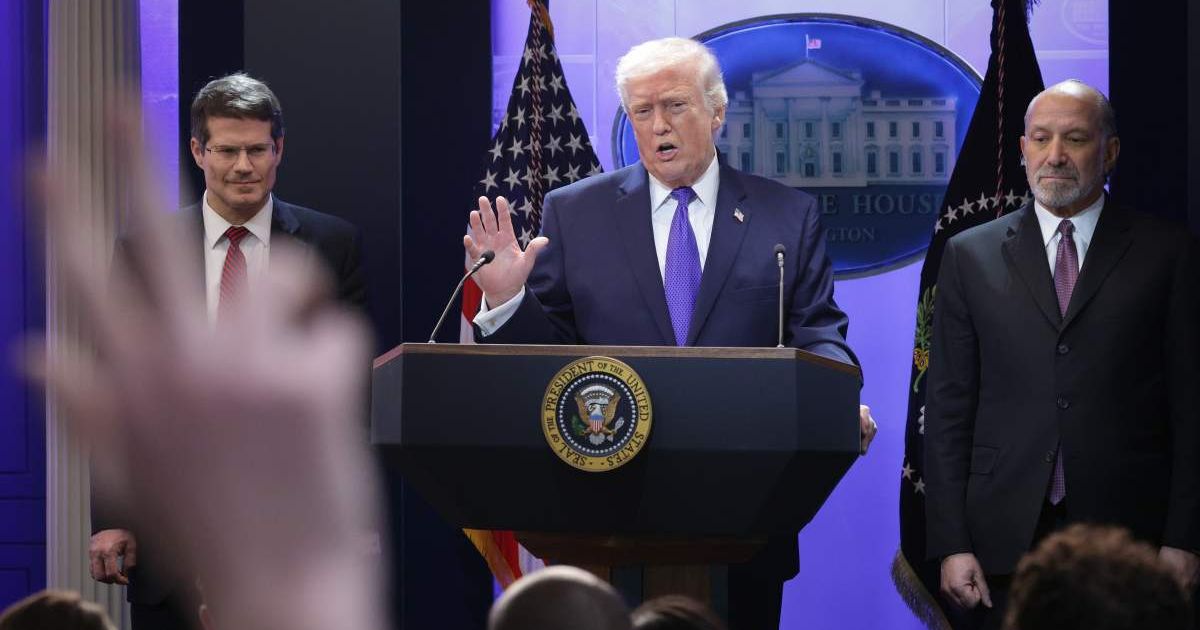
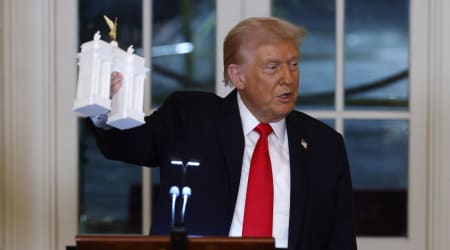
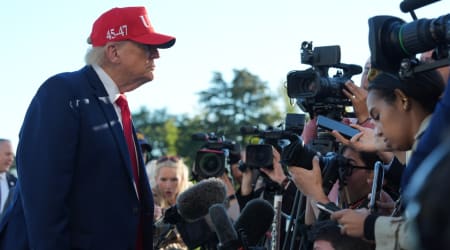
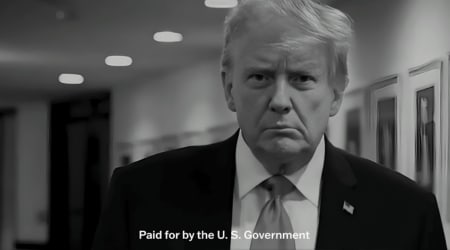
WASHINGTON, DC: Donald Trump addressed reporters in the White House press briefing room on Friday, February 20, calling the Supreme Court’s decision to strike down his global tariffs as "deeply disappointing."
Joined by Solicitor General John Sauer, the President chided "certain members" of the Court for ruling that his use of the International Emergency Economic Powers Act (IEEPA) was unlawful.
Despite his criticism of the majority, Trump offered high praise for the dissenting jurists. "I’d like to thank and congratulate Justices Thomas, Alito, and Kavanaugh for their strength and wisdom and love of our country," he said, noting he was "very proud" of their positions.
His remarks underscored a rare public divergence with Justices Gorsuch and Barrett, both presidential appointees who ultimately ruled against the administration in this case.
🚨HAPPENING NOW: President Trump says, “I’d like to thank and congratulate Justices Thomas, Alito, and Kavanaugh for their strength and wisdom and love of our country.
— Ashley (TeamTrump47) (@TeamTrump47) February 20, 2026
NO THANKS TO YOU, AMY “PHONY” BARRETT. 🙅🏼♀️ pic.twitter.com/U7mXj7t6Ct
Allegations of judicial fear and foreign influence
During the briefing, the President claimed without evidence that the Supreme Court has been "swayed by foreign interests" and a "political movement" that he described as smaller than commonly perceived. He characterized these unnamed groups as "obnoxious, ignorant, and loud," suggesting that certain justices ruled against him out of fear rather than legal merit. "They don't want to do the right thing. They're afraid of it," Trump asserted regarding the six-justice majority.
Trump: "It's my opinion that the Court has been swayed by foreign interests and a political movement that is far smaller than people would ever think." pic.twitter.com/AxYXfjaBnK
— The Bulwark (@BulwarkOnline) February 20, 2026
Pivot to even stronger trade authorities
While the court struck down the IEEPA-based tariffs, Trump asserted that the decision actually made a president’s power to regulate trade "more powerful and more crystal clear."
He suggested that the administration would now turn to other "methods, practices, statutes, and authorities" that he claimed are even more potent than the emergency powers now off-limits. Trump stated that these "great alternatives" could potentially generate even more revenue for the government.
Trump: "Other alternatives will now be used to replace the ones that the court incorrectly rejected. We have alternatives, greater alternatives." pic.twitter.com/i3W3tjYz6F
— The Bulwark (@BulwarkOnline) February 20, 2026
"Other alternatives will now be used to replace the ones that the court incorrectly rejected. We have alternatives," he told the press corps. The President indicated that these new avenues were essentially "approved by the decision" handed down by the court, allowing him to transition his trade strategy toward what he called a "different direction".
Statutory transition and the road ahead
The President specifically identified the Trade Expansion Act of 1962 and the 1974 Trade Act as the primary tools he will now employ to maintain duties on foreign countries. He admitted that this new direction, which he believes he "probably should have gone the first time," will involve a longer process. Many of these alternative legal sections require formal investigations before new tariffs can be officially applied.
Trump:
— Clash Report (@clashreport) February 20, 2026
I’m going to go in a different direction — probably the direction I should have gone in the first time.
I read the language. I’m very good at reading language. pic.twitter.com/0bcm5qkzpX
Trump argued that while the court incorrectly rejected his initial choice, the legal roadmap they provided has established a firmer foundation for his "even stronger" replacement levies.
As the administration begins these new statutory processes, the President maintains that his ability to impose tariffs remains a cornerstone of his second-term agenda, regardless of the judicial roadblocks encountered today.