Trump's Fed chair breaks with White House, says politics won't dictate rate cuts
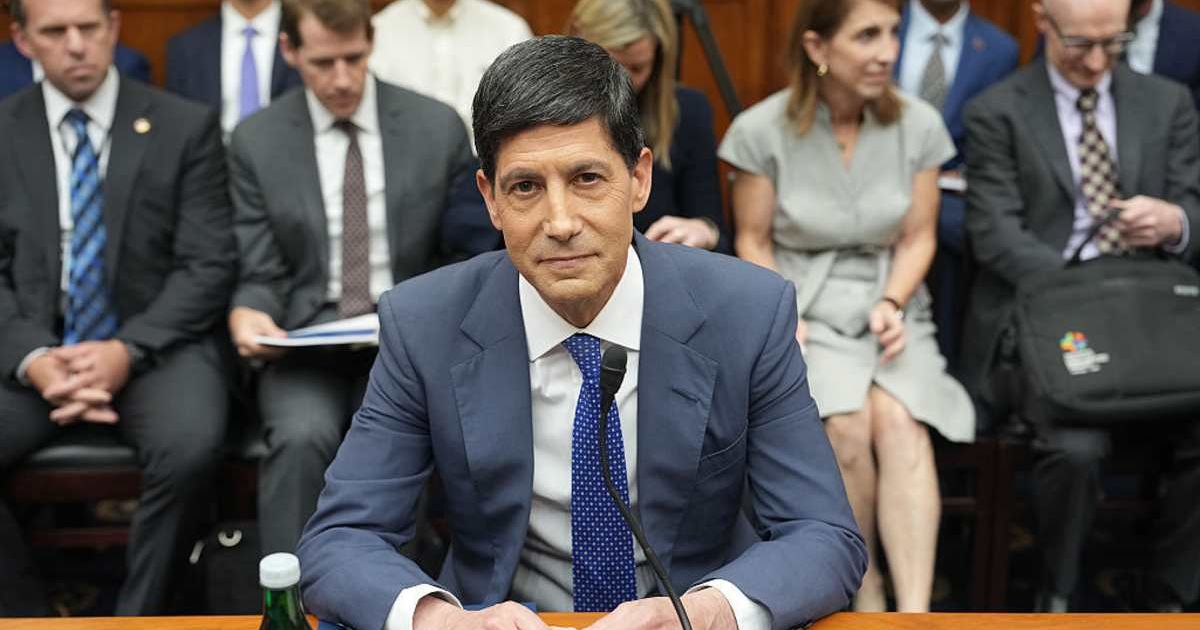
WASHINGTON, DC: President Donald Trump's handpicked Federal Reserve Chairman Kevin Warsh publicly distanced himself from the White House on Tuesday, July 14, insisting the central bank would not allow politics to dictate interest-rate decisions.
The remarks came during his first appearance before Congress as Fed chair, where lawmakers repeatedly questioned whether he would resist pressure from Trump, who spent months criticizing former Chairman Jerome Powell for refusing to cut rates quickly enough.
Fed Chair Warsh: "We're an independent central bank."
— Khaled Arnaout (@KhaledonChain) July 14, 2026
Warsh told the House Financial Services Committee the US should not bail out anyone, including crypto. Asked "Do you work for Trump?", he replied: "My goal inside the central bank is for there to be no politics." pic.twitter.com/wQYKttGbsZ
Warsh responded by reaffirming the Fed's independence, signaling that despite being Trump's choice to lead the central bank, he intends to preserve one of its defining principles.
Kevin Warsh: 'We're an independent central bank'
The sharpest exchange came when Rep Nydia Velázquez (D-NY) asked Warsh a direct question: whether he worked for President Trump.
"We're an independent central bank," Warsh replied.
Another Democratic lawmaker asks Federal Reserve Chairman Kevin Warsh about central bank independence.
— Liberty Nation (@libertynation) July 14, 2026
This time, Rep. Gregory Meeks (D-NY).
Meeks: Will you follow the president's wishes or follow the data?
Warsh: My commitment to you is to follow the law and follow the data,… https://t.co/NGQEuYKuIB pic.twitter.com/vv7GsDQEgS
"We're honored to be independent. Outside the four walls of the Federal Reserve, there's no doubt a lot of politics," he added.
Later in the hearing, Rep Gregory Meeks (D-NY) pressed Warsh on how he would respond if Trump publicly demanded lower interest rates or criticized him for following a different course.
"My commitment to you is to follow the law and follow the data. Follow our very best judgment," Warsh answered, making clear that economic conditions, not political pressure, would determine monetary policy.
Breaking from Powell-era battles
Warsh's testimony comes after one of the most politically charged periods in the Federal Reserve's modern history. During Trump's second term, the White House repeatedly criticized former Fed Chair Jerome Powell over interest rates, arguing borrowing costs should be reduced more aggressively to support economic growth.

The administration also attempted to remove Fed Governor Lisa Cook, though the Supreme Court later ruled she had not received sufficient due process.
Against that backdrop, Warsh's comments offered the clearest indication yet that he intends to separate the Fed's policymaking from Washington's political battles. While acknowledging the intense political environment surrounding the central bank, he repeatedly emphasized that the institution's legal mandate, not presidential preferences, would guide future decisions.
Warsh seeks quieter Fed messaging
Warsh also defended his plan to reduce how much Federal Reserve officials publicly signal about future interest-rate moves.
He argued that policymakers should avoid commenting on every possible scenario because economic conditions can change rapidly.
Federal Reserve Chairman Kevin Warsh vowed to tackle inflation during his first congressional testimony as the central bank's leader on Tuesday, saying rising prices have placed an "undue burden on American households and businesses.”
— CBS News (@CBSNews) July 14, 2026
“The members of our committee have no… pic.twitter.com/ztoOihHTwj
"If we were to share with you our every passing thought, I worry not that there's anything wrong with us, but we're human," he said.
Warsh explained that new economic data can quickly alter policymakers' assessments, and excessive public guidance could create expectations that later become outdated. Instead, he said he prefers a more restrained communication strategy focused on making sound policy decisions rather than forecasting every possible move.
His testimony marks an early effort to establish his leadership style, one centered on institutional independence, data-driven decision-making, and more disciplined communication, as investors and lawmakers watch closely for the Fed's next interest-rate decision.