60% of Americans back Supreme Court decision blocking Trump's emergency tariffs, poll finds
Democrats strongly backed the ruling (88%), independents mostly approved (63%), while Republicans were split as 43% disapproved, 30% approved
UPDATED 1 HOUR AGO
A YouGov survey found that most Americans approved of the Supreme Court's decision to block President Donald Trump's emergency tariffs, while he called the ruling disappointing and vowed new trade actions (Getty Images)

WASHINGTON, DC: A majority of Americans approved of the Supreme Court’s recent decision blocking much of President Donald Trump’s sweeping emergency tariffs, according to a new YouGov survey released on Friday, February 20.

The poll found that 60% of US adults “strongly” or “somewhat” approved of the high court’s ruling, while 23% “strongly” or “somewhat” disapproved and 17% remained unsure. 

The court’s decision came in a 6-3 ruling that determined Trump did not have authority under a decades-old emergency powers law to impose broad global tariffs. The case marked the first time the Supreme Court directly evaluated a second-term Trump policy on its merits.

Public opinion split along party lines

The survey, conducted among 3,023 respondents with a margin of error of 3 percentage points, showed strong partisan differences in reaction to the ruling.

Democrats overwhelmingly supported the decision, with 88% expressing approval. Among independents, 63% backed the court’s action. Republican respondents were more divided: 43% disapproved of the ruling, while 30% said they approved.

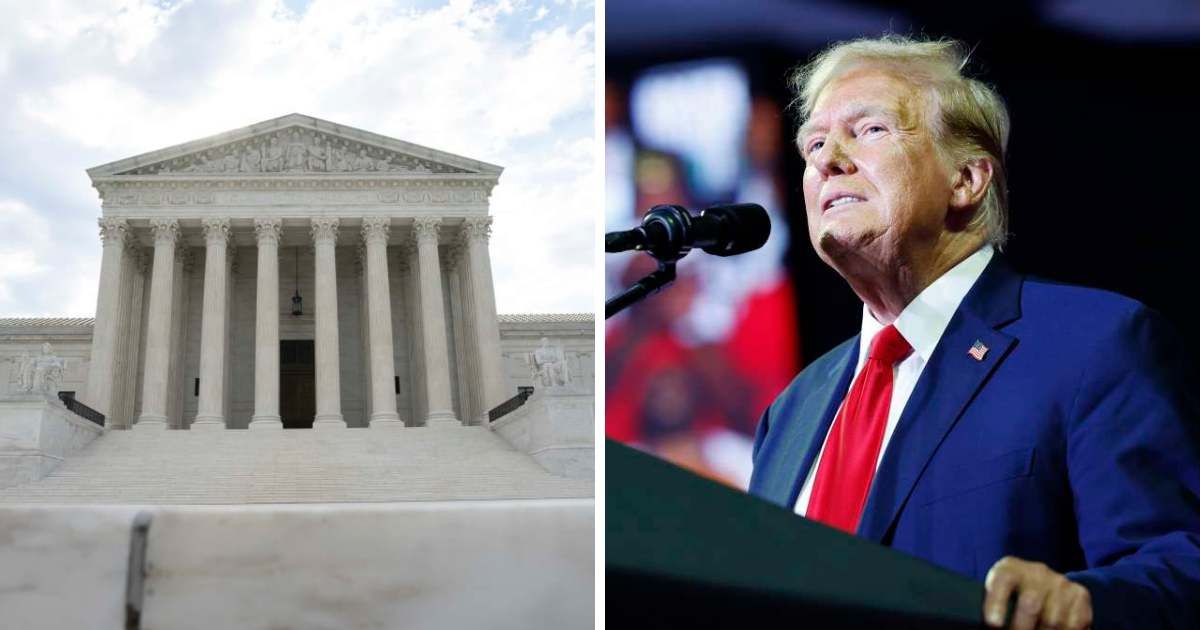
WASHINGTON, DC - SEPTEMBER 02: The U.S. Supreme Court is seen on September 02, 2021 in Washington, D
The Supreme Court, as seen on September 02, 2021, in Washington, DC (Kevin Dietsch/Getty Images)

The poll also examined views on the economic effects of Trump’s tariffs

Forty-one percent of respondents said prices had “increased a lot” under the administration’s tariff policies, while 25% said prices increased “slightly.”

Sixteen percent reported that the tariffs had “no effect,” and 5% were unsure. Less than 1% of those surveyed said that the tariffs had decreased prices.
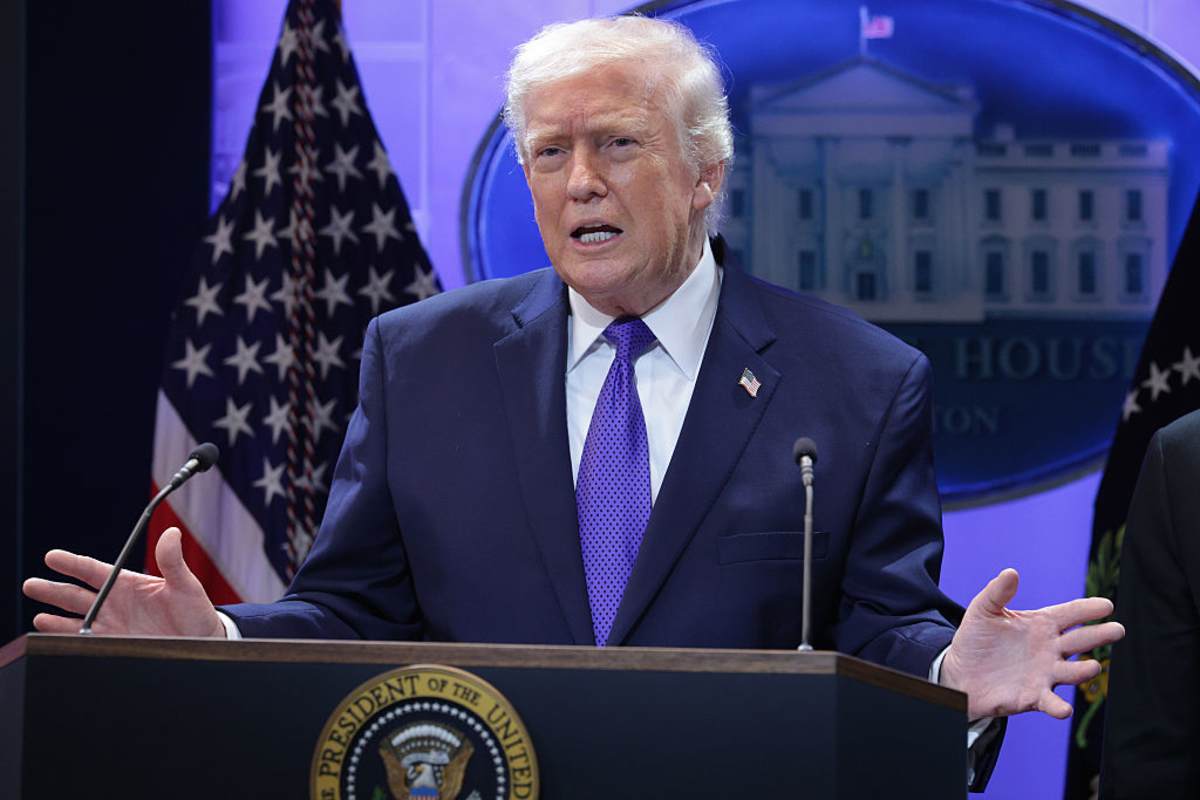
WASHINGTON, DC - FEBRUARY 20: U.S. President Donald Trump speaks answers questions during a press briefing held at the White House February 20, 2026 in Washington, DC. The U.S. Supreme Court today ruled against Trump’s use of emergency powers to implement international trade tariffs, a central portion of the administration’s core economic policy. (Photo by Alex Wong/Getty Images)
President Donald Trump spoke and answered questions during a press briefing held at the White House on February 20, 2026, in Washington, DC (Alex Wong/Getty Images)

Following the ruling, Trump described the decision as “disappointing” and criticized Justices Amy Coney Barrett and Neil Gorsuch, both of whom he appointed, for siding with the majority.

“I don’t want to say whether I regret nominating them,” the president told reporters from the White House on Friday afternoon. “I think their decision was terrible.”

He added that he was “proud” of Justice Brett Kavanaugh, saying the justice’s “stock has gone so up.”
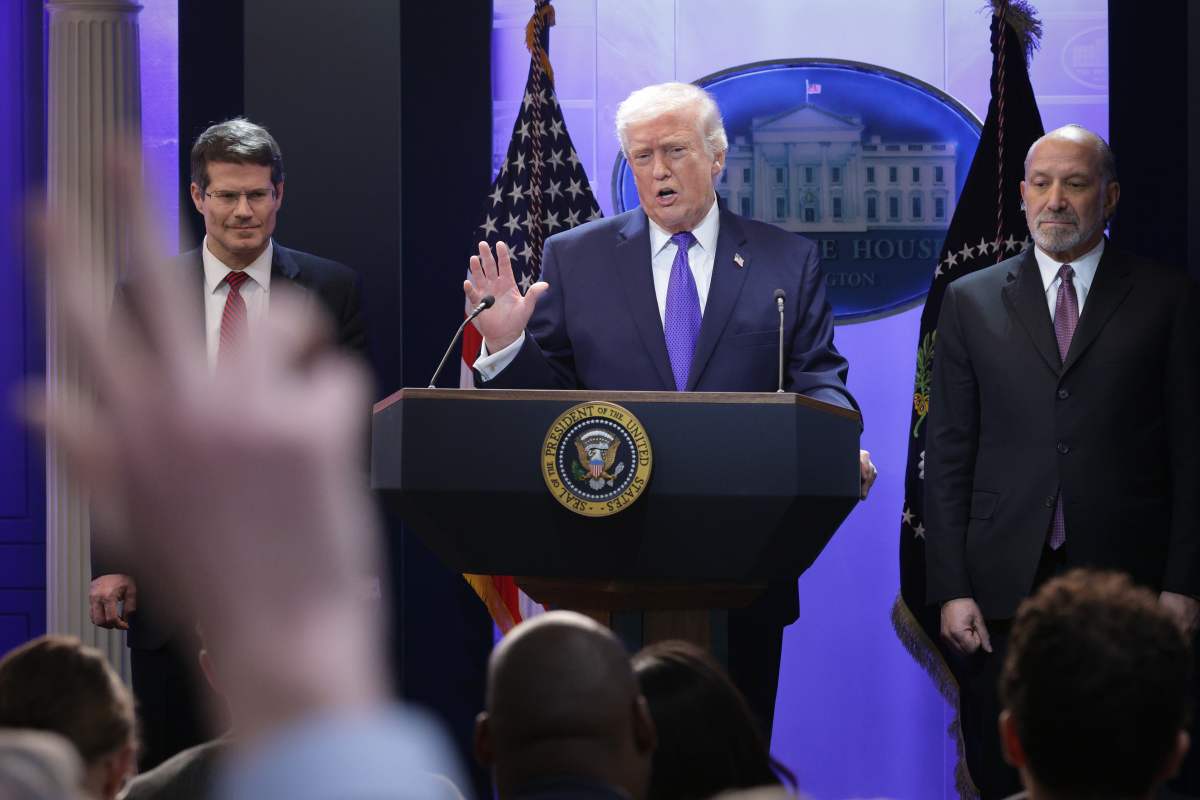
WASHINGTON, DC - FEBRUARY 20: U.S. President Donald Trump answers questions during a press briefing held at the White House February 20, 2026 in Washington, DC. The U.S. Supreme Court today ruled against Trump’s use of emergency powers to implement international trade tariffs, a central portion of the administration’s core economic policy. Also pictured (L-R) are U.S. Solicitor General John Sauer and Secretary of Commerce Howard Lutnick. (Photo by Alex Wong/Getty Images)
President Donald Trump answered questions during a press briefing held at the White House on February 20, 2026, in Washington, DC (Alex Wong/Getty Images)

Supreme Court sets limits on emergency tariff authority

The Supreme Court ruled on Friday that President Donald Trump did not have the authority to impose broad global tariffs under a 1977 federal emergency powers law, delivering a major legal setback to the administration’s trade strategy.

In a 6-3 decision, the court held that the International Emergency Economic Powers Act (IEEPA) did not authorize the imposition of tariffs. Justices Clarence Thomas, Samuel Alito, and Brett Kavanaugh dissented.

The ruling affirmed an earlier judgment by the US Court of Appeals for the Federal Circuit, which found the tariffs unlawful and outside the scope of the statute’s intended powers.

Writing for the majority, Chief Justice John Roberts determined that the law’s authority to “regulate or prohibit” international transactions did not extend to setting broad trade duties.

U.S. President Donald Trump displays a signed executive order imposing tariffs on imported goods during a “Make America Wealthy Again” trade announcement event in the Rose Garden at the White House on April 2, 2025 in Washington, DC. Touting the event as “Liberation Day”, Trump announced sweeping new tariffs targeting goods imported to the U.S. on countries including China, Japan and India. (Photo by Andrew Harnik/Getty Images)
President Donald Trump displayed a signed executive order imposing tariffs on imported goods during a 'Make America Wealthy Again' trade announcement event in the Rose Garden at the White House on April 2, 2025, in Washington, DC (Andrew Harnik/Getty Images)

While the court invalidated the use of IEEPA for sweeping tariff measures, it offered no guidance on potential refunds, leaving that issue to lower courts.

The nonpartisan Penn Wharton Budget Model estimates that as much as $175 billion in tariff revenue could be subject to refund claims.

Economists noted that importers had a 180-day window after goods are “liquidated” to protest and request refunds from the US Customs and Border Protection.

WASHINGTON, DC - FEBRUARY 04: U.S. President Donald Trump speaks with reporters in the Oval Office of the White House on February 04, 2025 in Washington, DC. Trump signed two executive orders, one
President Donald Trump spoke with reporters in the Oval Office of the White House on February 04, 2025, in Washington, DC (Anna Moneymaker/Getty Images)

Shortly after the ruling, Trump announced that he had signed an executive order imposing a 10% tariff on imports from countries worldwide under Section 122 of the Trade Act of 1974, a provision allowing tariffs of up to 15% for 150 days to address significant trade deficits.
GET BREAKING U.S. NEWS & POLITICAL UPDATES
STRAIGHT TO YOUR INBOX.

MORE STORIES

The poll showed Californians ranked the economy and housing as top concerns, with critics blaming Gavin Newsom for rising costs
2 days ago
Reports indicate the proposal will include a roughly $22 million reduction in the department’s $6.4 billion budget next year
2 days ago
Survey reveals bipartisan discontent, with Democrats leading on health care
2 days ago
A Focaldata poll shows Kamala Harris at 39%, ahead of Gavin Newsom at 21%, and she beats him 56–44% head-to-head
4 days ago
Backlash grew as critics seized on the remark and questioned Ocasio-Cortez’s grasp of US foreign policy during the high-profile forum appearance
4 days ago
A Yahoo/YouGov poll found more Americans say Bad Bunny represents the United States better than Donald Trump after Super Bowl LX
6 days ago
Greg Gutfeld proposed the test as a strategy to put 'necessary pressure on others inside and outside the circle' and to help rule out potential leads
7 days ago
Despite being among the top donors, Spielberg is under fire as users compare his wealth to a small tip
7 days ago
NBC poll finds broad disapproval of ICE tactics, deep partisan divide before DHS fight
Feb 11, 2026
A netizen slammed Bad Banny over the jersey, calling it a 'direct politicization of the halftime show'
Feb 9, 2026