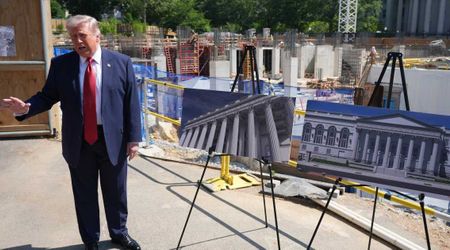
Chief Justice John Roberts throws an unexpected curveball into Trump’s White House ballroom fight
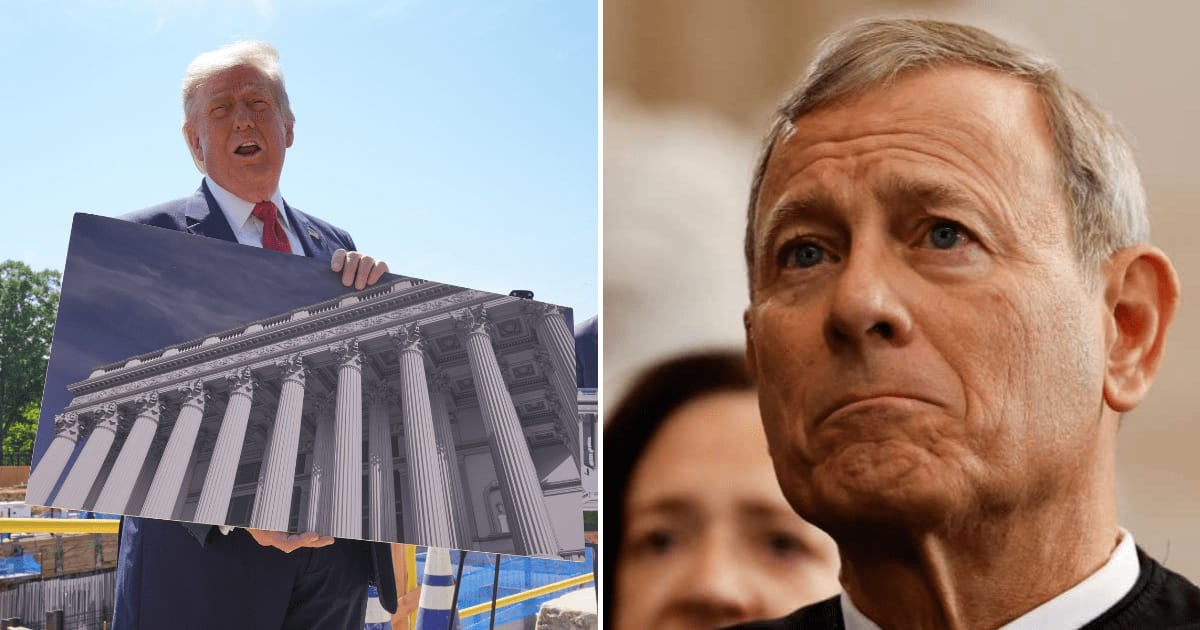
WASHINGTON, DC: Chief Justice John Roberts has drawn an unusual line with President Donald Trump, joining the Supreme Court’s three liberal justices in dissent from a ruling that allows construction of Trump’s proposed White House ballroom to continue.
The 5-4 decision did not determine whether the project is ultimately lawful.

Instead, the majority said the National Trust for Historic Preservation likely lacked standing to challenge it.
Roberts said the construction was likely unlawful and argued that Congress had not authorized the project.
A rare break inside Trump’s court
Roberts’ dissent stands out because the chief justice has frequently supported Trump’s expansive claims of presidential power.
He backed Trump’s immunity from criminal prosecution in 2024 and has joined major rulings favorable to the administration during the president’s second term.
On Monday, he sided with Justices Sonia Sotomayor, Elena Kagan and Ketanji Brown Jackson.
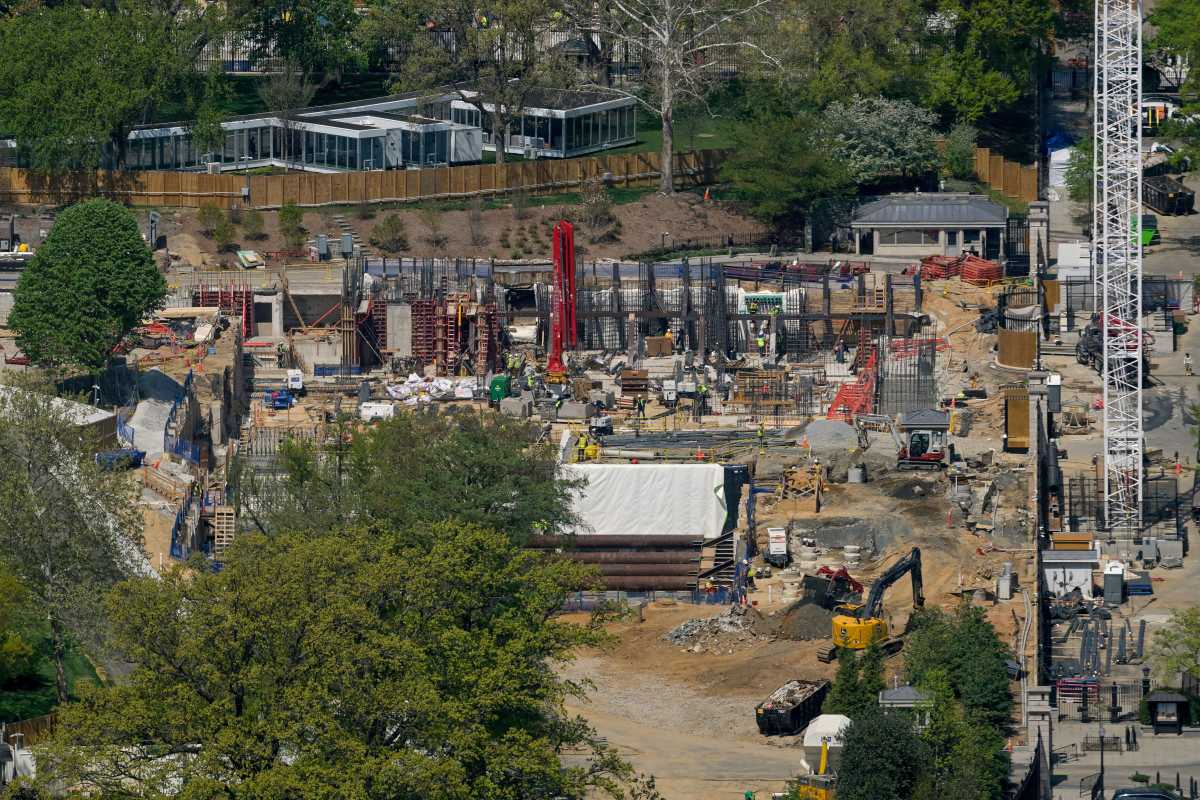
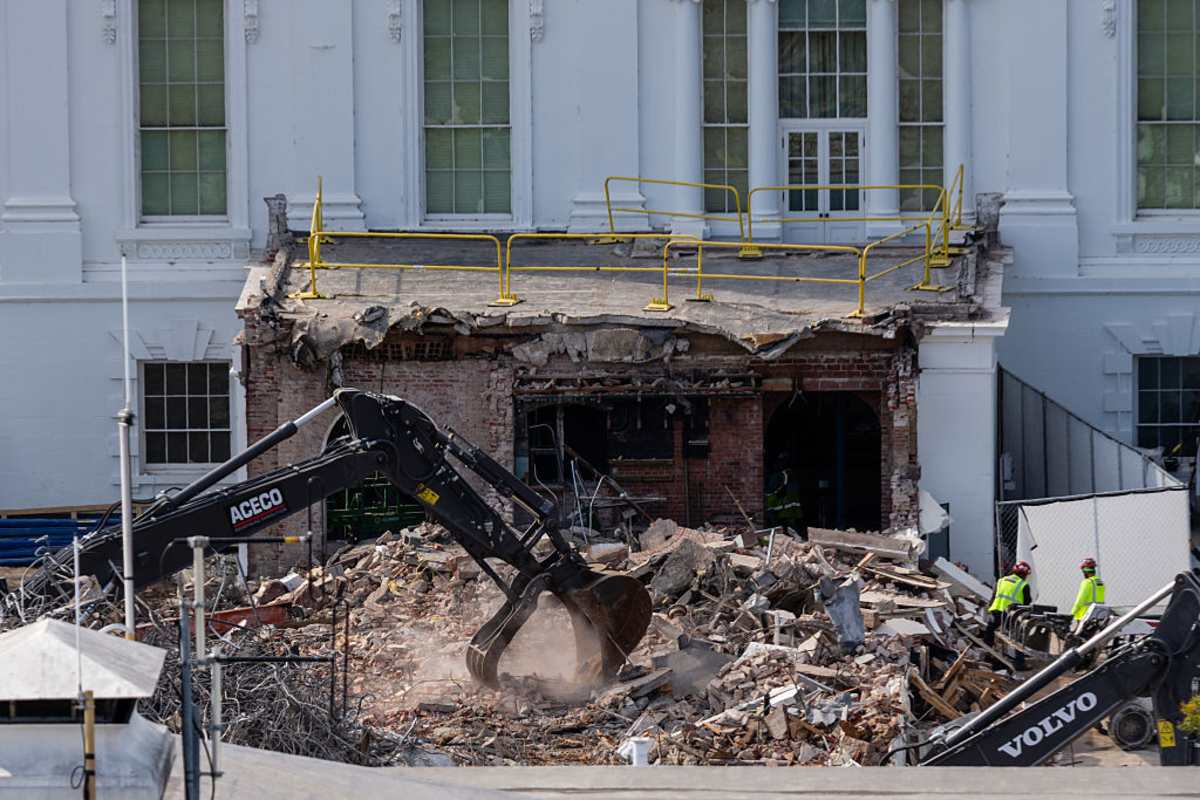
The dispute began after Trump ordered the White House’s East Wing demolished to make way for a new 90,000-square-foot ballroom complex.
The administration has put the project’s cost at about $400 million and argued that the facility is needed for presidential events and security.
Roberts invokes White House history
Roberts’s six-page dissent placed unusual emphasis on the symbolism and architecture of the White House.
He cited Theodore Roosevelt’s remarks about preserving the building’s historic character and quoted Winston Churchill’s observation that buildings shape the people who use them.
The chief justice has spoken publicly about his interest in American history and said he once considered pursuing a history doctorate before studying law.
His dissent reflected that interest, describing the White House as an iconic American structure whose history is inseparable from its architecture.
He also rejected the majority’s treatment of the preservation group’s alleged injury.
Roberts argued that Alison Hoagland, an architectural historian and National Trust member, could have a legally recognizable aesthetic interest in a historic building she regularly visits.
The project faces a bigger legal fight
The National Trust filed its challenge after the East Wing was demolished in late 2025.
Lower courts found that the group could pursue the case and concluded that the administration was likely exceeding its legal authority.

The DC Circuit said Congress controls federal property and that existing statutes did not clearly authorize the ballroom.
The Supreme Court’s latest ruling leaves that underlying question unresolved.
The majority explicitly said it was not deciding the legality of the East Wing project.
Construction can therefore continue while the broader litigation proceeds, potentially allowing substantial work to be completed before the courts issue a final ruling.
What the ruling means for Americans
For Americans, the immediate effect is that work on the above-ground ballroom can continue despite the preservation lawsuit.
The project is privately funded, while the legal dispute concerns presidential authority over federally controlled property and Congress’ role in approving major construction.
Roberts warned that allowing the project to proceed could weaken the separation of powers if the executive branch can undertake major changes to federal property without express congressional authorization.