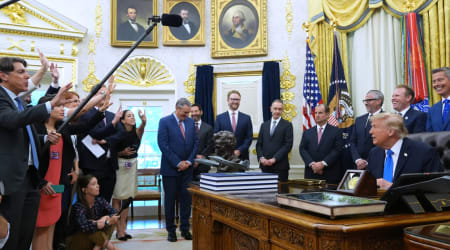
Democrats launch $250K investment ahead of Michigan special election to protect slim majority
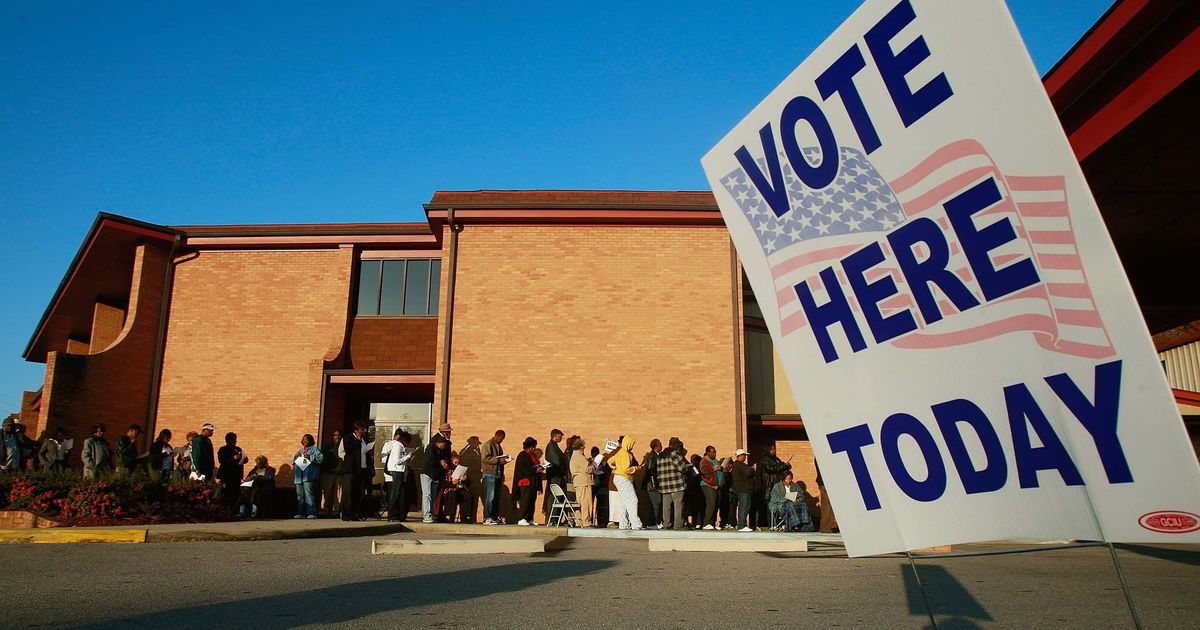
WASHINGTON, DC: The Democratic Legislative Campaign Committee (DLCC) announced a $250,000 investment ahead of the May 5 special election for a Michigan state Senate seat, aiming to protect Democrats’ narrow majority in the chamber.
The DLCC said it will back Democratic candidate Chedrick Greene in the race for Michigan’s 35th Senate District.
Democrats currently hold a slim 19–18 edge in the state Senate, and party leaders are calling the contest one of the most competitive legislative special elections of the year.
Democrats' $250K investment
The DLCC said it is committing $250,000 toward the special election and broader Michigan Senate efforts this cycle, including the May contest and the general election in which all state Senate seats will be up for election.
The investment will help boost Greene’s campaign and elevate the race nationally among Democratic donors.
District 35 includes portions of Saginaw, Bay and Midland counties. The seat became vacant after Kristen McDonald Rivet won election in 2024 to represent Michigan’s 8th Congressional District.
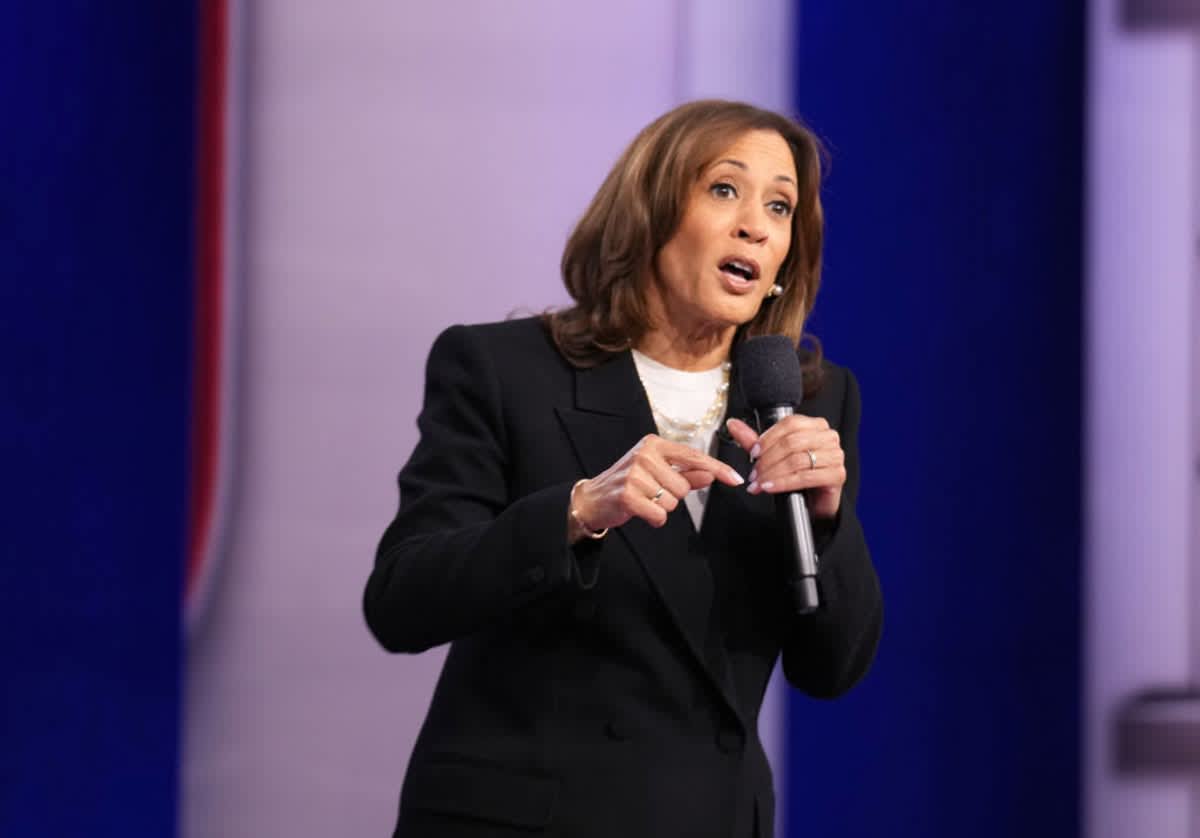
The district previously leaned narrowly Democratic, with former Vice President Kamala Harris winning just over 50% of the vote there in 2024.
Greene, a Saginaw fire captain and retired Marine who previously served as an aide to McDonald Rivet when she was a state senator, will face Republican candidate Jason Tunney, a Saginaw-based attorney and businessman, in the May 5 special election.
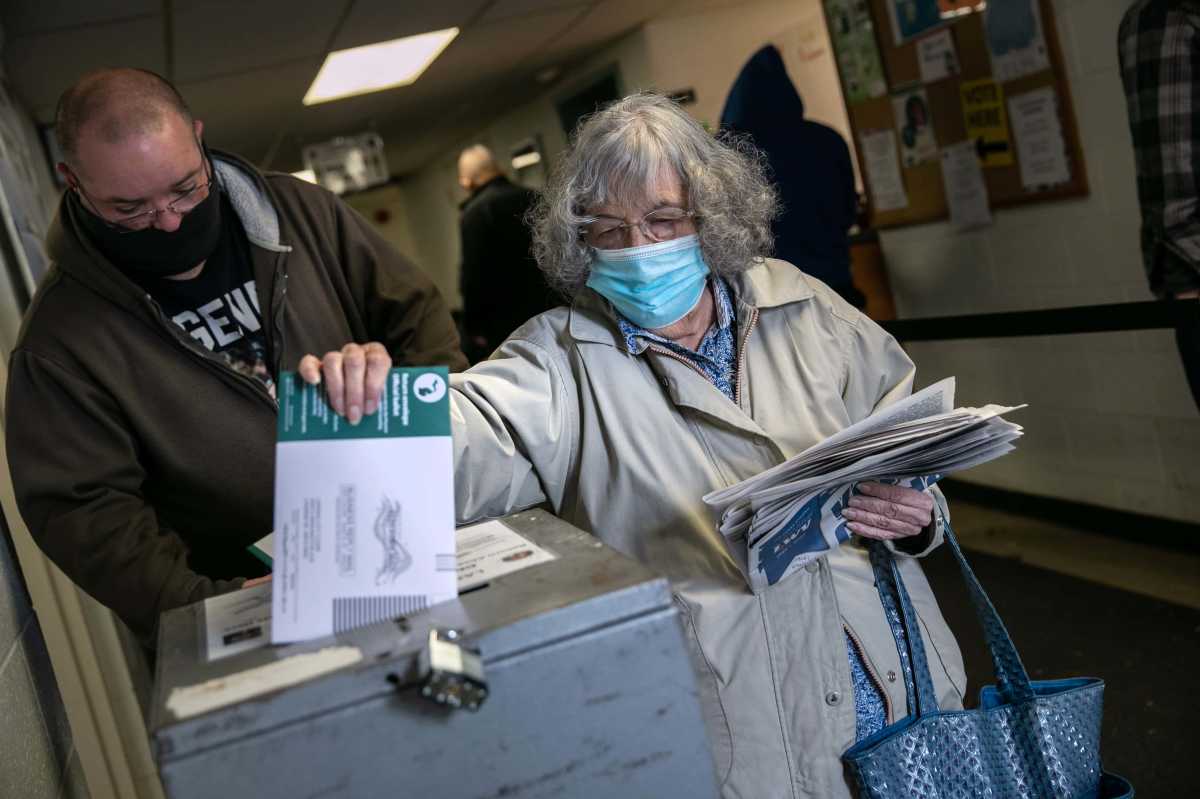
“All eyes should be on Michigan this spring. This will be the most competitive special election in a battleground state this year, and a chamber majority is on the line,” DLCC President Heather Williams said in a press release.
The committee has designated the 35th District as a “Spotlight” race, meaning Greene’s campaign will receive promotion to the organization’s national donor network.
Democrats' one-seat majority in Michigan at stake
Democrats currently hold a one-seat majority in the Michigan Senate at 19-18.
If Republicans flip the seat in May, the chamber would move to a 19-19 split. In that scenario, Democratic Lt. Governor Garlin Gilchrist could cast tie-breaking votes, but only if all members are present and the vote results in a tie.
Williams emphasized the broader implications of the race in a statement: “This election will set the tone for the midterms as we work to build state power across the country to safeguard against Trump’s abuses of power and his agenda that is raising costs. The stakes couldn’t be higher, and the DLCC will be with Michigan Democrats every step of the way between now and November.”

The Michigan contest is being closely watched as another data point in assessing Democratic performance ahead of the midterm elections. Earlier this year, Democrats flipped a Texas Senate seat in a special election in a district that President Donald Trump had previously carried by a wide margin.

Both chambers of the Michigan Legislature are on the DLCC’s “target map” for 2026. Democrats are seeking to retain their Senate majority and regain control of the state House.
While the May 5 race will not determine long-term control beyond 2026, the outcome will shape legislative dynamics for the remainder of the term and could signal broader voter sentiment heading into November.