House Republicans challenge Hegseth over Pentagon budget, amid rising Iran war costs

WASHINGTON, DC: Senior Republicans on the House Appropriations Committee sharply questioned the Pentagon’s budget strategy on Tuesday, expressing concerns over the Defense Department’s request for a historic $1.5 trillion defense budget.
During a tense hearing before the House Appropriations defense subcommittee, lawmakers pressed Defense Secretary Pete Hegseth over the administration’s plan to split defense funding between the traditional appropriations process and future emergency supplemental requests.
The hearing highlighted growing unease within Congress, including among Republicans, about rising military expenditures, weapons stockpiles and the long-term financial burden of the conflict in the Middle East.
Representative Ken Calvert, the Republican chairman of the House Appropriations defense subcommittee, openly questioned whether the Pentagon’s request would translate into tangible improvements in military readiness.
“The subcommittee needs to understand how the resources requested in this budget translates into real, measurable improvements in warfighting capability,” Calvert said during the hearing.
He added that he has “serious concerns” regarding the Pentagon’s funding proposal and warned that lawmakers remain uncertain whether the United States is building the industrial and operational depth necessary for a prolonged high-end conflict.
“Questions persist about whether we are building the depth and reliance required for a high-end conflict,” Calvert said.
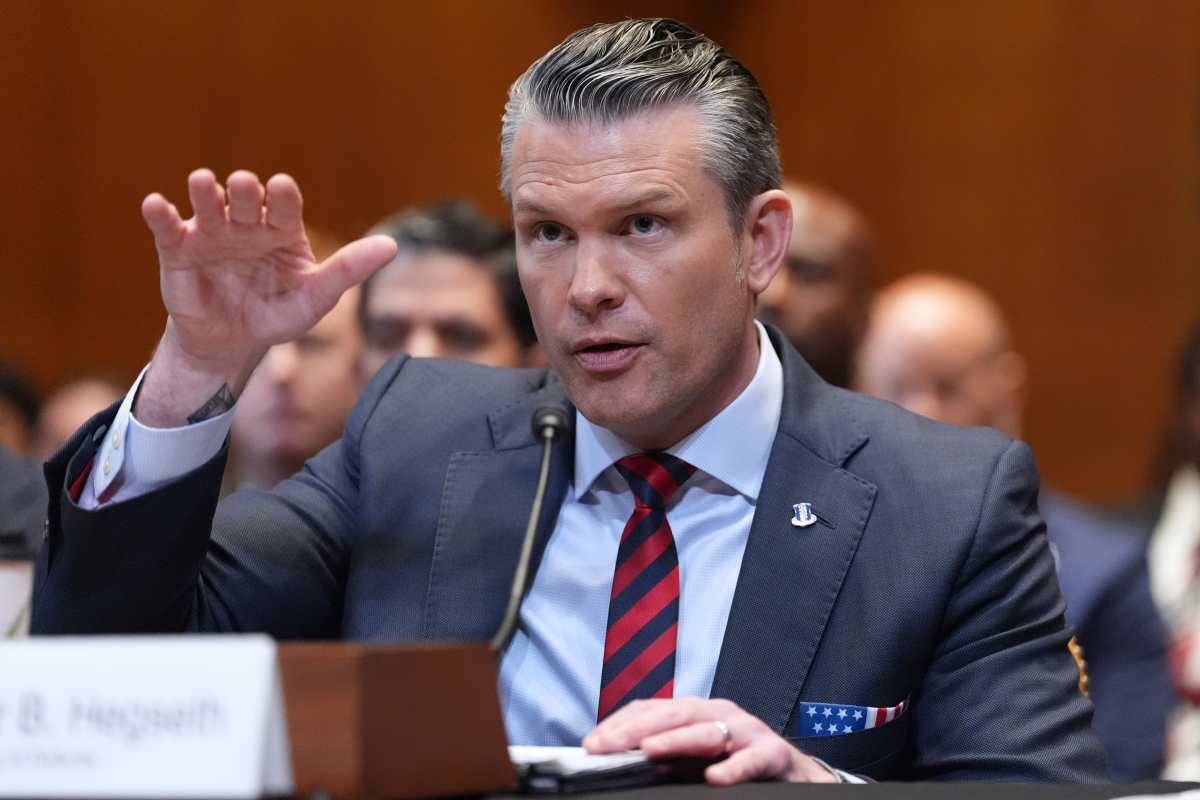
Pentagon defends historic $1.5 trillion proposal
Hegseth defended the administration’s request, describing it as both financially responsible and essential for restoring American military strength.
According to the defense secretary, the Trump administration inherited a weakened defense industrial base after years of underinvestment and policies that allegedly diminished US military capability.
“This is a fiscally responsible budget, and it is a warfighting budget,” Hegseth told lawmakers.
He argued that previous “America last policies” had hollowed out America’s defense manufacturing capacity and weakened the country’s ability to project military power globally.
Still, Hegseth acknowledged the political difficulties surrounding the administration’s funding strategy, which involves seeking roughly $1 trillion through the normal appropriations process while relying on supplemental funding requests to secure an additional $500 billion.
“There’s a reality in this town of what can get done and how it gets done,” Hegseth said.
“In a perfect world everything would get done in regular order and with a $1.5 trillion topline, but there are a lot of challenges and dynamics, some of which I don’t control.”
The unusual funding structure has raised concerns among lawmakers who worry the Pentagon may be relying too heavily on emergency spending mechanisms instead of traditional congressional oversight.
Congress awaits massive Iran war supplemental
A major source of bipartisan concern is the administration’s expected supplemental funding request tied to the war with Iran.
Congress is reportedly waiting for an emergency spending package estimated between $80 billion and $100 billion, much of which would be used to replenish weapons and munitions expended during the conflict.
Calvert urged the administration to submit the supplemental request quickly so lawmakers could begin evaluating the growing costs of the war.
“I understand a desire for flexibility,” Calvert said. “I understand why you’re breaking this up in order to, in some chunks I guess, more digestible to some degree politically.”
“But I would hope we can get a supplemental bill here soon. Obviously we know of the munitions issue and we know of the cost of this conflict.”
He pressed Hegseth directly on when Congress could expect the formal request.
The defense secretary declined to provide a timeline, saying only that the Pentagon was “well aware of all of those dynamics.”
Hegseth dismisses concerns over weapons stockpiles
One of the most contentious issues during the hearing involved concerns over depleted US munitions stockpiles after weeks of military operations connected to the Iran conflict.