Pentagon email floats punishing NATO allies over Iran war stance, report
WASHINGTON, DC: An internal Pentagon email reportedly outlined possible ways to pressure NATO partners seen as unwilling to back the US position during the Iran conflict, including proposals such as suspending certain members from the alliance and reconsidering American support for allied territorial claims.
The report by Reuters, on Friday, April 23, has triggered fresh scrutiny over tensions between Washington and some European capitals.
SCOOP! Internal Pentagon email details options to punish NATO allies who the US believes failed to support it in Iran war operations. Will post a link to my story later but US official says the options include:
— Phil Stewart (@phildstewart) April 24, 2026
* Suspending Spain from NATO alliance.
* Reassessing US…
Pentagon email lists punishment for NATO
According to Reuters, citing a US official familiar with the matter, the internal communication discussed a range of retaliatory options for countries viewed as unhelpful during the standoff with Iran.
Among the ideas reportedly mentioned were removing Spain from NATO, suspending other “difficult” member states, and reassessing US diplomatic backing for certain European overseas claims.
One example cited in the report was British sovereignty over the Falkland Islands, a long-running issue contested by Argentina.
Spanish Prime Minister Pedro Sanchez was asked about the reported email that brushed aside concerns.
He said that governments respond to formal policy decisions, not unofficial communications.
“We do not work with emails. We work with official documents and positions taken, in this case, by the government of the US.”
Sanchez also defended Spain’s alliance posture, saying Madrid remains committed to cooperation with partners while acting within international law.
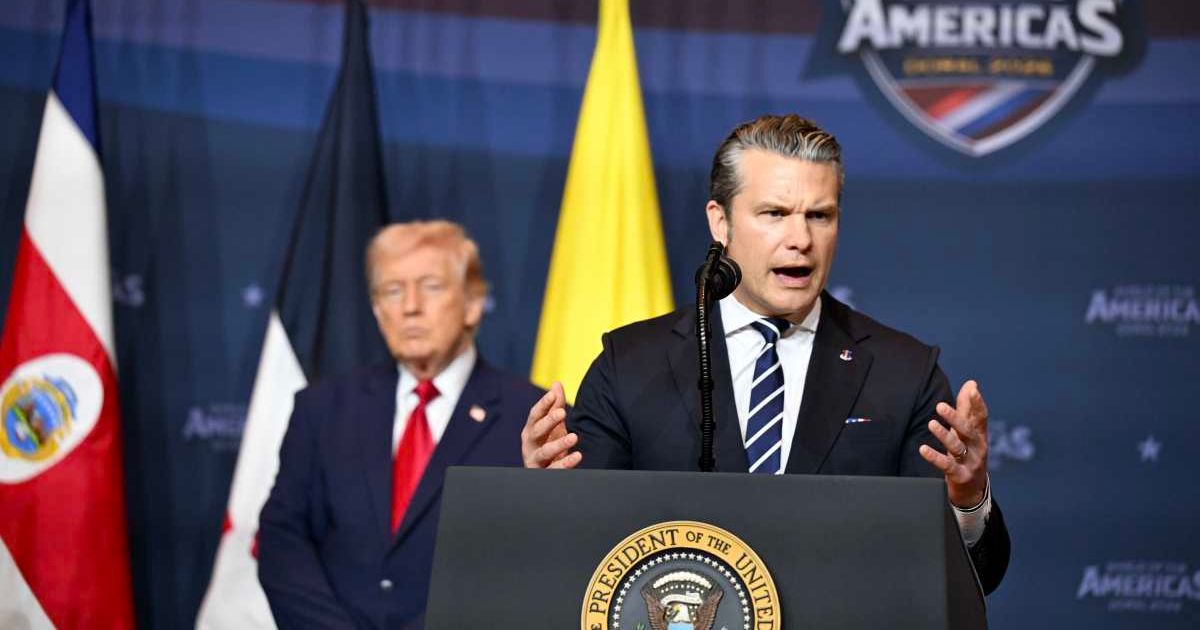
The reported memo surfaced as Defense Secretary Pete Hegseth publicly criticized European allies for what he portrayed as inadequate action during the Strait of Hormuz crisis.
Speaking on Friday, Hegseth said many European governments were holding meetings while relying on Washington to manage a conflict more directly tied to their own energy security.
Pete Hegseth said the US blockade on Iran is expanding beyond the Middle East, signaling a wider push under Trump’s strategy.
He revealed that American forces recently seized two Iranian “dark fleet” vessels in the Indo-Pacific that had left port before the blockade began.
“They thought they got out in time. They didn’t,” Hegseth said, adding that more seizures are expected as the blockade grows globally.
.@SecWar: "Our blockade is only growing and growing global, and as @POTUS said, we have all the time in the world. Iran has a historic chance to make a serious deal, and the ball is in their court. Either way, @DeptofWar stands ready for what comes next, locked and loaded." pic.twitter.com/w8iALf7YUt
— Rapid Response 47 (@RapidResponse47) April 24, 2026
Growing strain inside NATO alliance
The Strait of Hormuz remains one of the world’s most critical shipping chokepoints, with roughly one-fifth of global oil supplies moving through it.
Although President Donald Trump recently announced an extension of a ceasefire with Iran, maritime tensions have continued, including attacks on commercial vessels and competing blockade claims.
𝗗𝗼𝗻𝗮𝗹𝗱 𝗝. 𝗧𝗿𝘂𝗺𝗽 𝗧𝗿𝘂𝘁𝗵 𝗦𝗼𝗰𝗶𝗮𝗹 𝗣𝗼𝘀𝘁 𝟭𝟬:𝟭𝟯 𝗔𝗠 𝗘𝗦𝗧 𝟬𝟰.𝟭𝟳.𝟮𝟲
— Commentary Donald J. Trump Posts From Truth Social (@TrumpDailyPosts) April 17, 2026
Now that the Hormuz Strait situation is over, I received a call from NATO asking if we would need some help. I TOLD THEM TO STAY AWAY, UNLESS THEY JUST WANT TO LOAD UP THEIR SHIPS…
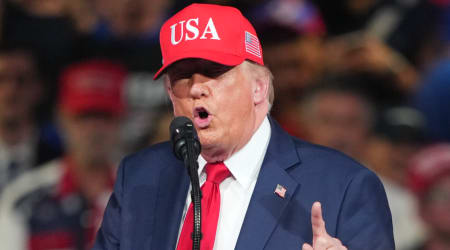
Earlier, President Donald Trump renewed his criticism of NATO after tensions in the Strait of Hormuz eased, claiming the alliance offered help only after the crisis had passed.
In a Truth Social post, Trump said he rejected NATO’s outreach and mocked the bloc as a “Paper Tiger,” reviving his long-standing complaints about burden-sharing.
“Now that the Hormuz Strait situation is over, I received a call from NATO asking if we would need some help,” he wrote.
“I told them to stay away unless they just want to load up their ships with oil.”
Whether the reported Pentagon email reflected serious planning, internal brainstorming, or frustration remains unclear.
But its emergence highlights widening disagreements inside NATO over burden-sharing, military commitments and how far allies should go in backing US operations abroad.