Taiwan issues defiant response to Trump’s arms sale freeze following high-stakes talks with Xi
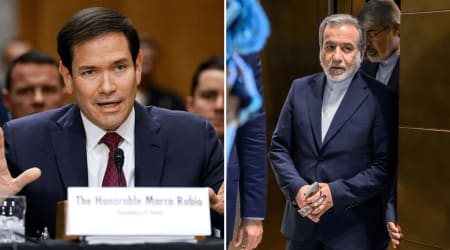
Min. @chia_lung welcomes @SecRubio's clarification that the longstanding US policy toward #Taiwan🇹🇼 remains unchanged. Taiwan will continue working with like-minded partners like the US🇺🇸 to oppose coercion & safeguard peace & stability across the Taiwan Strait & Indo-Pacific. https://t.co/pE7BqJNldL pic.twitter.com/K7JxBgfZRH
— 外交部 Ministry of Foreign Affairs, ROC (Taiwan) 🇹🇼 (@MOFA_Taiwan) May 15, 2026
ABOARD AIR FORCE ONE: Following two days of intensive negotiations in Beijing, President Donald J Trump sparked immediate diplomatic concern across the Pacific by expressing hesitation regarding a massive, pending arms sale to Taiwan.
The president’s remarks, delivered as he departed China on Friday, May 15, prompted a swift and formal response from Taipei, as the island’s leadership moved to secure its primary defense partnership amid growing regional tensions.
At the heart of the friction is a $14 billion arms package that has been a point of contention between Washington and Beijing for months.
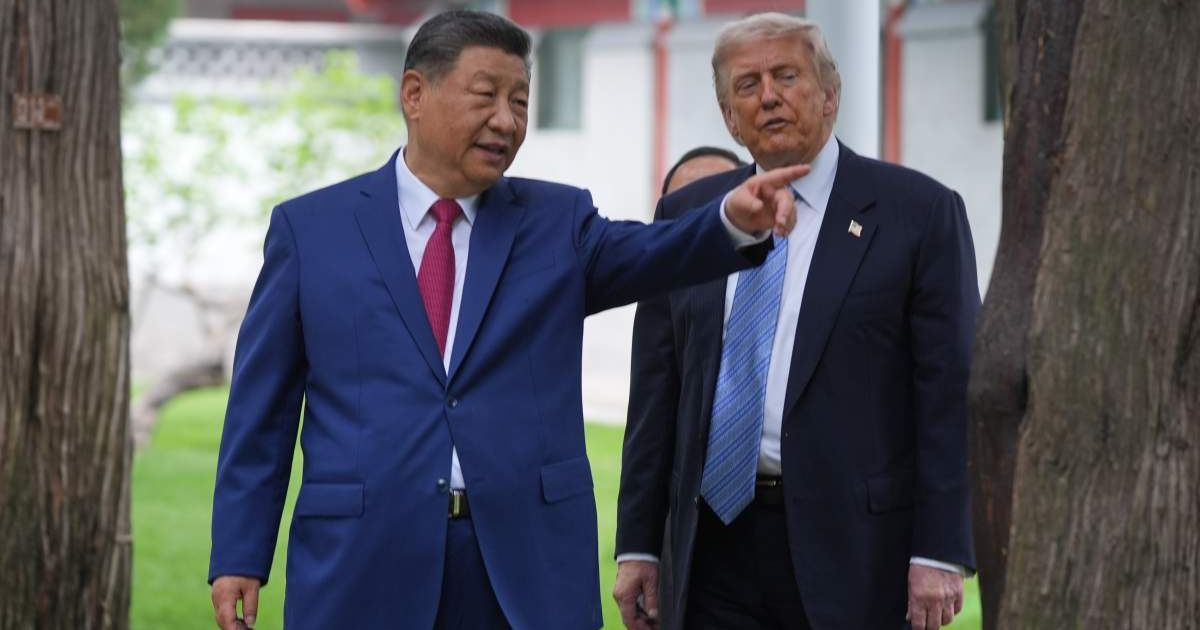
President Trump told reporters that during his meetings with President Xi Jinping, the Chinese leader expressed a firm stance against any movement toward Taiwanese independence, warning that such a path would lead to a "very strong confrontation."
President @realDonaldTrump on his Taiwan discussions with President Xi:
— Trump War Room (@TrumpWarRoom) May 15, 2026
"On Taiwan he does not want to see a fight for independence because that would be a very strong confrontation. I heard him out. I didn’t make a comment on it." pic.twitter.com/XqcoUNa86u
Trump noted that while he "heard it out," he chose not to offer a comment at the time, citing his deep respect for Xi.
Taiwan appeals to long-standing security commitments
In a statement released Friday morning, Taiwan’s Ministry of Foreign Affairs underscored the "long-standing and consistent policy" of the United States toward the island’s defense.
The ministry emphasized that arms sales are not merely a bilateral agreement but a fundamental "security commitment" explicitly mandated by the Taiwan Relations Act.

Taipei characterized these transfers as a vital joint deterrent against regional threats that preserve the balance of power.
The ministry further expressed appreciation for the record-high arms sales achieved during President Trump’s first term, describing the "close cooperation" between the two nations as the "cornerstone of peace across the Taiwan Strait."
The urgent tone of the statement reflects Taipei’s desire to maintain the momentum of the $14 billion deal, which remains a critical component of their national security strategy.
Bipartisan pressure mounts on weapons transfer
The president’s uncertainty arrives despite significant pressure from the US Congress. On Monday, a bipartisan group of eight senators sent a letter to the White House urging the administration to move forward with the $14 billion sale immediately.
Trump: “We discussed Taiwan, the whole thing with the arm sales. It was in great detail actually. And I’ll be making decisions… I think the last thing we need right now is a war that's 9,500 miles away.”
— Dori Toribio (@DoriToribio) May 15, 2026
“Would the US defend Taiwan if it came to it?”
Trump: “There's only one… pic.twitter.com/Lu6ACeNgcV
This group argues that any delay in the weapons transfer could be interpreted as a sign of weakness in the face of Chinese opposition.
President Trump, however, appears to be prioritizing a different set of risks. "I think the last thing we need is a war," Trump told reporters, specifically noting the logistical challenges of a conflict located "9,500 miles away."
While he acknowledged that the US is currently "doing very well," his focus remains on avoiding an escalation that could lead to a large-scale military confrontation in the Indo-Pacific.
Decision expected following direct leader talks
President Trump clarified that a final determination on the future of the arms deal has not yet been made but would be reached over a "short period."
He specifically noted that before finalizing any move, he intends to speak directly with the leader of Taiwan to discuss the regional situation.

This deliberate approach suggests that the administration is attempting to balance its 'America First' avoidance of distant conflicts with its legal and strategic obligations to its partners.