Trump launches federal investigation into ‘fraudulent’ Iran peace plans after discrepancies

WASHINGTON, DC: A major diplomatic rift has emerged just 24 hours after the announcement of a two-week ceasefire between the United States and Iran.
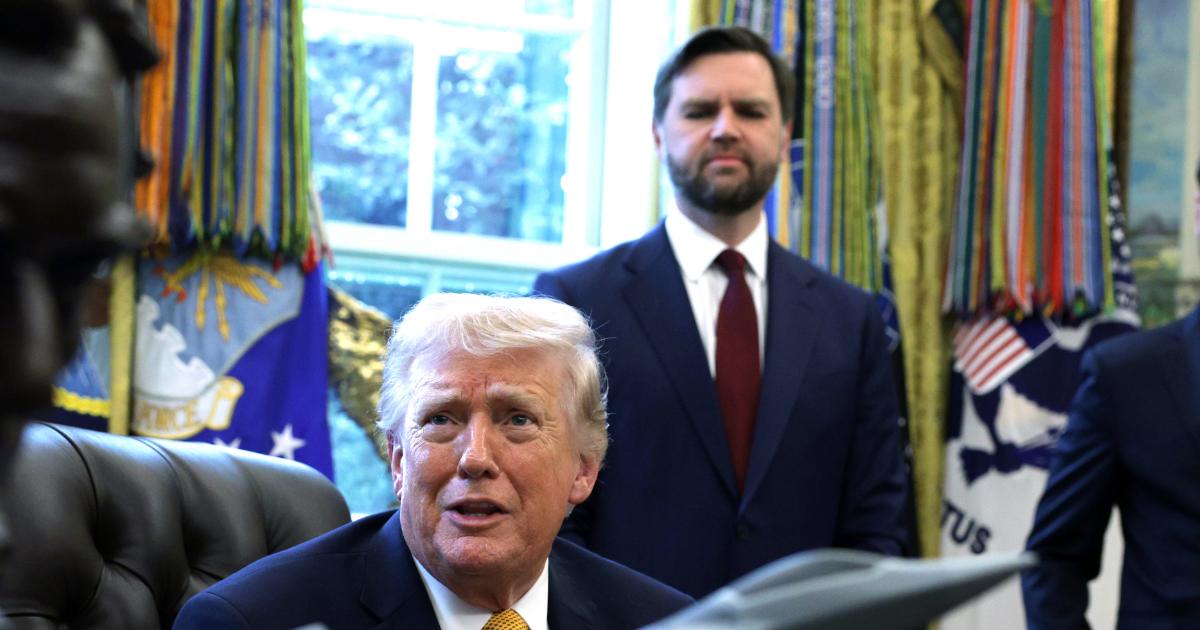
While President Donald Trump initially touted a 10-point peace proposal as a "workable basis on which to negotiate," a White House official confirmed to CNN on Wednesday, April 8, that the document later released by Iranian authorities to the press is not the same version the President accepted.
The discrepancy has ignited the President’s fury, leading him to order a ‘Federal Investigation’ into the origins of the conflicting documents.
"There is only one group of meaningful 'POINTS' that are acceptable to the United States, and we will be discussing them behind closed doors during these Negotiations..." - President Donald J. Trump pic.twitter.com/PP4jlW8LAJ
— The White House (@WhiteHouse) April 8, 2026
Taking to Truth Social, Trump labeled the authors of the circulating agreements "total Fraudsters, Charlatans, and WORSE," promising they would be "rapidly exposed" once the investigation is complete.
The confusion is compounded by the lack of a formal, written document signed by both parties, with the truce currently resting on reciprocal social media posts.
Federal probe targets ‘Charlatan’ negotiation lists
President Trump made it clear that there is only one ‘meaningful’ group of points acceptable to the United States, and these are being discussed exclusively behind closed doors.
He derided the "Numerous Agreements, Lists, and Letters" being distributed by people he claims have "absolutely nothing to do" with the official US/Iran negotiation.
🚨 Statement from Iran’s Supreme National Security Council
— Drop Site (@DropSiteNews) April 7, 2026
📌 Full Text of the Statement of the Supreme National Security Council (Translated to English):
The enemy has suffered an undeniable, historic, and crushing defeat in its dishonorable, illegal, and criminal war against…
The President specifically targeted a "source" cited by "Fake News CNN," claiming the individual had "no power or authority" to write the letters currently being reported as official victory claims.
According to the White House, the version of the 10-point plan being circulated by Iran’s Supreme National Security Council, which includes demands for US troop withdrawals and war compensation, is a "fraudulent" departure from the "reasonable" basis on which the ceasefire was actually struck.
Ceasefire lacks formal signed documents
🚨 President Donald J. Trump makes a statement on Iran: pic.twitter.com/9mqTayL0Q3
— The White House (@WhiteHouse) April 7, 2026
Unlike traditional truces underpinned by signed treaties, this agreement appears to be a digital handshake. President Trump initiated the pause by stating that "subject to the Islamic Republic of Iran agreeing to the COMPLETE, IMMEDIATE, and SAFE OPENING of the Strait of Hormuz," he would suspend the bombing for two weeks.
Shortly after, Iranian Foreign Minister Seyed Abbas Araghchi mirrored the sentiment, stating their forces would cease operations if US attacks halted.
Statement on behalf of the Supreme National Security Council of the Islamic Republic of Iran: pic.twitter.com/cEtBNCLnWT
— Seyed Abbas Araghchi (@araghchi) April 7, 2026
The White House official did not elaborate on the specific differences between the "behind-closed-doors" points and the public versions, but the Iranian release included several high-friction demands, such as a right to nuclear enrichment and the unfreezing of all international assets.
Without a formal text to reference, the two nations are currently operating on an informal truce that Trump insists can be "easily dispensed with" if the "Fraudsters" continue to interfere.
Lebanon strikes deemed ‘Separate Skirmish’
Confusion has also mounted regarding the geographic scope of the ceasefire.
While Pakistani Prime Minister Shehbaz Sharif and Iran’s embassy in India suggested the truce included the "Islamic Resistance of Lebanon," the President flatly denied this.
A few minutes after the Pentagon briefing wrapped I spoke with President Trump briefly to ask about the latest with Iran: pic.twitter.com/tW0nYD1Vcs
— Liz Landers (@ElizLanders) April 8, 2026
Trump clarified that continued Israeli strikes on Lebanon are a "separate skirmish" with Hezbollah that was "not included" in the two-week Iran deal.
As the 14-day clock ticks down, the President remains adamant that the only "points" that matter are the ones being negotiated in private.
By ordering a federal investigation into the conflicting lists, the administration is attempting to regain control over the narrative of the ceasefire, while the world waits to see if the "meaningful" basis for peace can survive the diplomatic crossfire.