US conducts first sea test of 'Hammer of the Gods', here's what it can do to Iran's missiles
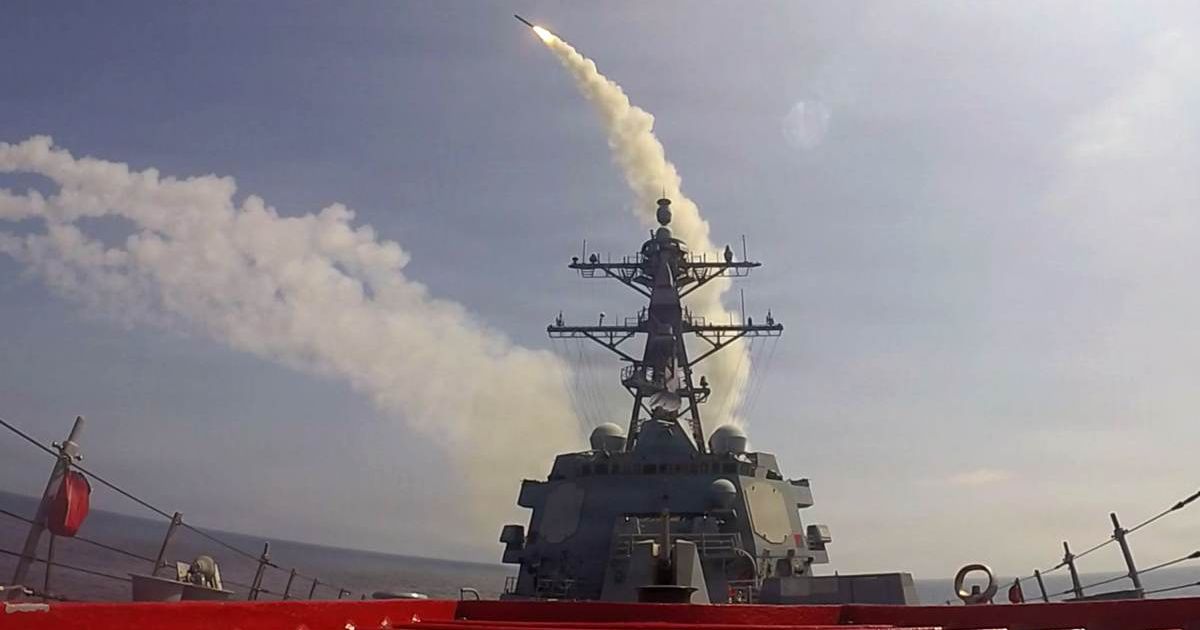
WASHINGTON, DC: The US has launched a wave of fresh strikes targeting new Iranian sites after a pause of five nights, as the tension between the two countries doesn't appear to be calming anytime soon.
While the fighting continues and the US is persistently attacking Iran to avoid potential threats against US forces and commercial vessels, the Pentagon has revealed that it has quietly been testing 'Hammer of the Gods' in the Pacific since mid-July to bolster defense capabilities.
While the name of the weapon sounds like mythology, it works like a killswitch for modern warfare.
What is the 'Hammer of the Gods'
Countries mainly have two types of weapons: either they defend, or they attack. Well, the ‘Hammer of the Gods’ does neither — instead, it does something strategically vital.
It isn’t a weapon that destroys. It's a weapon that confuses. It doesn't fire bullets. It blinds missiles.
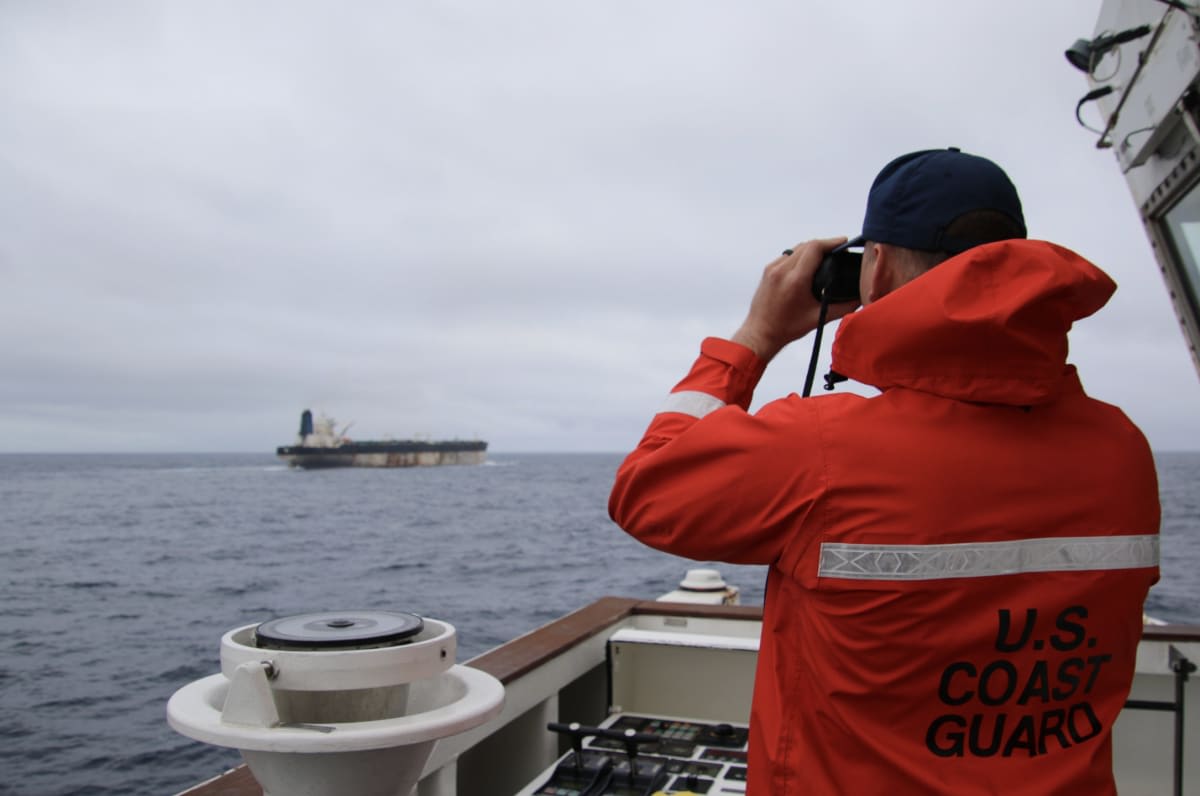
This portable electronic warfare system doesn’t harm friendly forces. Instead, it blinds enemy missiles by disrupting GPS and other positioning, navigation, and timing (PNT) signals used by enemy precision-guided weapons while ensuring friendly troops remain connected in contested environments.
Notably, long-range guided artillery, guided missiles, cruise missiles, drones, and others are GPS-guided and GPS-dependent weapons. Hence, their accuracy is significantly affected.
The system also creates a resilient communications network for US and allied forces operating in electronically contested environments.
“PNT is the foundation of modern military operations,” said Lt Col Darrin Hall, chief of modeling, simulation and integration for US Space Forces Pacific.
At Project Convergence Capstone 6, @USArmy, @USNavy and @USSpaceForce tested Hammer of the Gods. Joint experimentation is how we prepare for future fights, integrating space, cyber and conventional forces to operate as one team in contested areas.
— U.S. Space Command (@US_SpaceCom) July 28, 2026
👉 https://t.co/looBmNiZXe pic.twitter.com/Rnauf6GuzC
“Counter-PNT effects enhance lethality by impacting the backbone for pinpoint targeting via long-range artillery, guided missiles and cruise munitions. Without PNT data, modern weapon precision drops sharply, resulting in delayed missions, missed objectives or severe collateral damage,” Hall explained.
Why is the US testing 'Hammer of the Gods' now
The maritime test took place in mid-July off the Southern California coast, just weeks after the Iran conflict escalated in late June.
The exercise came as concerns grew over security in the Strait of Hormuz, one of the world's most strategically important waterways.
The electronic warfare in the US-Israel attack on Iran is among the most consequential methods, as as Washington and Tel Aviv have targeted navigation systems, communications, and critical data infrastructure to gain an edge over Iran since the beginning of the Epic Fury operation.

The United States reportedly deployed stealth aircraft, including the B-2 Spirit bomber and F-35 fighters, alongside the dedicated EA-18G Growler, whose primary function is to jam enemy radar and communications systems.
As electromagnetic jamming and disrupted internet connectivity have been critical in this warfare, the testing of ‘Hammer of the Gods’ proves a milestone and a dramatic edge for America.
Will the system cause civilian or economic damage
The ‘Hammer of the Gods’, unlike wide, large jammers, can be kept hidden on ships and is built as a low-electromagnetic-signature platform. It is built to minimize signal bleed so adversary sensors cannot track the emitting US vessel.
Infrastructure implication: Unlike large-scale GPS jammers that can disrupt navigation across an entire region, this system works only within a small area around the warship using it. That means it is unlikely to affect major shipping lanes or commercial ports on a wide scale.
Indiscriminate close-range jamming: If the system is switched on to protect a warship from incoming missiles or drones, it can also disrupt GPS signals for nearby civilian vessels, including cargo ships, fishing boats and private boats. In busy waterways such as the Strait of Hormuz, even a short GPS outage could interfere with autopilot systems and increase the risk of collisions or ships running aground.
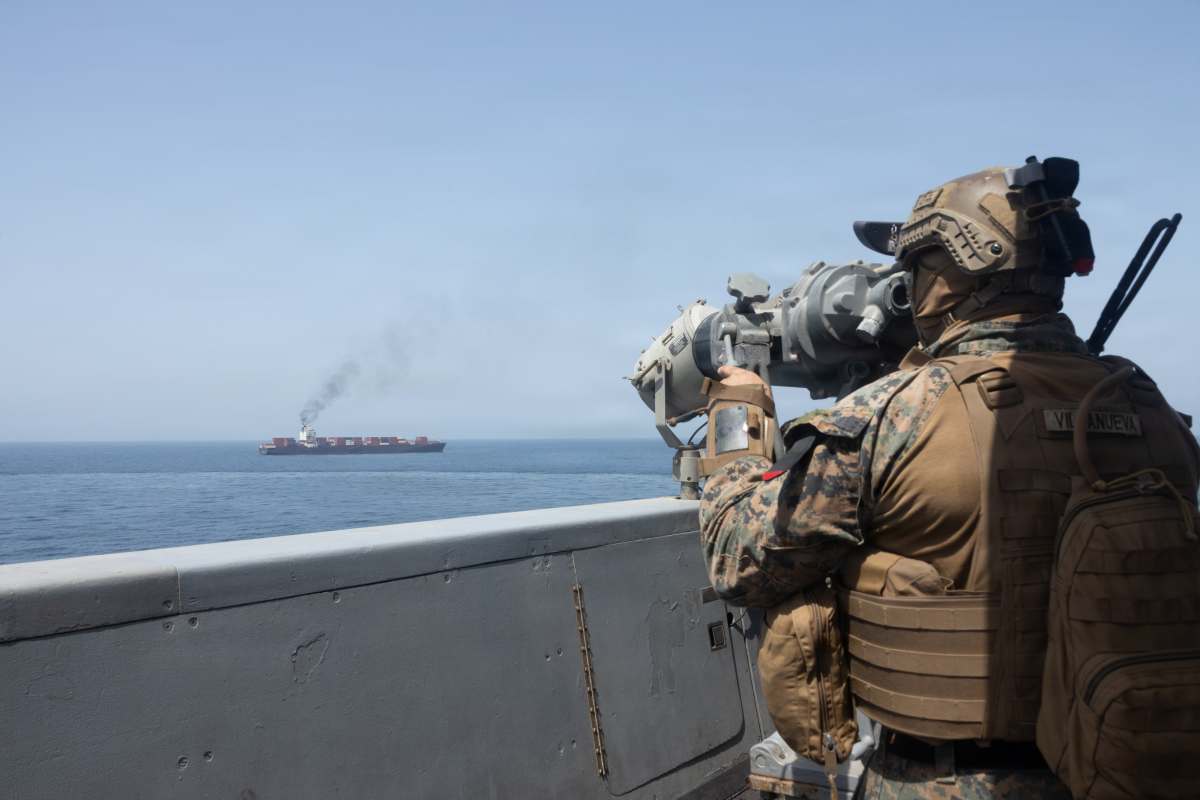
War risk insurance premiums: Shipping and insurance experts closely watch the use of GPS-jamming systems in commercial waterways. Even if the disruption is limited to a small area, activating the system near busy shipping routes can lead insurers to raise war-risk premiums for merchant vessels operating nearby.
Secondary reliance on backup systems: Because the system interferes with GPS signals instead of permanently damaging them, nearby civilian ships would have to switch to backup navigation methods such as radar, paper charts or terrestrial navigation.
While ships can continue operating, the switch can slow vessel movements and reduce the flow of commercial traffic through the area.
'Hammer of the Gods' and the future of silence
The introduction of the 'Hammer of the Gods' marks a fundamental shift in how the United States intends to manage escalation in high-stakes choke points like the Strait of Hormuz.
In a conflict where a single kinetic strike can ignite a regional war, a weapon that doesn't blow up launchers, but simply turns off their eyes, gives commanders an invisible upper hand.
Yet, as the Pacific tests demonstrate, modern warfare rarely offers a truly friction-free weapon.
Even an electronic shield designed to minimize signal bleed will leave its mark on global commerce, forcing commercial tankers onto backup systems and driving up war-risk insurance in already volatile waters.
As the electronic warfare arms race between Washington, Tehran, and Tel Aviv intensifies, the definition of air defense is being rewritten.