Merz brushes off 'nuclear' accusation, says Trump ties stronger than Iran row
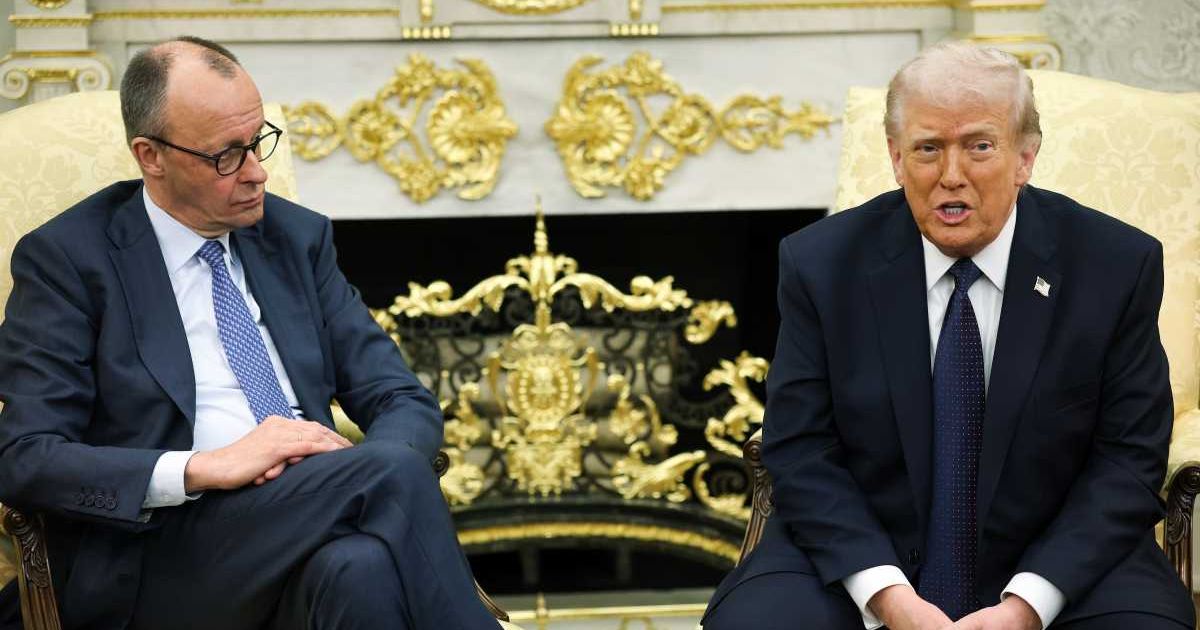
Merz acknowledged differences with Washington over Iran but emphasized a strong personal rapport despite rising tensions between the two sides
President Donald Trump speaks during a bilateral meeting with German Chancellor Friedrich Merz in the Oval Office of the White House on March 03, 2026 in Washington, DC (Getty Images)

WASHINGTON, DC: German Chancellor Friedrich Merz on Wednesday, April 29, sought to play down tensions with President Donald Trump, insisting their relationship remains “as good as ever” despite a sharp exchange over the Iran war.

Speaking amid growing transatlantic unease, Merz admitted he had harbored concerns about the conflict from the outset, signaling a clear divergence in approach between Berlin and Washington.

“I had doubts from the very beginning about what was started there,” he said, referring to the US-led strategy in Iran.

U.S. President Donald Trump meets with German Chancellor Friedrich Merz in the Oval Office of the White House, March 3, 2026 in Washington, DC. Trump and Merz are expected to discuss a range of topics, including the recent U.S. and Israeli attacks on Iran and international tariffs imposed by the Trump administration. (Photo by Win McNamee/Getty Images)
President Donald Trump meets with German Chancellor Friedrich Merz in the Oval Office of the White House, March 3, 2026, in Washington, DC (Win McNamee/Getty Images)

Economic fallout weighs on Europe

Merz underscored the tangible economic consequences of the conflict, warning that Germany and the wider European region are already feeling the strain.

He pointed specifically to disruptions linked to the closure of the Strait of Hormuz, a critical artery for global oil shipments.

“We are suffering considerably in Germany and in Europe from the consequences,” Merz said, highlighting rising energy costs and supply chain uncertainties.

He urged all sides to work toward a resolution, stressing that prolonged instability would deepen economic pain and undermine global markets.

U.S. President Donald Trump listens during a Cabinet meeting at the White House on February 26, 2025 in Washington, DC. Trump is holding the first Cabinet meeting of his second term, joined by Tesla and SpaceX CEO Elon Musk, head of the Department of Government Efficiency (DOGE). (Photo by Andrew Harnik/Getty Images)
President Donald Trump listens during a Cabinet meeting at the White House on February 26, 2025, in Washington, DC (Andrew Harnik/Getty Images)

Trump fires back over nuclear claims

The conciliatory tone from Merz followed a pointed rebuke from Trump a day earlier. Writing on his Truth Social platform, Trump accused the German leader of effectively endorsing Iran’s pursuit of nuclear weapons.

“The Chancellor of Germany, Friedrich Merz, thinks it’s OK for Iran to have a nuclear weapon. He doesn’t know what he’s talking about!” Trump said.

The president’s remarks were triggered by Merz’s earlier criticism of Washington’s handling of the conflict.

The German chancellor had argued that the United States risked being “humiliated” by Iranian leadership and questioned what he described as a lack of a clear, coherent strategy.
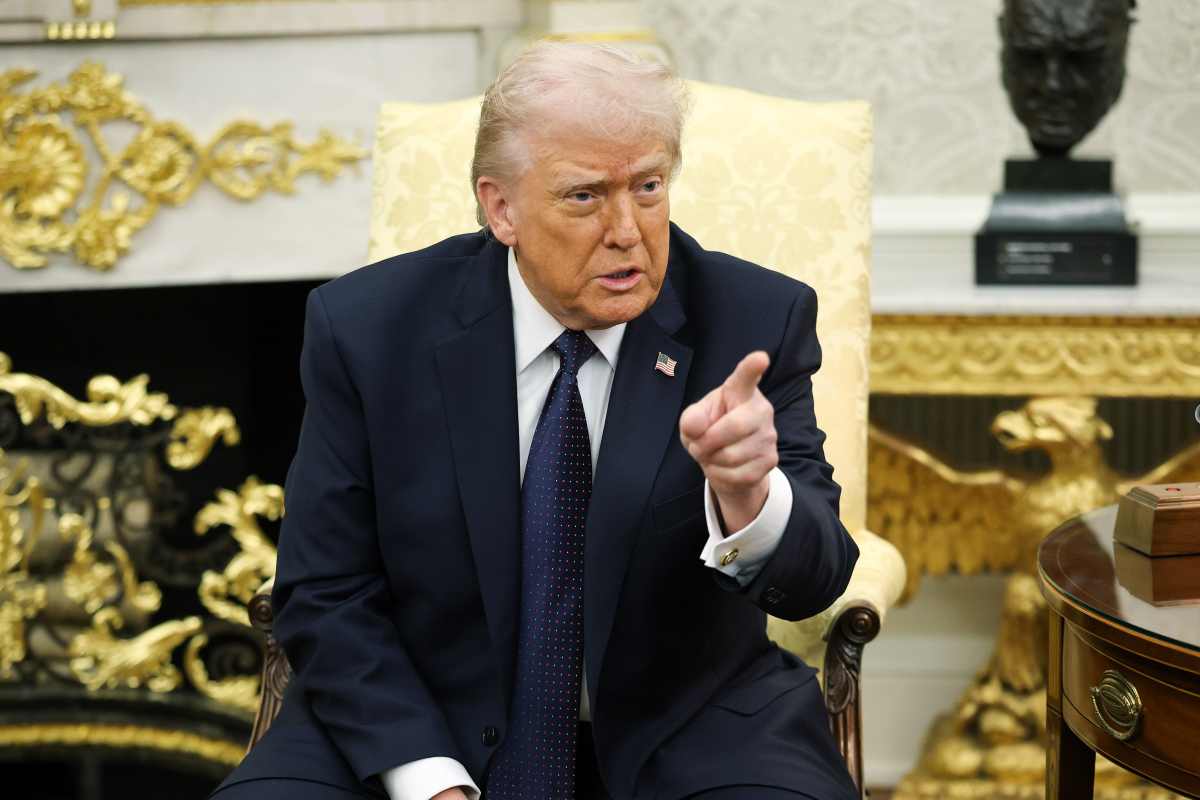
President Donald Trump takes questions from the media during a bilateral meeting with German Chancellor Friedrich Merz in the Oval Office of the White House on March 03, 2026 in Washington, DC. Trump and Merz are expected to discuss a range of topics including the recent U.S. and Israeli attacks on Iran and international tariffs imposed by the Trump administration. (Photo by Win McNamee/Getty Images)
President Donald Trump takes questions from the media during a bilateral meeting with German Chancellor Friedrich Merz in the Oval Office of the White House on March 03, 2026, in Washington, DC (Win McNamee/Getty Images)

Transatlantic differences come into focus

The episode has brought underlying policy differences into sharper focus, even as both leaders publicly affirm the strength of their ties.

While Merz has emphasized diplomacy and de-escalation, the Trump administration has taken a more hardline stance, particularly on Iran’s nuclear ambitions and regional posture.

Despite the rhetoric, Merz’s insistence on maintaining a strong working relationship suggests both sides are keen to avoid a deeper rupture at a time of heightened geopolitical uncertainty.
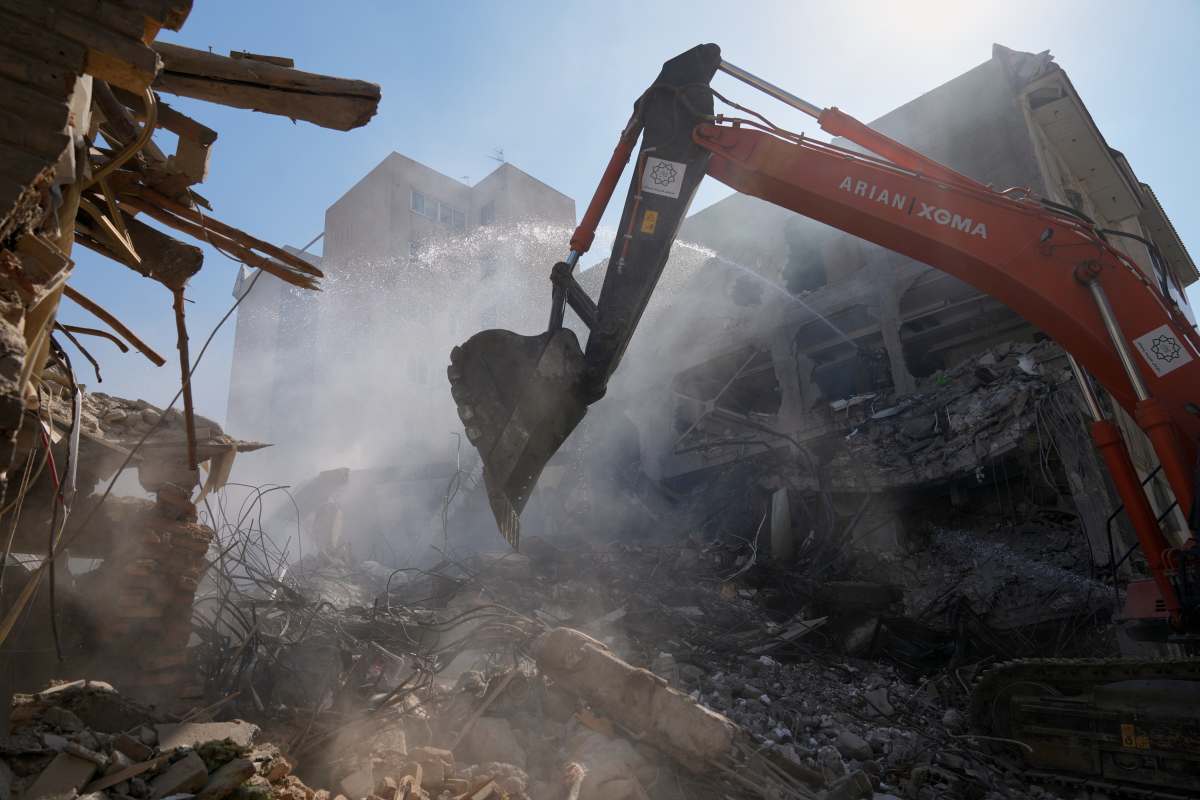
An excavator removes rubble at the site of a strike that, according to a security official at the scene, destroyed half of the Khorasaniha Synagogue and nearby residential buildings in Tehran, Iran, Tuesday, April 7, 2026. (AP Photo/Francisco Seco)
An excavator removes rubble at the site of a strike that, according to a security official at the scene, destroyed half of the Khorasaniha Synagogue and nearby residential buildings in Tehran, Iran, Tuesday, April 7, 2026 (AP Photo/Francisco Seco)

Observers say the coming weeks will be crucial in determining whether it remains rhetorical or evolves into a more substantive policy divide between Europe and the United States.
RELATED TOPICS US STRIKES IRAN

GET BREAKING U.S. NEWS & POLITICAL UPDATES
STRAIGHT TO YOUR INBOX.

MORE STORIES

Paris recorded temperatures climbing above 104 degrees Fahrenheit during the past week
1 day ago
Trump has previously criticized Italy and other NATO allies for what he described as insufficient support for US military action against Tehran
2 days ago
Venezuela's earthquake death toll has reached 1,719, with over 5,000 injured and tens of thousands still missing
2 days ago
Fresh hostilities began after Iranian drones struck a commercial vessel in Hormuz, which US officials cited as triggering renewed fighting
3 days ago
Amid rising tensions despite a ceasefire, Trump warned that Iran could 'cease to exist' if the US were forced to intensify its military response
3 days ago
Round-the-clock rescue efforts have continued since magnitude 7.2 and 7.5 earthquakes struck Venezuela's northern coast
4 days ago
Hezbollah leader Qassem rejected the US-brokered Israel-Lebanon peace deal, calling the agreement 'null and void' in a Saturday, June 27, statement
4 days ago
After US strikes near Hormuz, Iran said it hit US military positions, putting Trump's fragile ceasefire and regional peace efforts under severe strain
4 days ago
A military-to-military communication channel between the two longtime adversaries would be unprecedented, marking a potential breakthrough
5 days ago
President Trump further claimed US forces intercepted and destroyed the three remaining drones before they reached their intended targets
5 days ago