‘You will face a Nightmare’: Iran’s Qalibaf warns Trump after GOP’s midterm losses

TEHRAN, IRAN: Iran’s parliament speaker has weighed in on the Republican setback in the US midterm elections, and his message to Washington was blunt.
Mohammad Bagher Qalibaf, who also leads Tehran’s negotiators in talks with the United States, said on Tuesday, November 3 that voters had rejected the war with Iran.
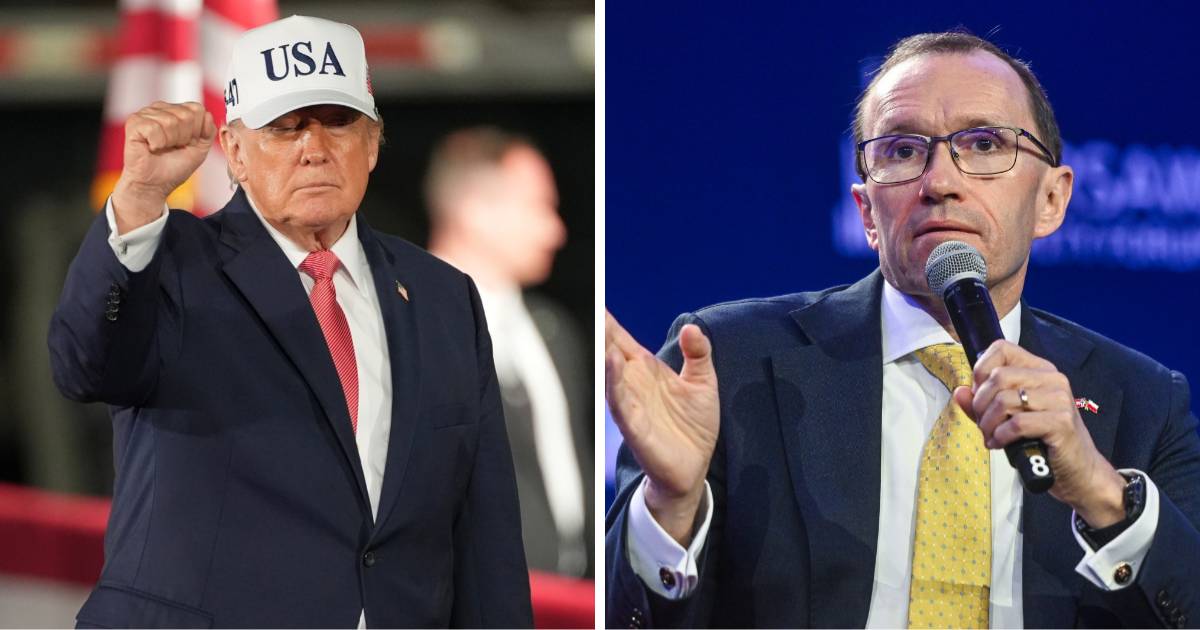
He warned the Trump administration against ignoring them. Both President Donald Trump and Vice President JD Vance have acknowledged that the conflict contributed to the Republican Party’s election losses, although Trump defended his decision to launch the war.
Conscience or the cost of living, Americans said NO TO WAR, and we endorse this message. If the US govt betrays their public will to serve international paymasters and blackmailers, it will learn our NO comes with a Nightmare.
— محمدباقر قالیباف | MB Ghalibaf (@mb_ghalibaf) November 4, 2026
Tehran sends a warning to Trump
Qalibaf posted his reaction on X as Democrats secured control of both chambers of Congress, delivering a major setback to the Republican Party.
“Conscience or the cost of living, Americans said NO TO WAR, and we endorse this message,” he wrote.
He then turned to the White House. “If the US govt betrays their public will to serve international paymasters and blackmailers, it will learn our NO comes with a Nightmare,” he said.
The warning landed as Republicans began their own search for answers. Vance wrote a lengthy post on X arguing that low turnout was not the problem.
He said Republican voters did show up, but many were unhappy and backed Democrats anyway.
“The main problem is that many people who voted for Trump/Vance in 2024 voted for Democrats in 2026,” he wrote.
Vance said a pollster had told him that angry former supporters could return if the party ended the war, focused on living costs, put America first and changed its approach to Israel.
“The reason we lost is the war,” Vance wrote, adding that the president had said so himself.
Trump’s own comments were more guarded. He told Fox News that Iran was partly responsible for the Republican losses but defended his approach.
“Historically, it will be much more important than this evening because you can’t let the number one state sponsor of terror have a nuclear weapon,” he said.
He also said Republicans suffered because he was not on the ballot himself.
The result is a major blow to a president who urged his supporters to treat the election as a vote on his time in office.
Democrats have said they will not approve more money for the war.
One of the things the data analysts on our side obsessed over was "composition"—whether the electorate looked close enough to 2024 for Republicans to win. And despite polls that showed a Democrat blowout, the data kept on telling us the same story: in some states turnout was merely OK, in other states it was downright amazing, and in no state was it catastrophic. There was a genuine sense of optimism on our team: our people were showing up. So, I asked the smartest data guy I know, does that mean we're going to shock the world? "No," he told me. "We might do better than the polls suggest. But the data is telling us that a lot of Trump/Vance 2024 voters are pissed and planning to vote for the other guys. Our voters are turning out, but they may not vote for us." Well, that looks prophetic now. Our voters did show up. In Florida, for example, the electorate was 9 points more Republican than Democrat, just a couple points worse than 2024. Undoubtedly there were places we could have done better on turnout. But the main problem is not turnout. The main problem is that many people who voted for Trump/Vance in 2024 voted for Democrats in 2026. There will be a lot of infighting and arguing over what happened and why that is. One of the pollsters I really respect told me that our economic messaging wasn’t sharp enough down the stretch. I’m sure that’s true. But the real reason we lost is obvious to almost everyone. Another pollster—one of the smartest people I know in politics, told me yesterday we’d lose the generic ballot by 13 points. I felt negative going into Tuesday, but even I was shocked by this. In his polling, he saw that a lot of Trump 2024 voters were angry and planning to vote for Democrats. He asked those voters who had abandoned us what would cause them to come back on our team. The top four answers, accounting for nearly all of the responses were: 1) End the war 2) Focus on cost of living/inflation 3) Put America First 4) Change our relationship to Israel Our voters showed up. And the above four reasons are why many of them voted for Democrats. This is according to a pollster who nailed the results. While many spent Monday attacking Rachel Campos Duffy for calling for a diplomatic resolution to the conflict, it turns out her political advice was sound. (She’s also a great person.) In the next few months, there's going to be a lot of gaslighting. Expect to hear any number of establishment politicians say the solution to our woes is amnesty. I'm open to the idea that we should change enforcement—by focusing more on businesses that hire illegal labor, for instance. But anyone pushing amnesty is lying to you. The reason we lost is the war. The president himself said so last night. If you'd like to argue it was worth it, that losing the Senate for the next 6 years was worth it, then do so. Argue it was a worthwhile cost to pay. Agree or disagree, that's at least honest. But everyone knows why we lost. And any honest conversation about where we go from here must start there. I remain hopeful about our country. To the people who are pissed off and want to say, “I told you so”: you’re right, you did tell us so. Take that energy into electing Republicans who share your worldview. To the people who are just pissed at the results, you should be. Let’s take that anger and get back to the work of saving our country.
— JD Vance (@JDVance) November 4, 2026
How Iran war shaped campaigns?
The conflict has dominated American politics for much of 2026. A ceasefire was declared in April, but tensions remained high, and efforts to reach a lasting agreement faced repeated setbacks.
Negotiators met in Pakistan and Iran later suspended its participation at one stage, blaming Israeli actions in the region. US strikes resumed in late May even as diplomacy continued.
The fighting hit Americans at home. The closure of the Strait of Hormuz pushed up fuel prices, feeding the cost-of-living worries that dominated the campaign.

Congress also pushed back. After several failed attempts, the House passed a war powers resolution in June and the Senate followed.
The measure was largely symbolic and did not require the president’s signature.
Even Republican lawmakers distanced themselves from the war. Some Senate Republicans, including Trump-backed Ashley Hinson in Iowa, said they wanted the conflict to end quickly.
What remains to be seen is whether Trump changes course on Iran with a Democratic-controlled Congress set to take office in January, and what Tehran means by its “Nightmare” warning if he does not.