Supreme Court signals support for Trump in FTC commissioner removal dispute
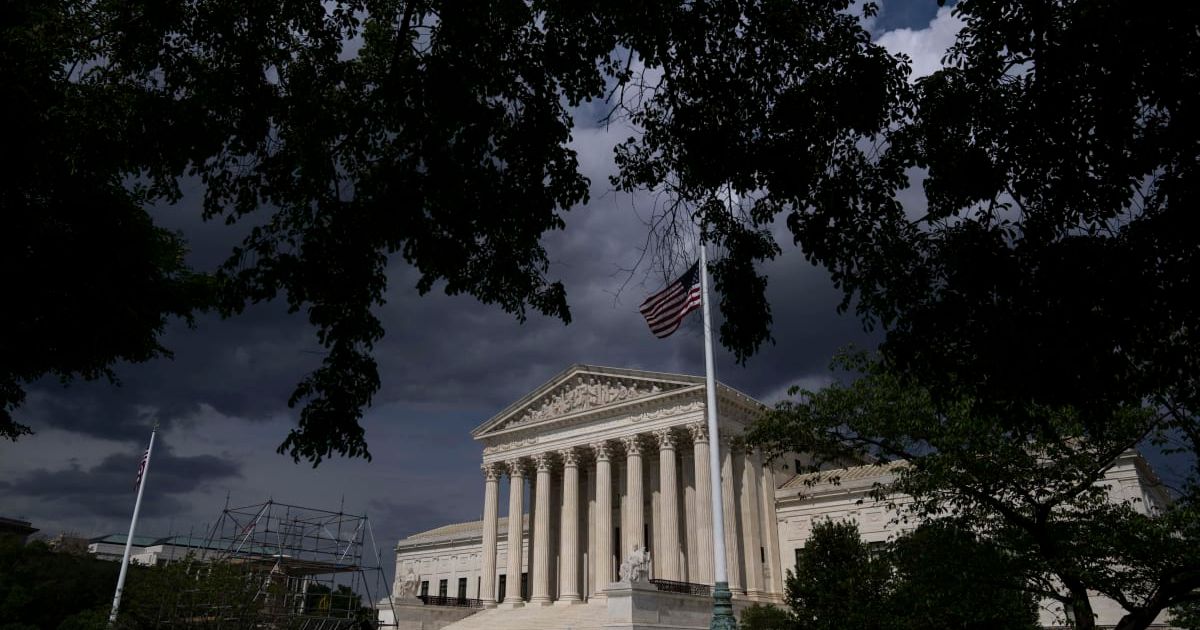
WASHINGTON, DC: The Supreme Court’s conservative majority signaled on Monday, December 8, that it was ready to back the Trump administration in a landmark dispute over presidential power, potentially overturning a 90-year-old precedent that protects independent agency officials from being fired at will.
During more than two hours of oral arguments in the high-stakes case, the court appeared split along partisan lines regarding President Donald Trump’s move to fire Federal Trade Commission (FTC) member Rebecca Kelly Slaughter.
If the justices side with the administration, it would mark a historic expansion of executive authority and strip protections from independent boards.

Trump administration calls precedent a 'decaying husk'
Solicitor General D John Sauer, arguing on behalf of the Trump administration, opened the session by directly attacking the 1935 ruling known as Humphrey’s Executor.
That decision established that the president requires Congress’s signoff to fire an official from an independent government agency, and that such removals must be "for cause.
Sauer argued that this precedent "must be overruled," and described it as a "decaying husk with bold, and particularly dangerous pretensions.

He contended that the current system created a "headless fourth branch insulated from political accountability and democratic control."
Sauer repeatedly warned the justices that if they construe the president’s powers narrowly, "then we have a situation where Congress could erect... virtually the entire executive branch outside the president’s control."
"And that is not even a republican form of government," Sauer added.

Liberal justices sound the alarm
The court’s three liberal justices offered fierce resistance, portraying the administration's argument as a dangerous power grab that could dismantle the government's checks and balances.
Justice Sonia Sotomayor seemed unconvinced from the start. "You’re asking us to destroy the structure of government," she told Sauer.
"To take away from Congress its ability to protect its idea that a government is better structured with some agencies that are independent," she added.

Justice Elena Kagan was equally blunt, warning that the court should not ignore "the real-world realities" of its decisions.
"The result of what you want is that the president is going to have massive, unchecked, uncontrolled power," Kagan told Sauer. "What you are left with is a president... with control over everything."
Justice Ketanji Brown Jackson focused on the practical implications of politicizing technical agencies.

"Having a president come in and fire all the scientists, and the doctors, and the economists and the PhDs, and replacing them with loyalists and people who don’t know anything is actually not in the best interest of the citizens of the United States," Jackson argued.
Conservatives skeptical of agency independence
The court’s conservative wing, however, appeared sympathetic to the view that the administrative state had grown too powerful and unaccountable.
Chief Justice John Roberts suggested that the 1935 precedent had "nothing to do with what the FTC looks like today," noting that the agency now wielded significantly more executive power than it did almost a century ago.
Justices Brett Kavanaugh and Amy Coney Barrett, potential swing votes, seemed inclined to support the administration while seeking to draw distinctions between the FTC and the Federal Reserve, signaling they may try to carve out protections for the central bank while allowing Trump to fire other officials.
Amit Agarwal cautions that ‘everything is on the chopping block’
Amit Agarwal, the lawyer representing the fired commissioner Rebecca Slaughter, warned that there is "absolutely no principled basis" for carving out specific agencies if the court sides with Trump.
"The real-world danger... is that everything is on the chopping block," Agarwal said. He noted that "multi-member commissions with members enjoying some kind of removal protection have been part of our story since 1790."

The case, Slaughter v Trump, arose after the president moved to fire Slaughter earlier this year. Trump had originally appointed her in 2018, and she was reconfirmed for a second term under Joe Biden, which was set to expire in 2029.
A decision in the case is expected before the end of June next year.