Trump takes a dig at US Supreme Court, calls birthright citizenship ‘money-making hoax’
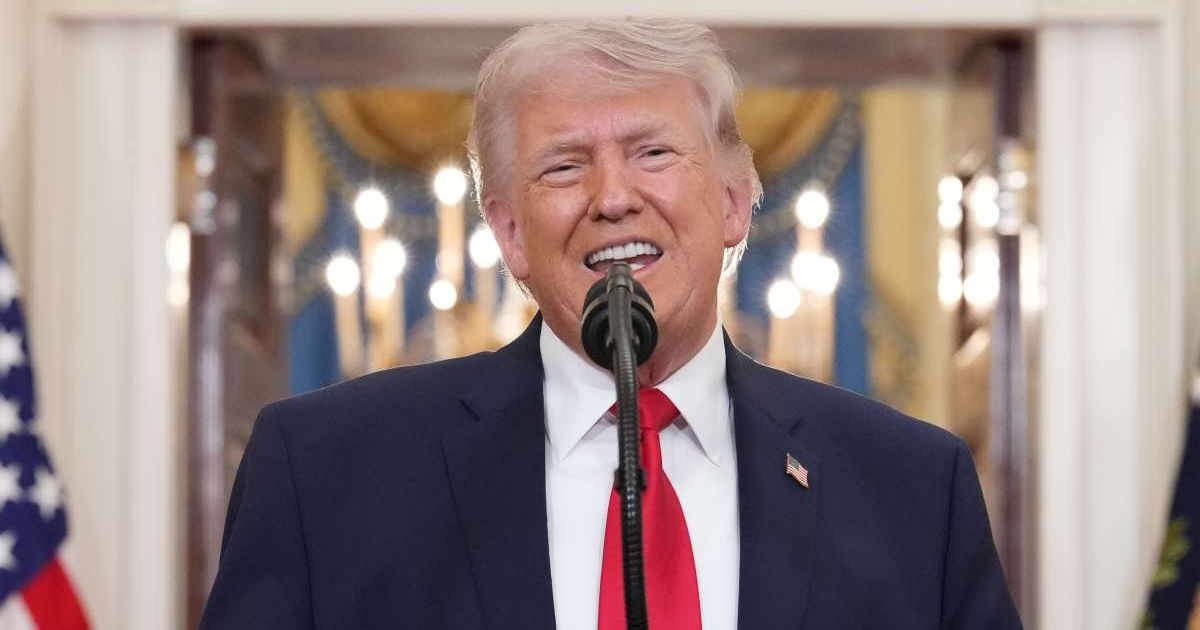
WASHINGTON, DC: President Donald Trump blasted birthright citizenship as a “money-making hoax” while taking a swipe at the US Supreme Court for good measure.
“It’s too bad that the Supreme Court can’t watch and study the Mark Levin Show tonight on the Birthright Citizenship Scam. If they saw it they would never allow that money-making HOAX to continue,” Trump posted on Truth Social.
“THEY SHOULD USE THEIR POWERS OF COMMON SENSE FOR THE GOOD OF OUR COUNTRY. They failed miserably on Tariffs, needlessly costing the USA Hundreds of Billions of Dollars in potential rebates for the benefit haters and scammers. Why??? Don’t do it again! The Country can only withstand so many bad decisions from a Court that just doesn’t seem to care,” he wrote.
The broadside is the latest in a series of attacks from the President, who has been ramping up his rhetoric against the long-standing interpretation of citizenship under US law.
The President had spoken out against birthright citizenship just days earlier. “Birthright Citizenship has to do with the babies of slaves, not Chinese Billionaires who have 56 kids, all of whom ‘become’ American Citizens,” he said in a social media post. “One of the many Great Scams of our time!”
A legal battle rooted in history
Trump’s criticism lands squarely against more than a century of legal precedent.
The Supreme Court has consistently held that nearly all children born on US soil are automatically citizens, regardless of their parents’ immigration status. That principle was cemented in an 1898 case involving a man born in the United States to noncitizen parents from China, where the court ruled he was a citizen at birth.

“Citizenship by birth is established by the mere fact of birth under the circumstances defined in the Constitution,” Justice Horace Gray wrote in the majority opinion. “Every person born in the United States, and subject to the jurisdiction thereof, becomes at once a citizen of the United States, and needs no naturalization.”
The foundation for that ruling traces back even further to the 14th Amendment, adopted in 1868, which states that “all persons born or naturalized in the United States, and subject to the jurisdiction thereof, are citizens of the United States and of the State wherein they reside.”
With Trump pushing to reinterpret that clause, the issue has once again landed before the nation’s highest court. Early signals suggest a tough road ahead for the administration.
Oral arguments last Wednesday hinted that several justices are uneasy about limiting birthright citizenship, raising questions about whether Trump’s effort can clear the legal bar.
Trump makes rare courtroom appearance
In a move that raised eyebrows, Trump showed up at the Supreme Court in person to watch the arguments unfold. He became the first sitting president in recorded history to sit in on Supreme Court proceedings tied directly to one of his own major policy initiatives.
BREAKING: President Trump departs the White House on his way to the Supreme Court, where he will be the first president in history to sit and listen to the court's oral arguments as it weighs the president's executive order ending birthright citizenship. | @DanaPerino… pic.twitter.com/xN0HPMUQGP
— Fox News (@FoxNews) April 1, 2026
He took a seat halfway back in the courtroom, positioned to the left of Chief Justice John Roberts. But Roberts made no verbal note of Trump’s presence and appeared to glance in the opposite direction as he took his seat.
The rest of the bench largely kept their focus forward. Justice Clarence Thomas did look toward Trump’s section, while Justice Ketanji Brown Jackson maintained a tight-lipped smile before settling in.
As arguments began, Trump sat stone-faced, listening intently without reaction. The President occupied a front-row seat in the public gallery, a space often reserved for parties involved in cases. The rest of the room’s front section was filled with Supreme Court Bar members, guests of the justices, and the press.
He arrived just before proceedings began and stayed through the questioning of his administration’s lawyer, Solicitor General D. John Sauer. But once Sauer wrapped up, Trump made a swift exit just six minutes into the opposing side’s argument.