Iran's opposition parties should lead nation under American 'guidance': Israel's US Ambassador
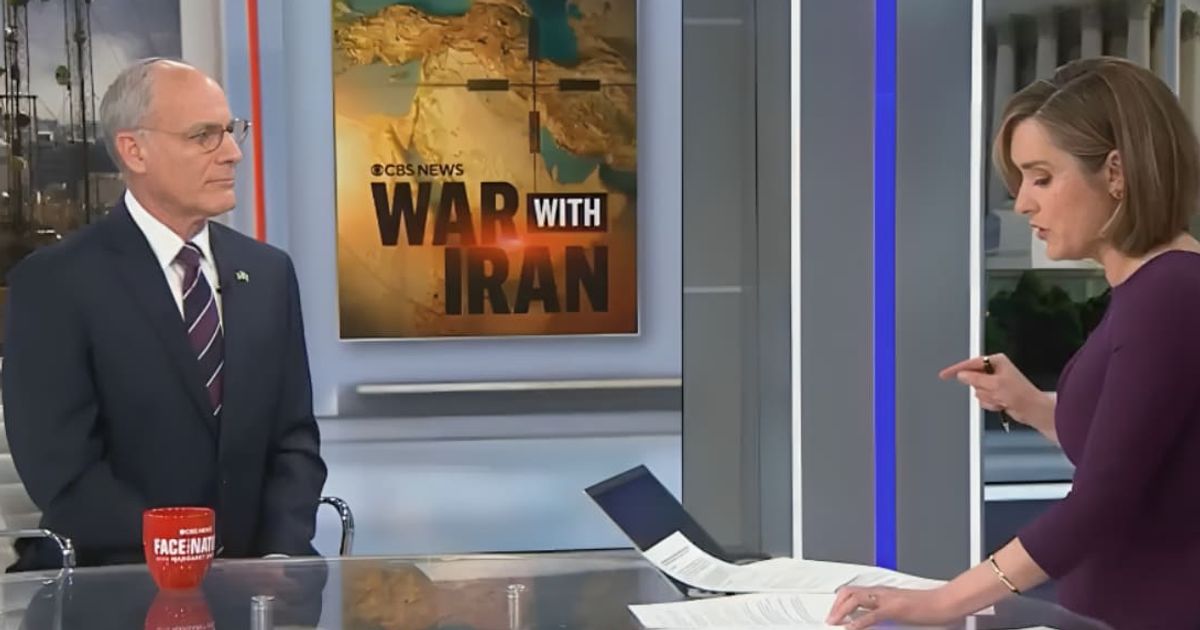
WASHINGTON, DC: Israeli Ambassador to the US Michael Leiter outlined a strategic vision for a "period of transitional government" in Iran during a Sunday, March 8, appearance on Face the Nation.
Leiter proposed that various opposition parties and minorities should coalesce to lead the country for approximately one year under the direct guidance of the United States, Israel and regional allies.
Iranian minorities should have say in govt
Asked about what comes next for Iran’s leadership, Leiter said that Israel hopes "the majority of the people come together, all the various opposition parties come together for a transitional government where they can lead the country for a year or so, together with the guidance from the United States, and Israel and other regional allies."
On the question of what comes next for Iran’s leadership, Israeli Ambassador to the U.S. Dr. Michael Leiter says Iranian pragmatists “are very limited in their ability to influence in Iran” and the ayatollahs are “the people influencing.”
— Face The Nation (@FaceTheNation) March 8, 2026
“What we're hoping for is that we move… pic.twitter.com/QwW8R3dlyX
Leiter further stated that the "end game" is a united Iran where minorities, including Kurds, Balochs, and Azeris are empowered to have a say in the political process.
He rejected claims that Israel is specifically pushing for Kurdish intervention, instead stating that Israel supports all minorities coming together to "take their country back".
"What we're encouraging them to do is to coalesce, is to come together, to unify," Leiter said.
He argued that a unified opposition could have brought the regime down years ago and that the current intervention provides the necessary "point of combustion" for the people to rise up against a regime that has oppressed them for 47 years.
Iran transition to differ from previous conflicts
Addressing concerns that this transition could mirror lengthy "forever wars" like Iraq or Afghanistan, Leiter argued the situation is fundamentally different.
He asserted that 80% of the Iranian people already oppose the regime and simply need the "ability to express themselves."
According to Leiter, this is not a repeat of past nation-building efforts because the local population is motivated to put their own "boots on the ground" to accomplish the mission.
Asked about the possibility of Israeli boots on the ground in Iran to secure the supply of enriched uranium, Israeli Ambassador to the U.S. Dr. Michael Leiter says, “The first thing we have to do is create a situation where we’re going to be able to get to that enriched material… pic.twitter.com/ByKmCk0QQl
— Face The Nation (@FaceTheNation) March 8, 2026
The Ambassador emphasized that while this process may involve "minimal pain", the long-term gain of a free Iran is achievable.
He noted that cracks are already appearing in the "edifice" of the military security regime, which is currently struggling with internal arguments over the appointment of a successor to the Supreme Leader.
Israel eyes Iran's nuclear materials

A critical component of the ongoing operation is the security of Iran's documented enriched uranium.
Leiter confirmed that Israel intends to secure and remove this material to prevent a "t****r state" from achieving nuclear weapons. While he declined to discuss specific operational details, he noted that the objective must be accomplished as kinetic activity on the ground decreases.
The Ambassador reported that the regime is currently "lashing out irrationally" by firing missiles into neighboring countries, which he characterized as a sign of grave difficulty.
He expressed confidence that the collaborative effort between the US and Israel would successfully end Iran's role as an exporter of t*rrorism.
Precision strikes and the future leadership
On the question of what comes next for Iran’s leadership, Israeli Ambassador to the U.S. Dr. Michael Leiter says Iranian pragmatists “are very limited in their ability to influence in Iran” and the ayatollahs are “the people influencing.”
— Face The Nation (@FaceTheNation) March 8, 2026
“What we're hoping for is that we move… pic.twitter.com/QwW8R3dlyX
When questioned about the deaths of Iranian "pragmatists" in the strike that killed the Supreme Leader, Leiter maintained that so-called pragmatists have had "absolutely no influence" over the past four decades.
He noted that the true decision-makers were ayatollahs with an "apocalyptic view" of the future.
Regarding the precision of the strikes, Leiter noted that while Israel has proven its ability for high-precision operations, the degree of precision required to distinguish between specific individuals in the same room is a separate challenge.
He concluded by reiterating that the goal is to "let the people choose" their future in the most pro-Western nation in the region after Israel.