Iran’s president delivers Tehran’s demands from US soil as war with Trump drags on
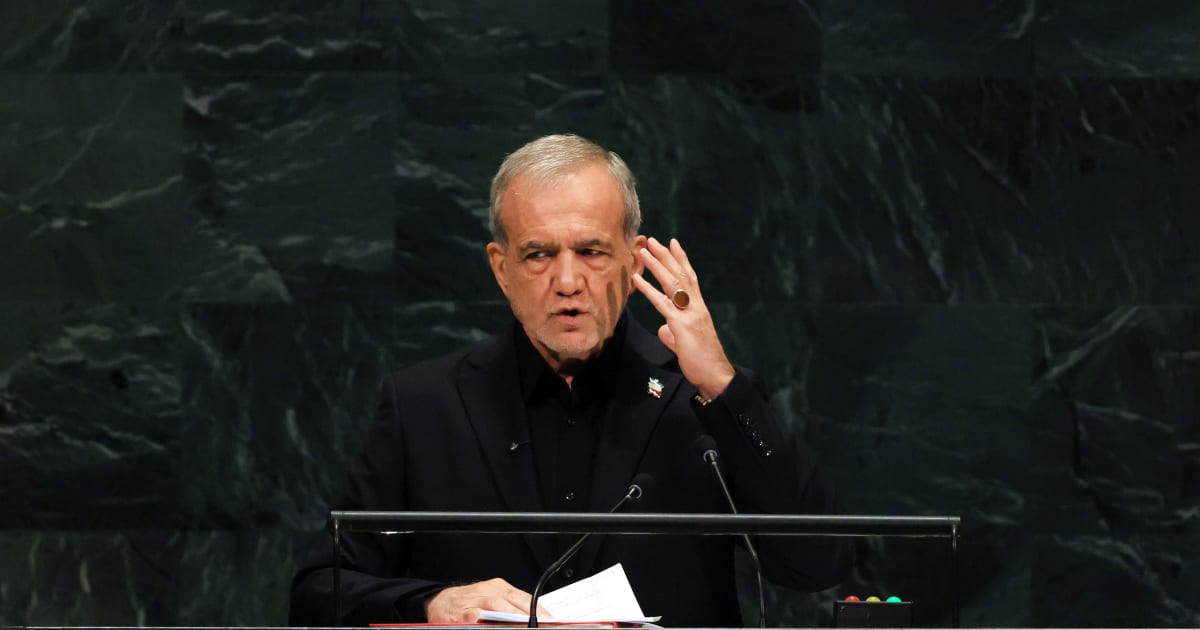
NEW YORK CITY, NEW YORK: Iranian President Masoud Pezeshkian used the UN General Assembly stage on Wednesday, September 23, to lay out Tehran’s position on the issues at the heart of its war with the United States and Israel.
Speaking from American soil, he made clear that Iran was not prepared to give up its nuclear program, missile defenses or control over the Strait of Hormuz. His address came as the seven-month conflict continued to put pressure on Tehran and Washington, with President Donald Trump threatening the Islamic Republic while diplomatic efforts between the two sides remained uncertain.
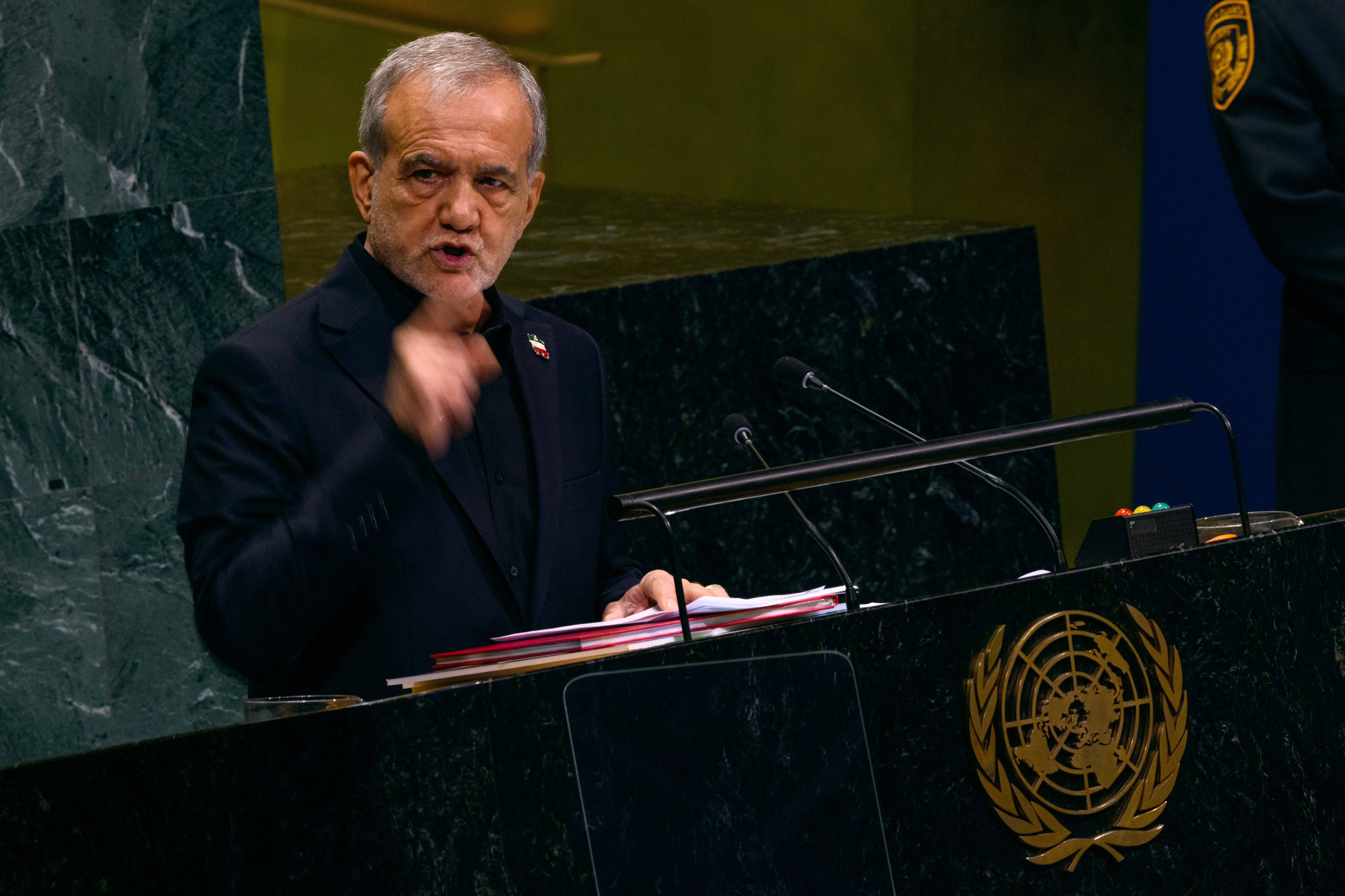
Pezeshkian defends Iran’s nuclear program, missile defenses and Hormuz
Pezeshkian used his address to lay out what Iran wants as it faces a prolonged war and growing pressure at home.
He rejected any suggestion that Iran would surrender its nuclear program, missile defenses or its control over the Strait of Hormuz. The waterway has become one of the most important points in the conflict because of its role in global oil shipping.
“We cannot let some have free access and gain their interest from a waterway while at the same time using that waterway to impose their aggressions upon us, to impose insecurity upon us, to forbid us access to our own waterways,” Pezeshkian said.
Iranian President Masoud Pezeshkian:
— Clash Report (@clashreport) September 23, 2026
Iran does not see her neighbors as security rivals — we want to have strong neighbors.
In the waters of the Strait of Hormuz, we do not want to impose insecurity. We cannot let some have free access and gain their interest from a waterway,… pic.twitter.com/q9YcnRREJw
His appearance at the UN was also notable because he was delivering Iran’s message from the United States, a country with which Tehran is still at war.
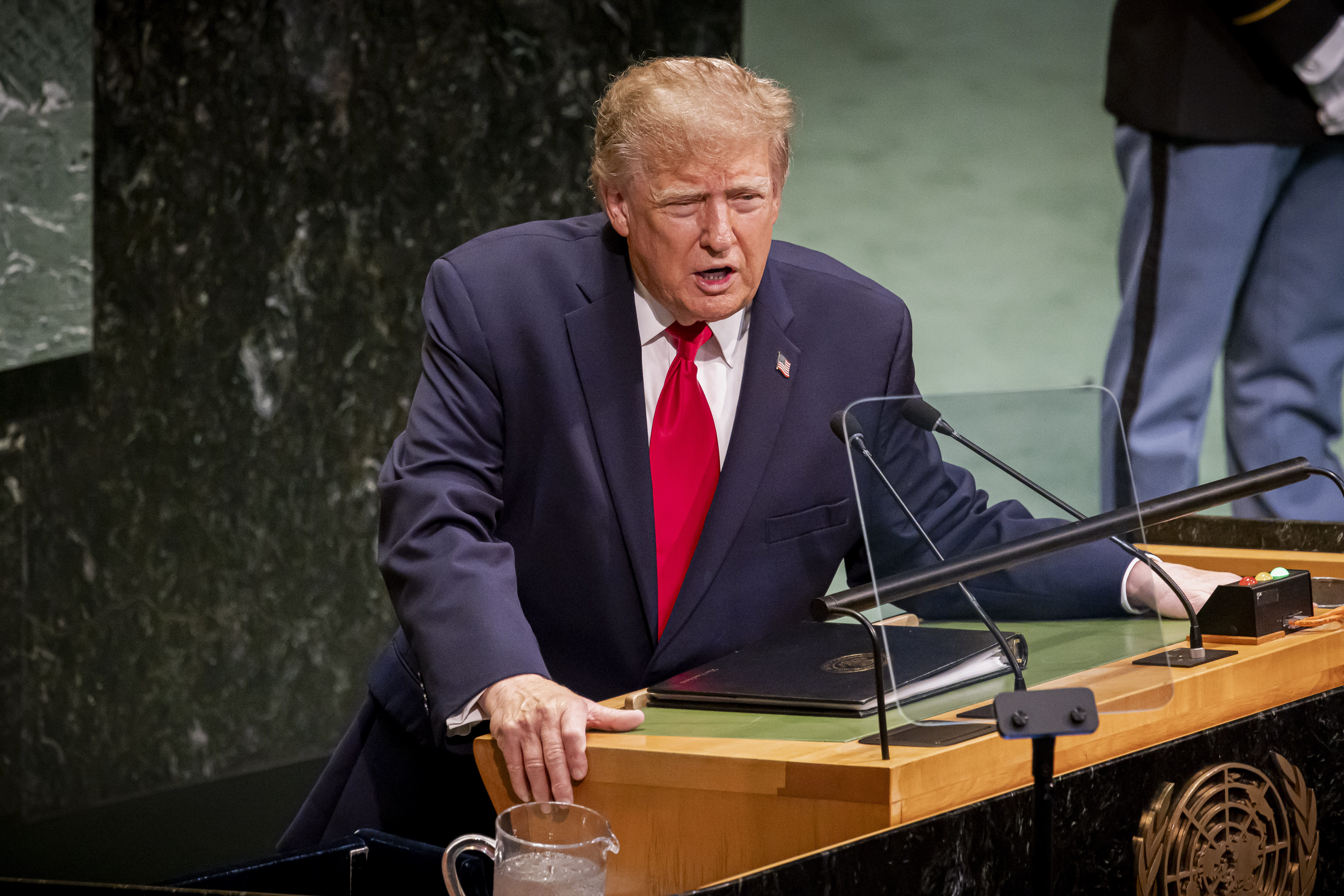
Trump has previously claimed that the US “blown up” nuclear sites in Iran and said he has control over the Strait of Hormuz. On Tuesday, he said he was considering whether to “annihilate the Islamic Republic.”
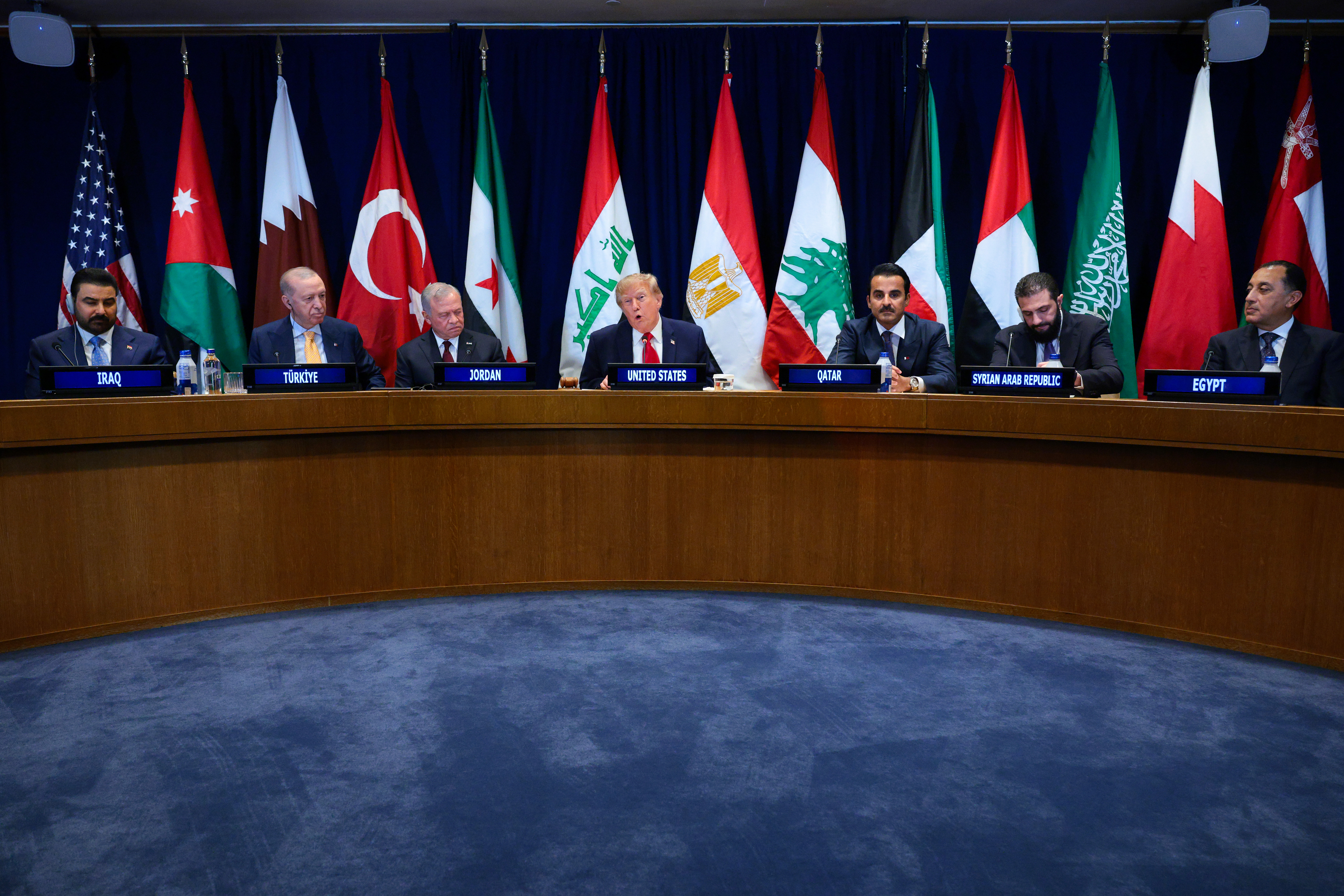
Pezeshkian calls for regional security as Iran faces pressure
Pezeshkian also spoke about Iran’s future relationship with its neighbors, warning that the country’s security must be guaranteed or the wider region could face continued instability.
He told Iran’s neighbors that they would have to “live under insecurity together” if Tehran’s security concerns were not addressed.
Sanam Vakil, director of the Middle East and North Africa program at London’s Chatham House, said the message suggested Iran was presenting regional security as something that could not be separated.
“Iran was presenting regional security as indivisible, signaling that continued pressure and conflict would impose costs across the region,” Vakil told CNN.
At the same time, Hamidreza Azizi, a senior analyst at the International Crisis Group, said the message also showed that Iran understands it will eventually need to coexist with its neighbors.
“This reflects an understanding that, at the end of the day, Iran will need to find an arrangement for peaceful coexistence with its neighbors,” Azizi said.
That balancing act comes as Pezeshkian faces pressure from hard-line factions at home over his willingness to engage with Washington.
Iran-US talks show little progress after New York meeting
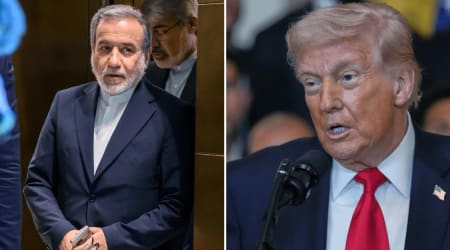
Pezeshkian’s UN appearance came one day after Iranian Foreign Minister Abbas Araghchi held at least two hours of talks in New York with Trump’s peace envoy Steve Witkoff.
The meeting was an important sign of diplomacy between Washington and Tehran after an earlier agreement failed to bring lasting progress. But the latest talks did not produce a major breakthrough.
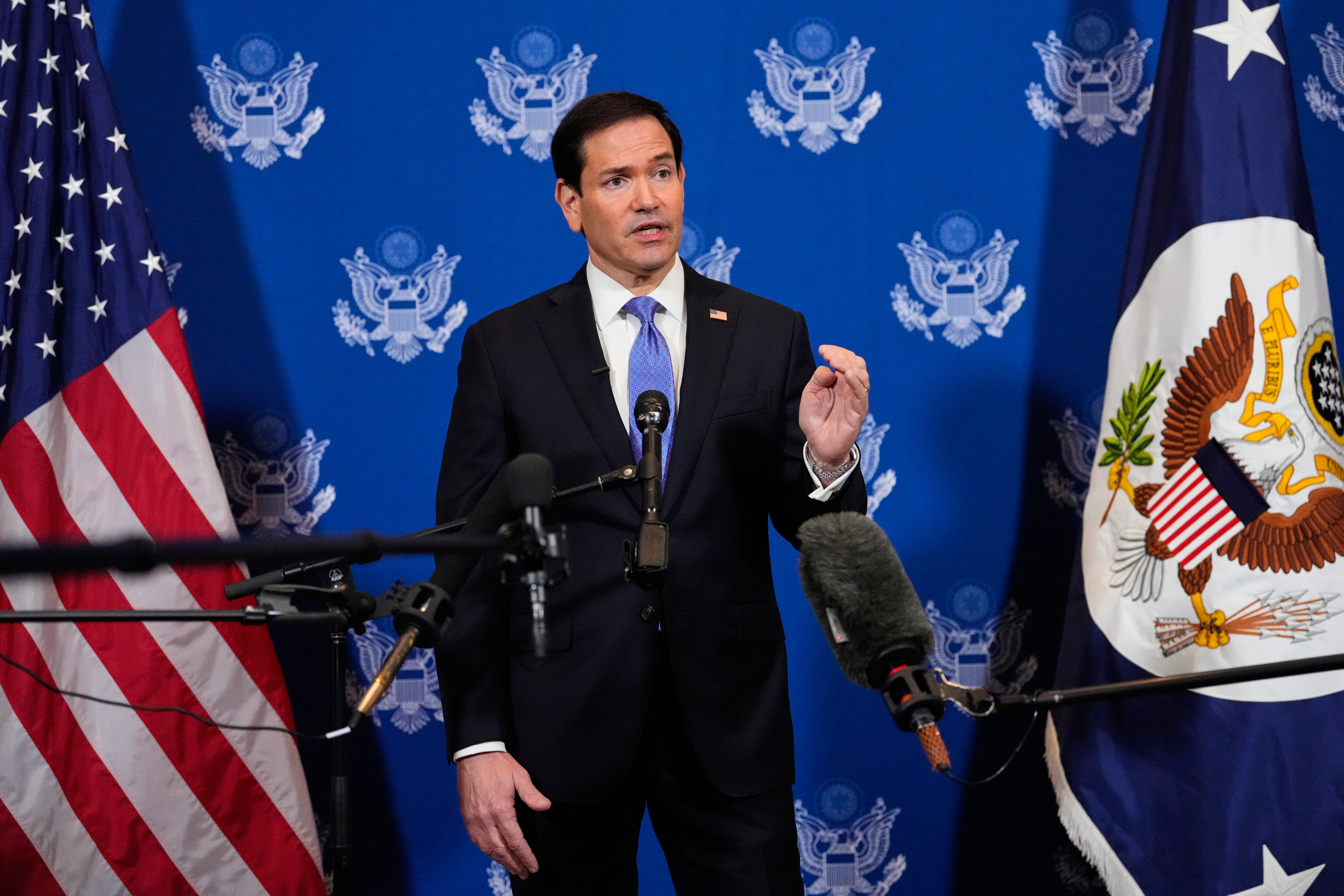
Secretary of State Marco Rubio said after Pezeshkian’s speech that the discussions had not resulted in significant progress, suggesting that the Memorandum of Understanding from earlier this year was no longer moving forward.
A plan for further negotiations between Iran and the US in June had also failed to take place, while the conflict instead continued to deepen uncertainty over how the war could end.
The talks have also created political pressure inside Iran. Hard-line lawmakers have questioned why Iranian officials are negotiating with representatives of the US.
After Araghchi met Witkoff, hard-line lawmaker Ebrahim Rezaei asked, “The foreign minister must explain on which authorization was his meeting with the representative of the aggressor enemy conducted?”
Pezeshkian has faced similar criticism for attending the UN and engaging diplomatically with Washington.
Azizi said critics feared that any sign of compromise could be viewed as weakness and could hurt Iran’s position as it tries to end the war on its own terms.
Iran links Strait of Hormuz to future US negotiations
While Pezeshkian was presenting Iran’s demands at the UN, Iran’s Supreme National Security Council chief Mohsen Rezaei announced an even tougher position on future talks with Washington.
Rezaei said Iran would adopt a new framework for negotiations that requires the US to take the first step.
“Under this new framework, the era of rhetoric and negotiations for their own sake has come to an end,” Rezaei said in an interview with state media.
He also tied any future negotiations and the reopening of the Strait of Hormuz to Iran’s demands.
“Any future talks, or the reopening of the Strait of Hormuz, will be contingent upon Washington’s full implementation of Iran’s requirements as a precondition,” Rezaei said.
His comments may have been aimed not only at Washington but also at hard-liners inside Iran who remain suspicious of the officials negotiating in New York.
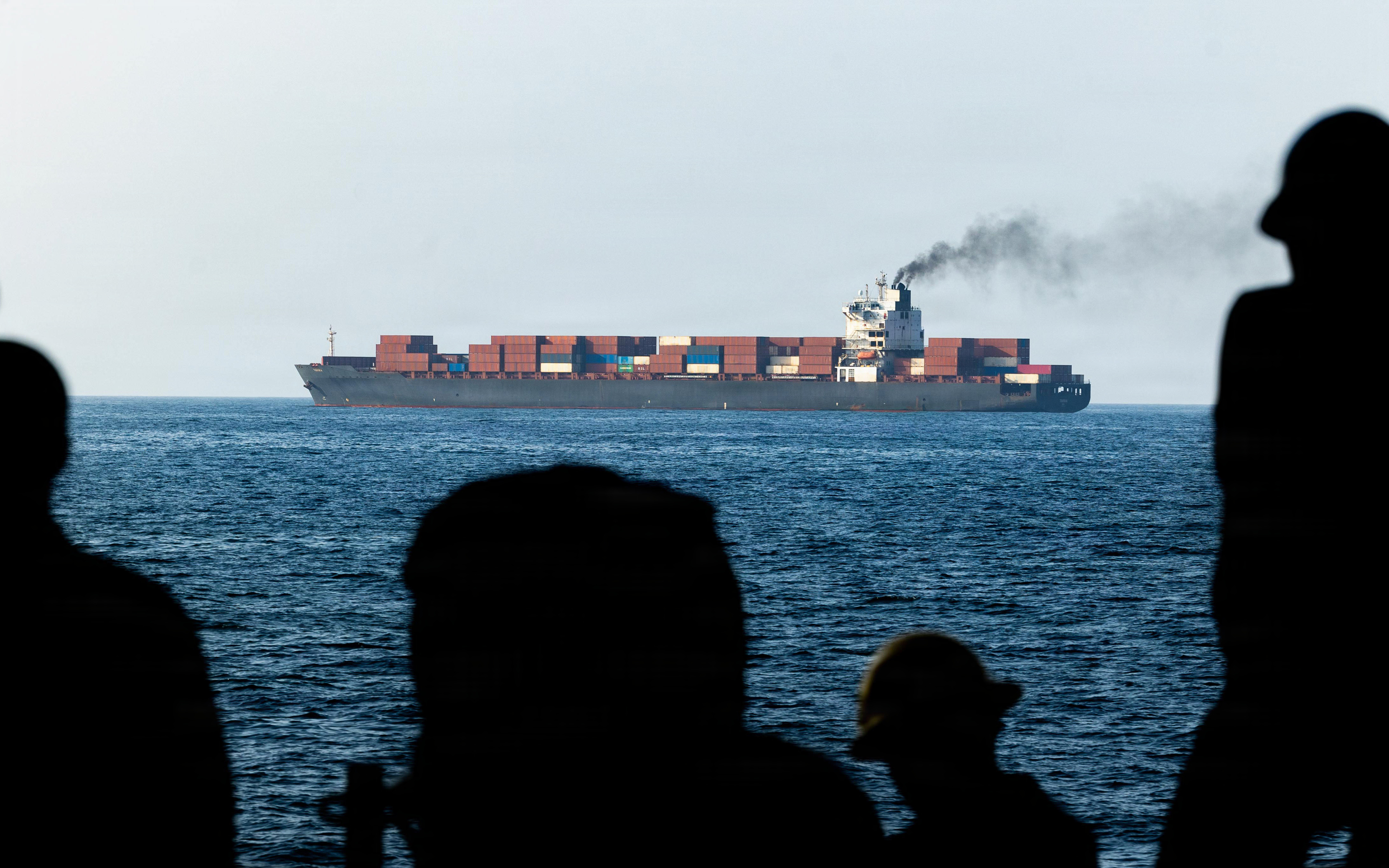
The tension around the Strait of Hormuz was highlighted again as diplomacy unfolded. Oman’s Maritime Security Center said a ship was targeted near the waterway, killing one person.
“Vessels are advised to transit with caution,” the UK Maritime Trade Operations center said.