Iran's supreme leader draws red line over uranium in US nuclear talks
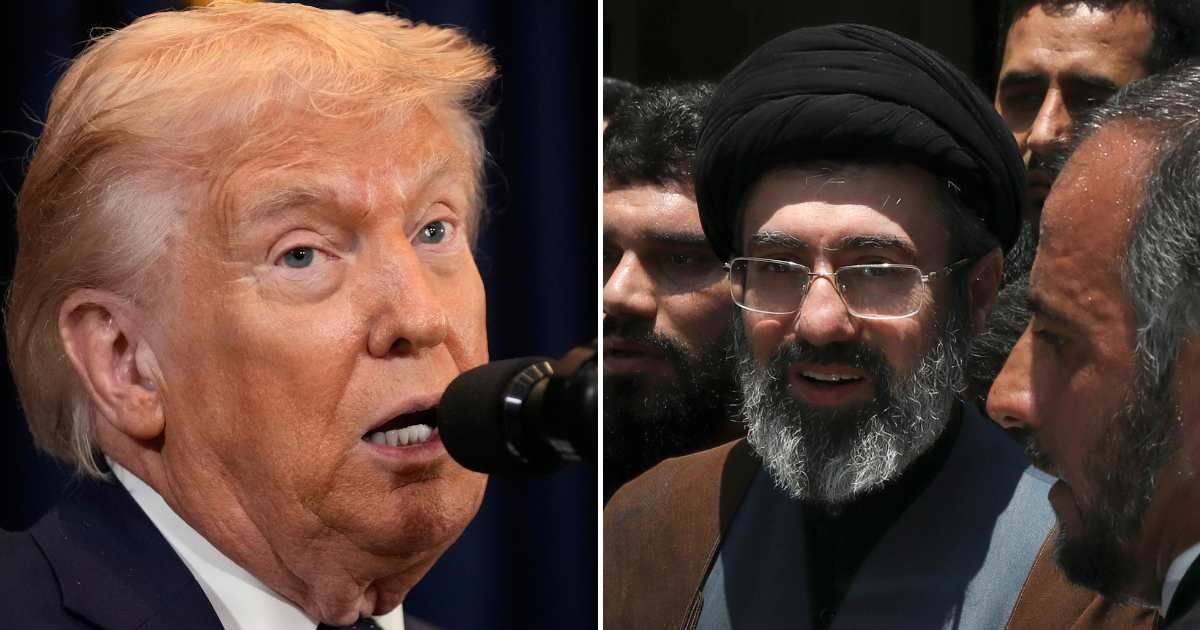
TEHRAN, IRAN: Iran’s Supreme Leader Ayatollah Mojtaba Khamenei has reportedly drawn a hard red line in ongoing peace negotiations with the United States, refusing to allow Iran’s near-weapons-grade uranium stockpile to leave the country.
The move threatens to derail already fragile diplomacy between Washington and Tehran, while also escalating tensions with Israel, which has demanded the complete removal of Iran’s enriched uranium as part of any long-term settlement to the conflict.
Iran's supreme leader has reportedly issued a directive not to export the country's highly enriched uranium. pic.twitter.com/vqlqOMqpXj
— Trey Yingst (@TreyYingst) May 21, 2026
Tehran reportedly hardens its position on Uranium
According to senior Iranian sources cited by Reuters in a report , Khamenei personally directed top officials to reject one of Washington’s central demands, transferring Iran’s highly enriched uranium outside the country.
The decision signals growing distrust inside Tehran’s leadership, which reportedly fears that surrendering the uranium stockpile would leave Iran exposed to future military strikes from the United States or Israel.
The uranium issue has become one of the most explosive sticking points in negotiations following months of conflict involving Iran, Israel and US-linked forces across West Asia.
“The stockpile of enriched uranium should not leave the country,” one Iranian source reportedly said, describing the position as a consensus view among Iran’s ruling establishment.
The development is likely to anger President Donald Trump, who has repeatedly warned Tehran that military action remains on the table if talks collapse.
Trump said earlier that the United States was prepared to launch additional strikes if Iran failed to provide what he called the “right answers” during negotiations.
But Iranian officials appear deeply skeptical of Washington’s intentions.
A senior Iranian official denied to me reports that Supreme Leader Mujtaba Khamenei has issued a new order requiring enriched uranium to remain inside Iran, saying they are “propaganda by the enemies of the deal”
— Ali Hashem علي هاشم (@Alihashem) May 21, 2026
The official added there are “no new order has been issued,” and…
Reuters' sources familiar with the talks said many within Iran’s leadership believe that the current ceasefire could merely be a temporary tactical pause before renewed attacks.
That suspicion has hardened Tehran’s negotiating posture, especially on issues tied to national security and nuclear capability.
Conflicting signals emerge
Hours after the report was published, a senior Iranian official reportedly denied reports, calling such claims “propaganda by the enemies of the deal.”
The official reportedly said no new order has been made and insisted Tehran’s position remains unchanged favoring domestic downblending of uranium.
The issue, they added, will be discussed in the next phase of negotiations.
JUST IN: The White House is pushing back hard on the Reuters report, calling it “not true” that Iran’s Supreme Leader Ayatollah Mojtaba Khamenei has ordered near-weapons-grade uranium to stay in Iran.
— RedWave Press (@RedWavePress) May 21, 2026
Aishah Hasnie: “The White House is pushing back on this. They say that the… pic.twitter.com/RpsTXB7zjq
The White House also pushed back, saying reports of a firm Iranian decision are “not true,” and confirming no final call has been made.
The uranium dispute has also intensified pressure from Israel, which has long argued Iran’s nuclear program poses an existential threat.
Israeli Prime Minister Benjamin Netanyahu has insisted the conflict cannot truly end unless Iran’s enriched uranium is removed, its missile capabilities dismantled, and its regional proxy networks weakened.

Israeli officials have reportedly told Reuters that Trump privately assured them that any final agreement would require Iran’s uranium stockpile to be shipped out of the country.
Diplomatic efforts mediated through Pakistan have so far failed to produce a breakthrough.
Still, Iranian officials hinted there may be room for compromise.
One source suggested to Reuters that Tehran could consider diluting portions of its enriched uranium under supervision from the International Atomic Energy Agency rather than sending the material abroad outright.

For now, however, Tehran appears unwilling to transparently surrender what it increasingly views as both a strategic shield and a bargaining weapon.